Why Are We Going to Mars When the Moon Is So Close? The Surprising Science Behind Our Space Missions
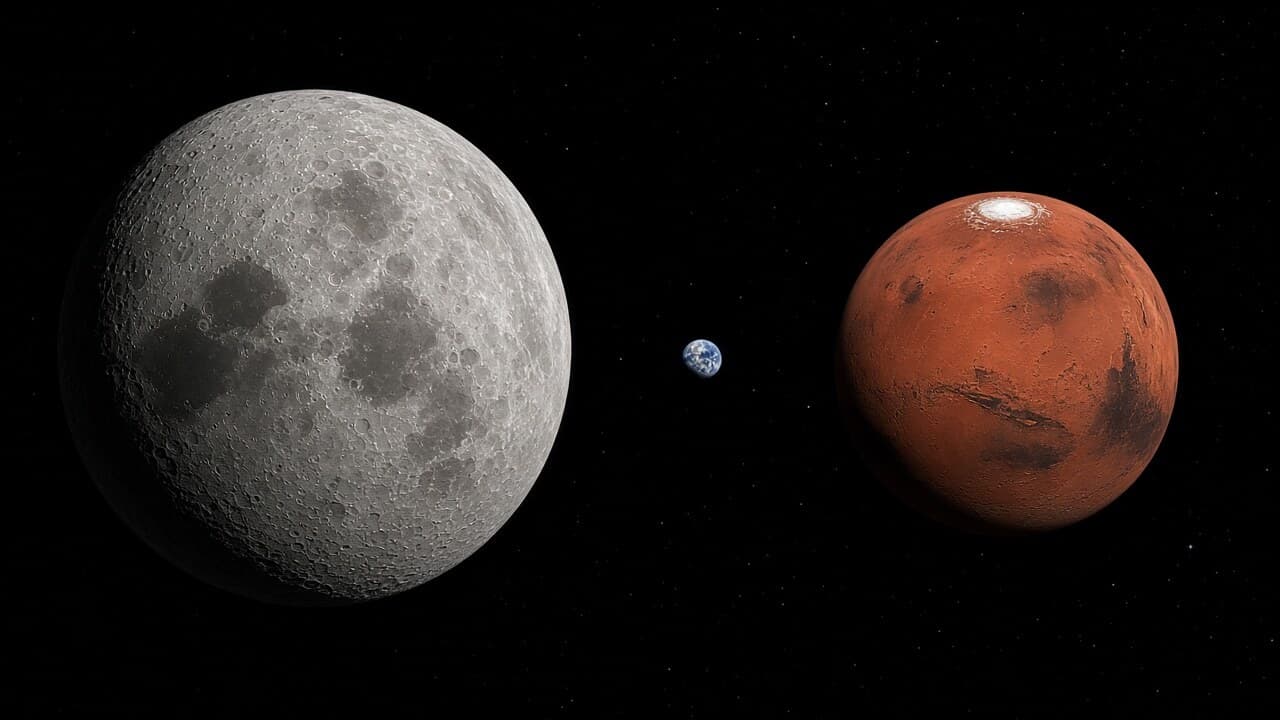
The Moon is just days away, yet humanity dreams of reaching Mars. Discover lunar ice, Chandrayaan-3 findings, and why both worlds matter.
Explainers for genuinely difficult physics, astronomy and engineering. We start with what you can picture, build up to the real mechanism, and mark clearly where current understanding stops.

The Moon is just days away, yet humanity dreams of reaching Mars. Discover lunar ice, Chandrayaan-3 findings, and why both worlds matter.
The universe is approximately 13.8 billion years old, yet the observable cosmos stretches around 93 billion light-years across. But where does it end? Discover what astronomy reveals about the edge of the universe—and what remains unknown.
Why does the universe exist? Are we alone in the cosmos? What happens when consciousness disappears? Science has transformed our understanding of reality, yet some of its biggest questions remain open. Explore ten mysteries at the edge of human knowledge.
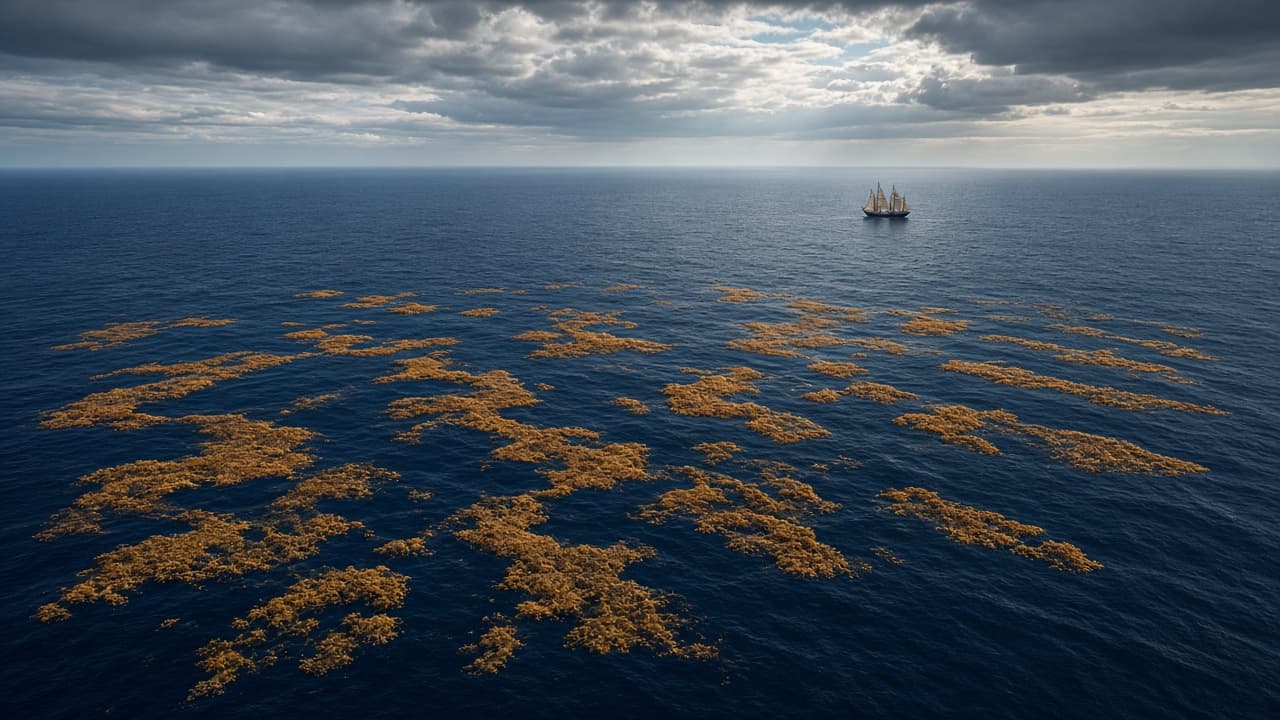
Imagine sailing across an ocean where the horizon never ends, strange golden seaweed drifts across the water, and there is no coastline to tell you where the sea begins or ends. Welcome to the Sargasso Sea—a real ocean mystery filled with maritime legends, extraordinary wildlife, and secrets that science is still investigating.
What if humanity is the universe's only intelligent civilization? Explore the Fermi paradox, the rarity of intelligence, the silence of space, humanity's cosmic future, and what it would mean if Earth were truly alone.
The universe is 13.8 billion years old, yet humans appeared only recently in cosmic history. Discover the science of cosmic timing, the evolution of life, the anthropic principle, and why we exist now rather than billions of years ago.
Why do humans dream? Discover the neuroscience behind vivid dreams, falling nightmares, déjà rêvé, lucid dreaming, dream-tracking experiments, and the unanswered mystery of consciousness.
Humanity dreams of exploring the universe, but cosmic expansion may impose a limit we can never overcome. Distant galaxies can become permanently unreachable, and future astronomers may struggle to uncover cosmic history.
What if the universe is stranger than we imagine? Explore seven unsettling scientific mysteries and philosophical theories involving cosmic gravity, alien silence, artificial intelligence, quantum mechanics, and the nature of reality.
The universe is unimaginably vast, and planets appear to be common. So why have we found no confirmed evidence of extraterrestrial life? Explore the Fermi Paradox, the Drake Equation, the Great Filter, alien civilizations, and the possible explanations for the universe's mysterious silence.
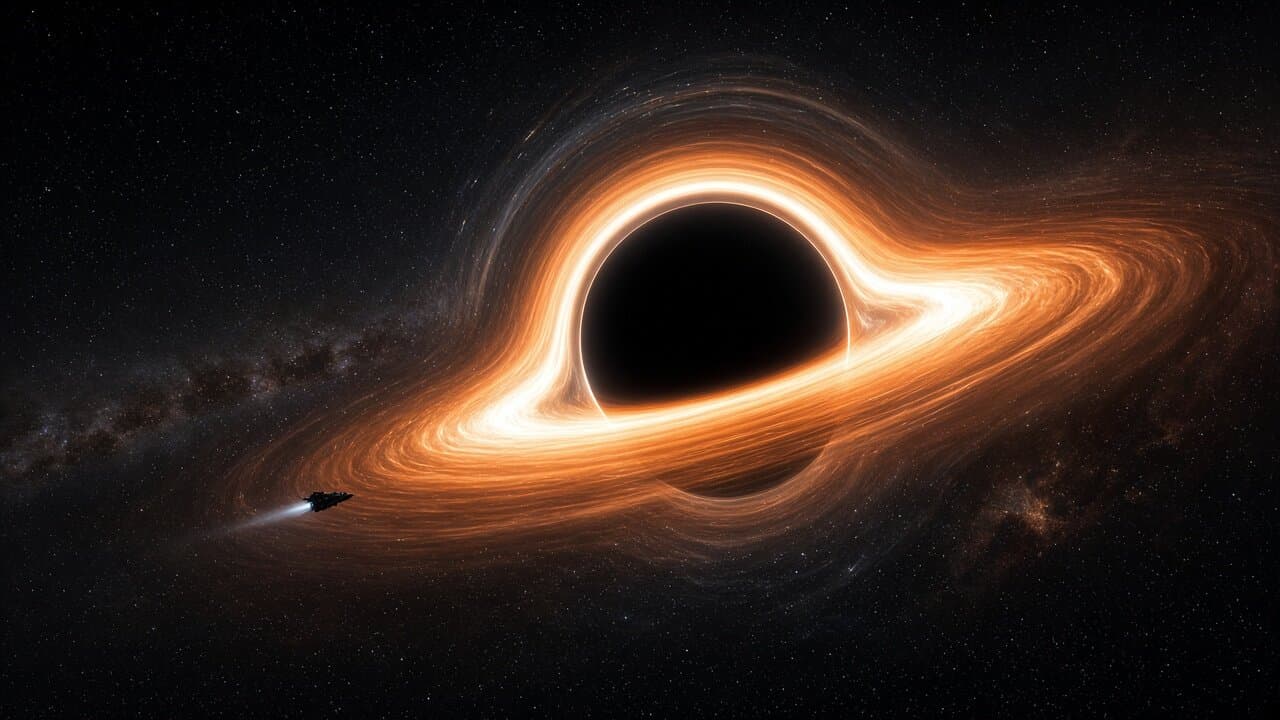
What happens if you fall into a black hole? Discover the event horizon, gravitational time dilation, spaghettification, and the difference between stellar-mass and supermassive black holes.
Earth is only the beginning. Beyond our planet lie billions of stars, distant galaxies, enormous cosmic structures, and an observable universe roughly 93 billion light-years across. But how big is the entire universe, what lies beyond what we can see, and will humanity ever reach another star?
Why do humans keep imagining aliens? The answer stretches from ancient Greek philosophers and the idea of infinite worlds to modern astronomy, exoplanet discoveries, and the search for extraterrestrial intelligence. Explore who first considered life beyond Earth, why the idea has endured for thousands of years, and what science actually knows today.
Imagine waking up to a world without sunlight. Earth would lose its warmth, plants would stop growing, ecosystems would begin collapsing, and humanity would face an extraordinary fight for survival.
Interstellar is more than a journey through space. Its real story is about time. Follow Cooper's journey from a collapsing Earth to Gargantua, the tesseract, and humanity's strange future.
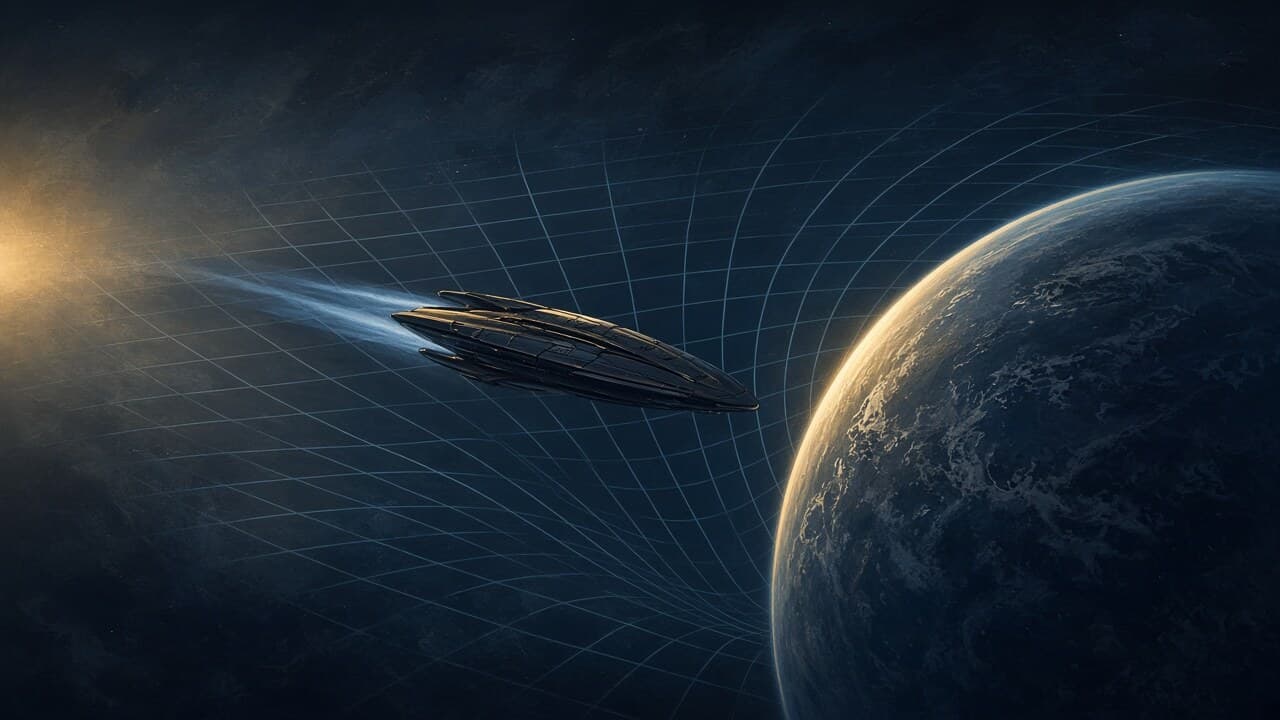
Time travel sounds like science fiction, but scientists have already measured something surprisingly close to it. Atomic clocks, airplanes, satellites and precision experiments have repeatedly shown that time can pass at different rates depending on motion and gravity.
We experience time as a journey from yesterday to tomorrow. But Einstein's relativity raises a strange possibility: the universe may not have one universal present at all. Could the future already be part of reality?
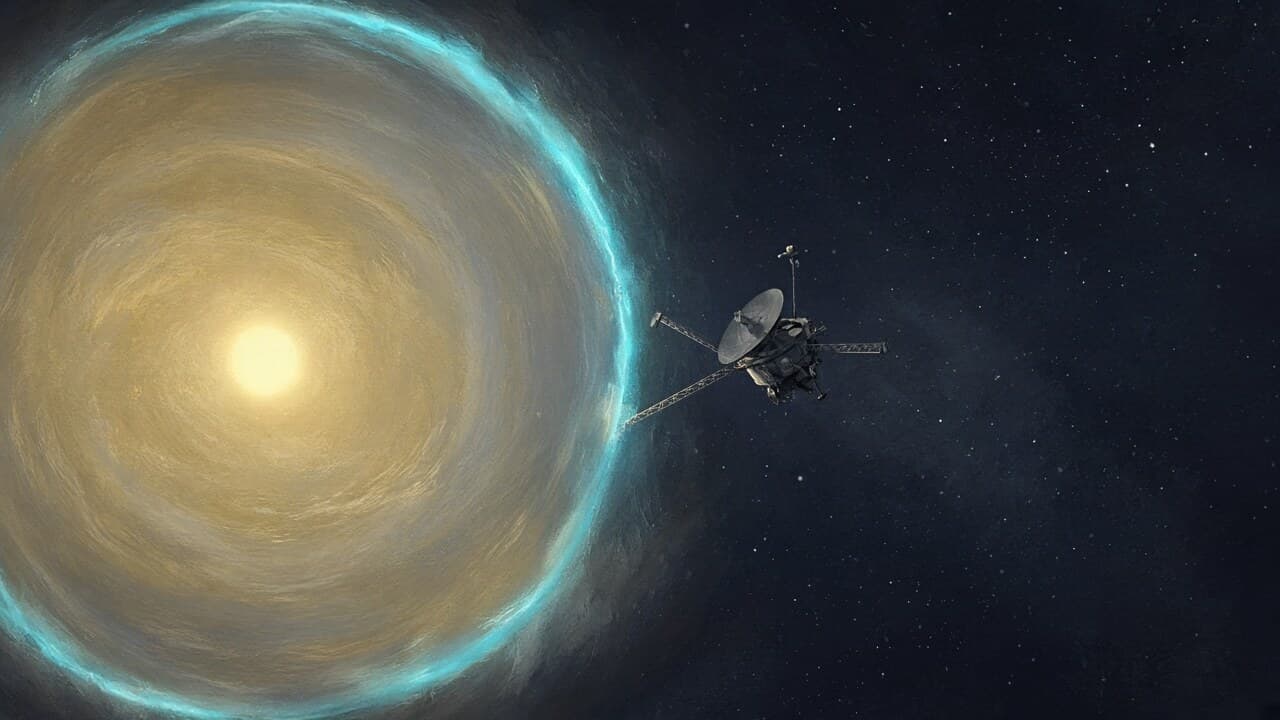
Voyager 2 spent more than 40 years traveling toward the edge of the Sun's influence. When it finally crossed into interstellar space, its instruments revealed a strange boundary, unexpected plasma conditions, and a transition far more complicated than a simple edge.
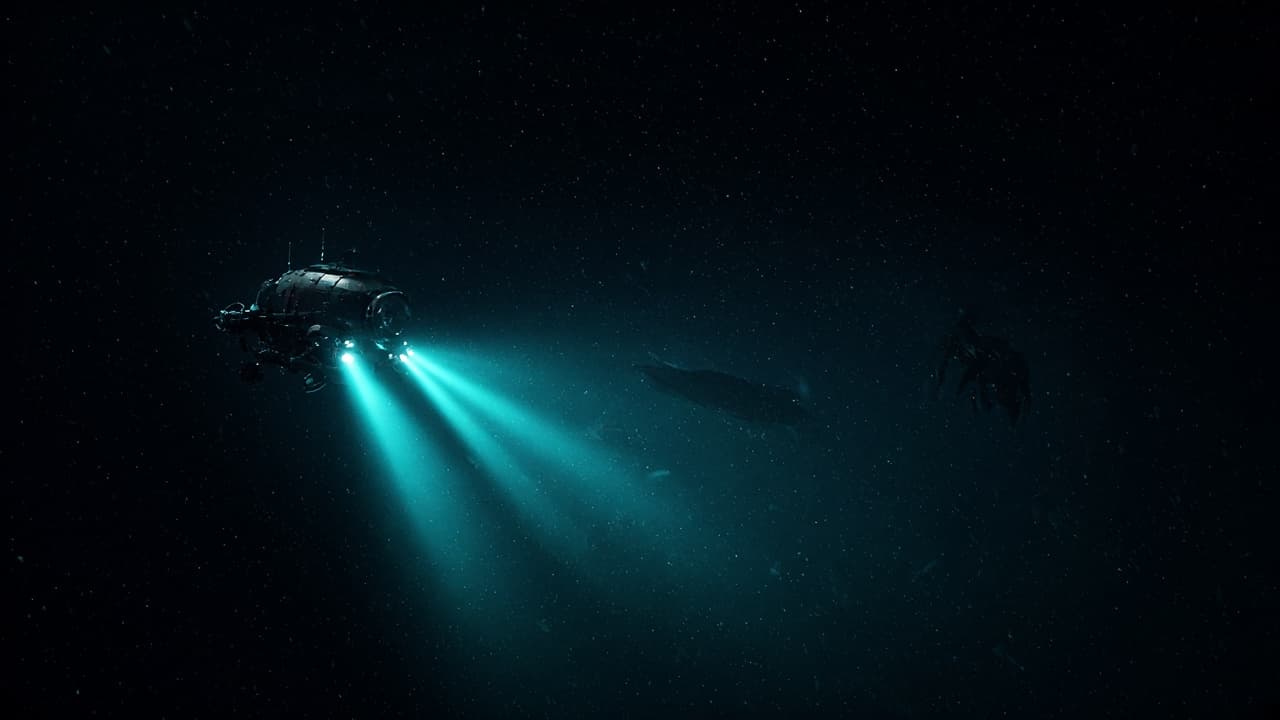
Scientists are searching Mars and distant worlds for signs of life. Meanwhile, Earth's deep ocean remains a world of darkness, crushing pressure, strange creatures and ecosystems we have barely seen.
Science fiction has imagined civilizations creating life on other worlds. Explore synthetic biology, extremophiles, planetary protection and the possibility of deliberately creating ecosystems beyond Earth.
Earth has never been a peaceful planet. Five major mass extinctions erased enormous portions of life, transformed ecosystems, and redirected evolution. Here is what happened — and which one may have been the most severe.
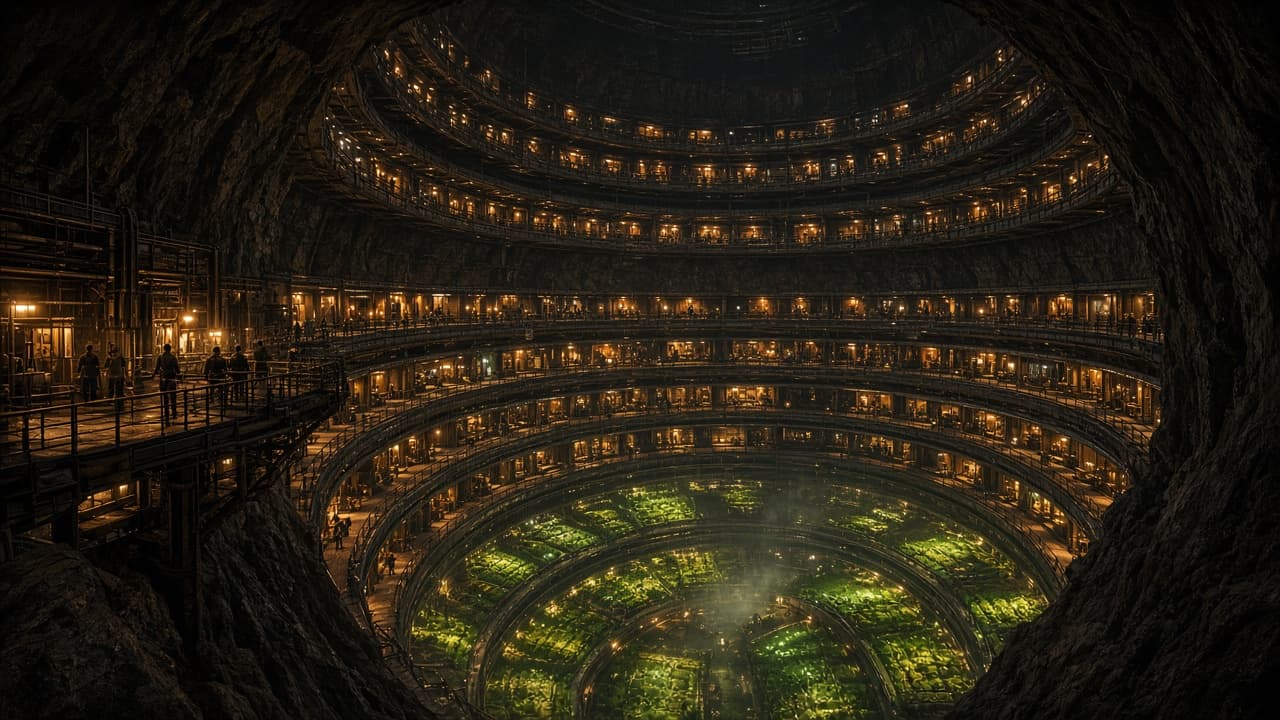
Apple TV+'s Silo imagines humanity surviving inside a vast underground structure. Real research into closed ecosystems, underground habitats and AI-controlled infrastructure is already exploring pieces of that idea.
HOPS-315 is giving astronomers a look at the moment when gas around a young star begins turning into the solid material that can eventually become planets.
Even a spacecraft at 20% of light speed would still face years of travel, deadly dust, and the chance that the nearest stars have nothing worth settling.
A short brief on space, science, AI, and the mysteries worth understanding — with the context that makes them make sense. No hot takes, no link dumps.
We'll only use this address for the brief. You can unsubscribe any time.