What if the most important journey in Interstellar was never through space—but through time?
At first glance, Interstellar looks like a story about astronauts searching for a new planet. But underneath the spaceships, wormholes and black holes is something much stranger: humanity is fighting an enemy that cannot be defeated with rockets or weapons. Time.
Cooper leaves Earth believing he may be gone for years. Instead, every major step of his journey separates him further from the people he loves. When he finally returns, his daughter Murph is no longer the little girl he left behind. She has become an old woman.
That is what makes the movie's timeline so powerful. Cooper travels only a fraction of his own lifetime, while decades pass for everyone else. And eventually, the mystery becomes even stranger: the future of humanity reaches backward through time to save its own past.
The story begins in a future where humanity has been pushed backward by environmental collapse. Dust storms are common, crops are failing, and agriculture has become the priority. Humanity is no longer dreaming about conquering space. It is trying to survive on the planet it already has.
Cooper, a former NASA pilot and engineer, has become a farmer. His old life of flying spacecraft seems to belong to another era. But strange gravitational anomalies begin appearing around his home, eventually leading Cooper and his daughter Murph toward a hidden NASA facility.
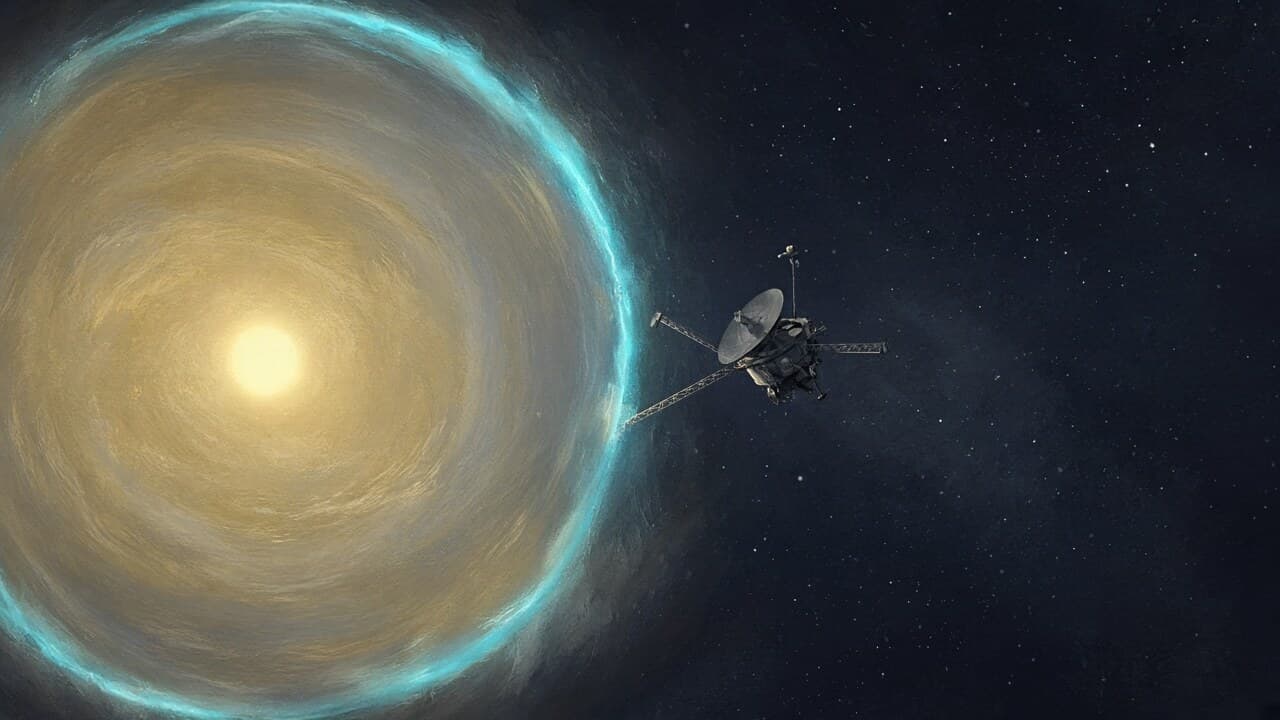
NASA has discovered something extraordinary near Saturn: a wormhole. Instead of requiring a conventional spacecraft to cross enormous distances through normal space, the wormhole provides a shortcut to another region of the universe.
Earlier probes have already been sent through it. Several potentially habitable worlds have been identified, giving humanity a desperate choice: remain on a dying Earth or gamble everything on worlds orbiting a distant black hole.
- Wormhole
- A hypothetical shortcut connecting distant regions of spacetime. Wormholes appear in certain solutions to general relativity, but no traversable wormhole has been observed in nature.
Cooper joins the Endurance mission with Brand, Romilly and Doyle. Their objective is brutally simple: investigate possible new homes for humanity and determine which world could support the next chapter of civilization.
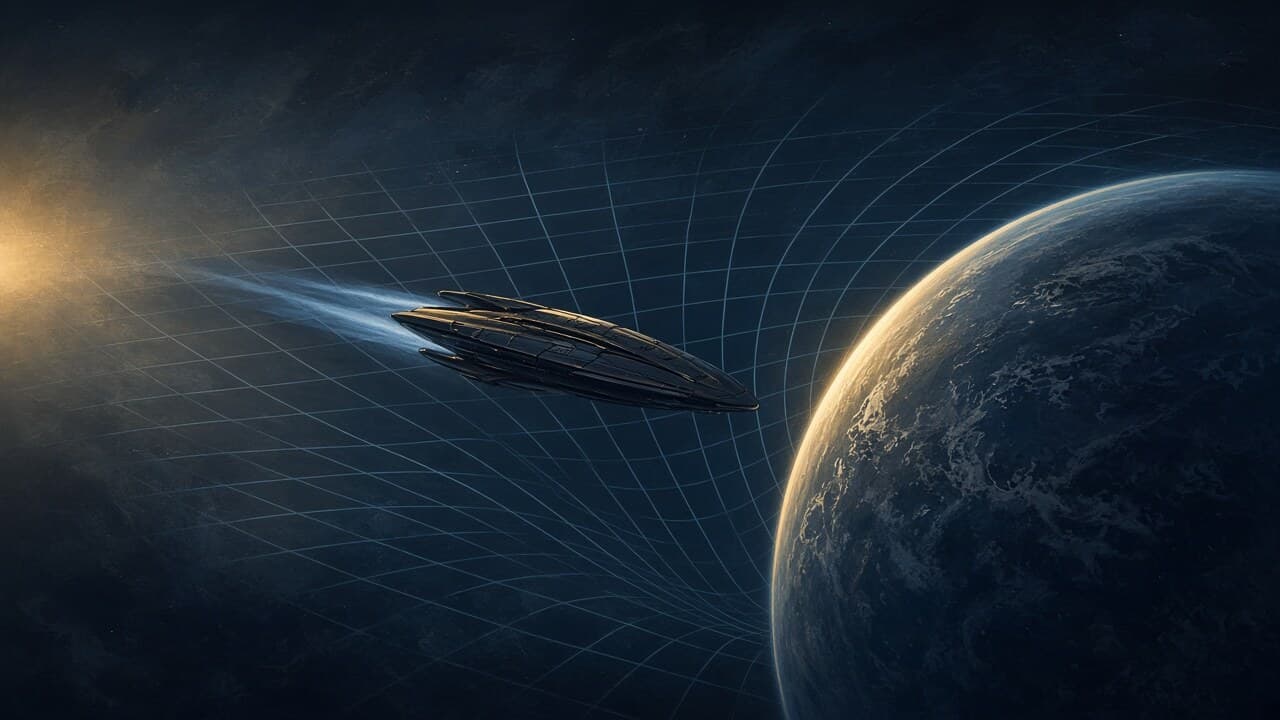
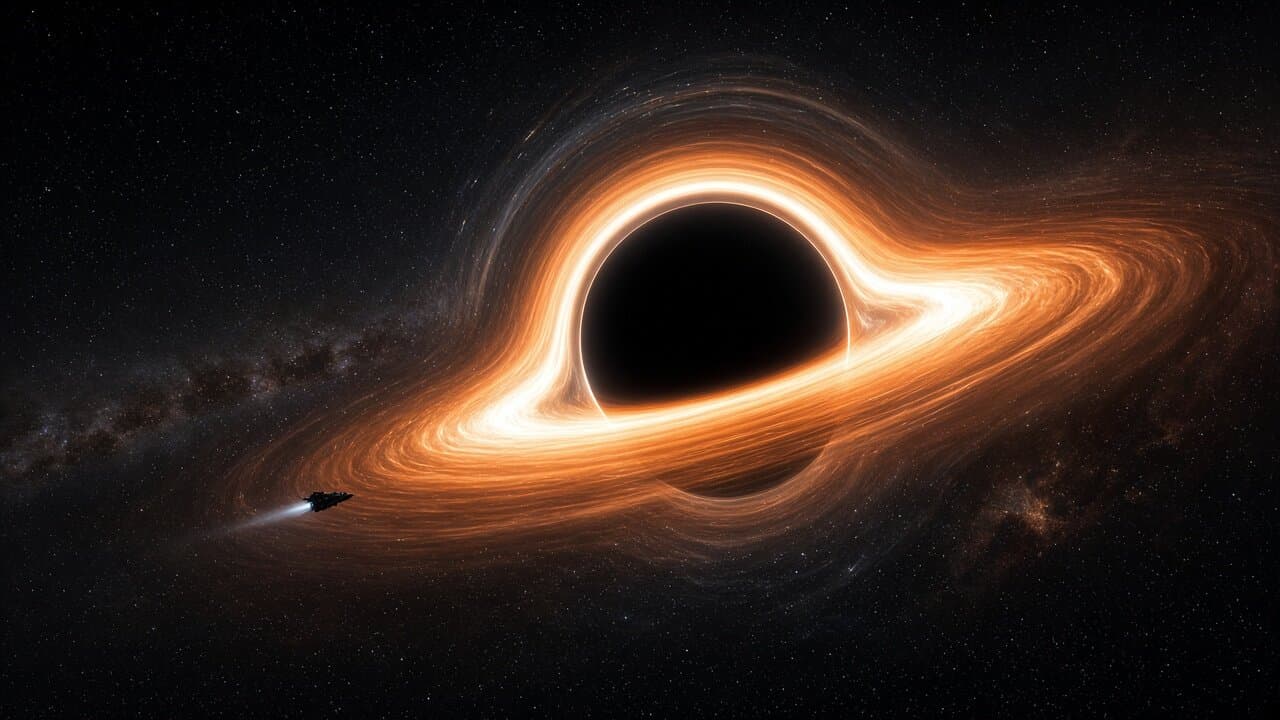
But there is a hidden cost. Cooper knows that travelling through space will also mean travelling through time. The closer the mission gets to the enormous black hole Gargantua, the more dramatically relativity will affect the crew.
That's relativity, folks.
The first major destination is Miller's planet, located extremely close to Gargantua. The planet appears promising, but its proximity to the black hole creates one of the most important consequences of relativity in the entire movie.
For the crew, only a short amount of time passes on the surface. For people far away from the black hole, years pass.
1 hour ≈ 7 years
Miller's planet time difference
Interstellar
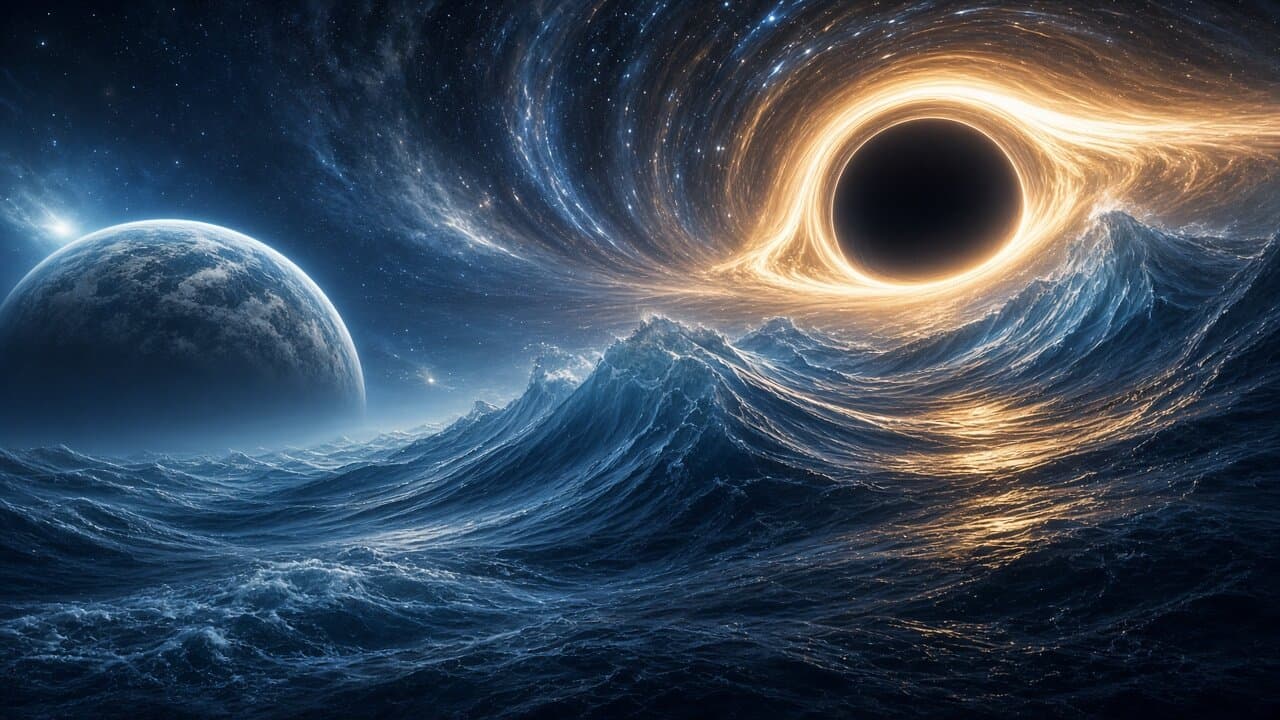
The consequences are devastating. What feels like a dangerous mission lasting only a few hours becomes decades of lost time for the people waiting back on Earth.
This is why Interstellar's greatest monster is not Gargantua itself. It is the clock.
When Cooper eventually receives the accumulated video messages from Earth, the emotional damage of relativity becomes impossible to ignore.
His children have grown up without him. Tom has become an adult. Murph, the daughter who once believed her father abandoned her, is now working with NASA and trying to solve the gravitational problem that could allow humanity to escape Earth.
Cooper has barely aged compared with the people he left behind. But emotionally, he has lost decades.
The crew next investigates the world of Dr. Mann, one of the astronauts who travelled ahead of them. His data initially makes the planet appear promising.
But the truth is darker. Mann has falsified aspects of his mission because he desperately wants to be rescued. His actions turn the expedition into a struggle not just against physics, but against fear, isolation and self-preservation.
Mann's storyline is important because Interstellar repeatedly asks the same question in different forms: what will humans do when survival is at stake?
After the disaster surrounding Mann's planet, Cooper and the remaining crew have limited options. They must choose between continuing toward Edmunds' planet or attempting another route that could potentially give humanity a future.
Cooper ultimately decides to sacrifice himself by using Gargantua's gravity to propel Brand's mission toward Edmunds' world.
To Cooper, this appears to be the end. He expects to fall into the black hole and disappear.
Instead of being destroyed immediately, Cooper and TARS survive long enough to enter the strange structure known as the tesseract.
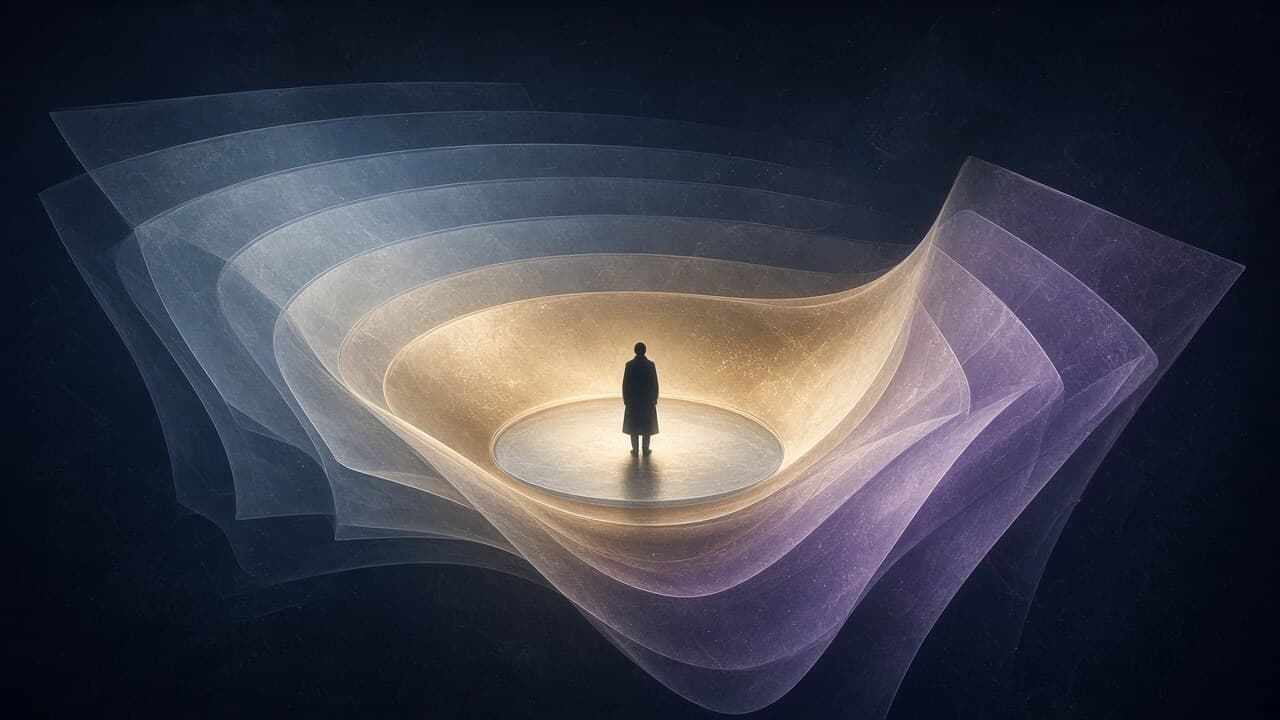
This is where Interstellar stops behaving like an ordinary space adventure. Cooper is no longer simply moving through space. He is experiencing time as though it were another physical dimension.
- Tesseract
- In the movie, the tesseract is a higher-dimensional structure that allows Cooper to perceive different moments of Murph's room simultaneously and interact with them through gravity.
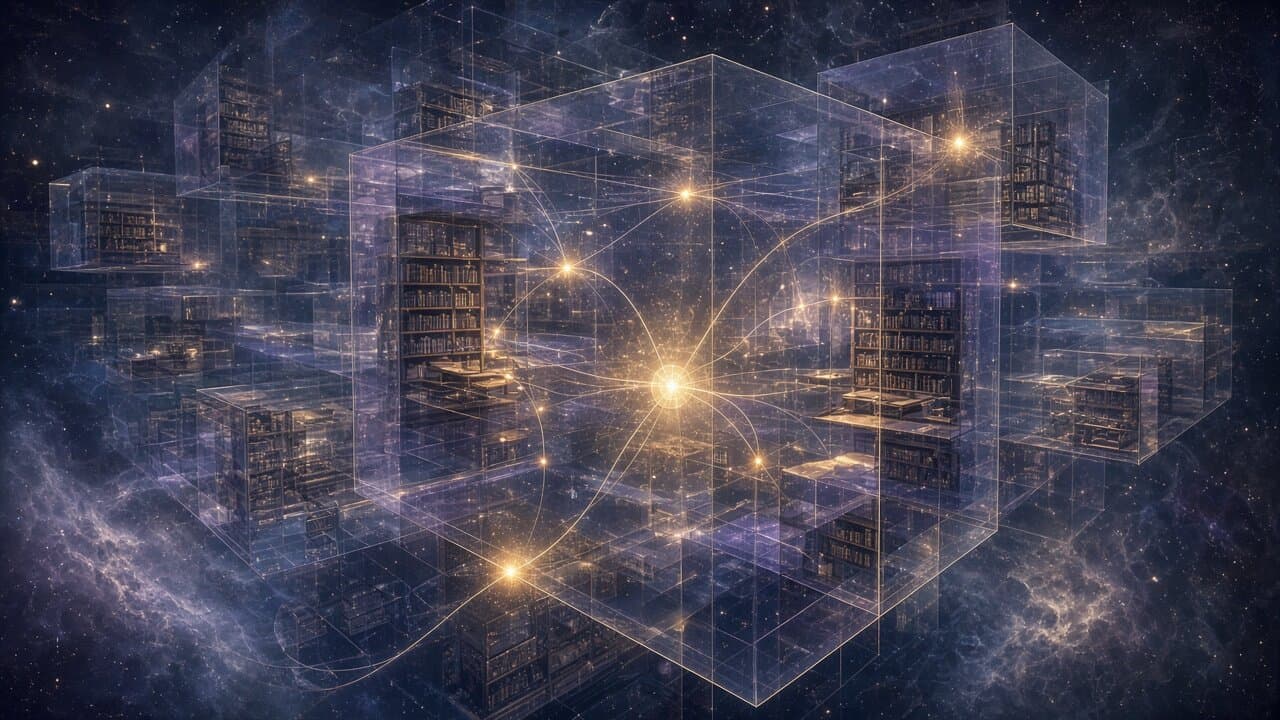
Earlier in the story, Murph believes that a mysterious force is haunting her room. Books fall from the shelf. Dust forms strange patterns. Something appears to be communicating with her.
Inside the tesseract, Cooper realizes the truth: he was the ghost.
The revelation transforms the beginning of the movie. The gravitational anomalies were not random supernatural events. Cooper was influencing Murph's room from a higher-dimensional structure.
| Moment | What Murph Sees | What Cooper Eventually Understands |
|---|---|---|
| Murph's childhood | Books and dust appear to move mysteriously | Cooper is manipulating gravity from the tesseract |
| NASA coordinates | A gravitational anomaly provides coordinates | Cooper sends the coordinates backward through time |
| The final message | Murph receives crucial data through her watch | Cooper uses gravity to communicate with her |
TARS has obtained critical quantum data from inside Gargantua. But Cooper cannot simply send a normal radio transmission back to Earth.
Instead, he uses gravity to communicate with Murph through the second hand of her watch. The pattern carries the information she needs.
Murph finally understands that the mysterious presence from her childhood was her father. She deciphers the information and uses it to complete the equation that allows humanity to escape Earth.
This is where Interstellar becomes a philosophical puzzle.
Future humanity creates or provides the higher-dimensional structure that allows Cooper to communicate with the past. Cooper then gives Murph the information needed to save humanity. Murph grows old, humanity survives, and future humans eventually become capable of creating the conditions that made Cooper's message possible.
There is no simple starting point in this chain. The future helps create the past that eventually produces the future.
Murph eventually solves the gravitational equation using the information Cooper sends from Gargantua. Humanity can now leave Earth instead of slowly dying on it.
The enormous space stations seen later in the film represent the consequence of that breakthrough. Humanity is no longer tied permanently to the surface of Earth.
Cooper eventually wakes aboard one of these stations and discovers something almost impossible to process: the little girl he left behind has lived an entire lifetime.
When Cooper sees Murph again, she is an elderly woman. Cooper, meanwhile, has aged far less because of his journey through extreme relativistic environments.
Their reunion is not a conventional happy ending. Cooper has missed almost all of Murph's life.
But Murph understands something important: her father did not abandon her. He was part of the reason she—and humanity—survived.
While Cooper is reunited with Murph, Brand has reached Edmunds' planet. The world appears suitable for human settlement, giving humanity a second chance.
Brand begins preparing the planet for humanity's future, with the Endurance available for the long-term effort of establishing a new civilization.
The final moments therefore point toward a remarkable possibility: Earth was not necessarily humanity's permanent home. It was the beginning of a much larger journey.
Cooper's Journey Through Time
Before the main mission
Earth enters ecological crisis
Dust storms, crop failures and social decline push humanity toward the edge of survival.
Cooper's childhood/family era
Cooper becomes a farmer
A former pilot lives with his family while the world loses much of its technological ambition.
Mission launch
NASA's hidden mission begins
Cooper joins the Endurance crew and travels toward Saturn.
Wormhole crossing
Humanity reaches another region of space
The crew enters the wormhole and begins investigating planets near Gargantua.
Miller's planet
Time becomes dramatically distorted
Extreme gravitational effects cause enormous differences between elapsed time for the crew and people farther from Gargantua.
Years later on Earth
Murph becomes a scientist
Decades pass on Earth while Cooper's journey continues.
Mann's planet
The mission nearly collapses
Dr. Mann's deception causes a catastrophic confrontation.
Gargantua
Cooper enters the black hole
Cooper sacrifices himself and enters the tesseract.
The tesseract
Cooper reaches across time
He manipulates gravity to communicate with Murph.
Murph's breakthrough
Humanity gains a way forward
Murph uses Cooper's message to solve the gravitational problem.
Humanity's future
Humans leave Earth
Human civilization survives and develops into a spacefaring society.
Cooper's return
Father and daughter meet again
Cooper finds Murph at the end of her life while he has experienced far less personal aging.
Final chapter
Brand begins humanity's new home
Brand reaches Edmunds' planet and begins preparing for humanity's future.
One of the interesting details in the timeline is that the dates do not produce a perfectly clean mathematical sequence. The film jumps over portions of the crew's long-distance journeys, and not every moment between major events is shown.
Some missing years can plausibly be attributed to journeys that happen off-screen, while other details remain open to interpretation—including possible discrepancies around the timing of the gravitational slingshot around Gargantua.
Interstellar's science is built around real concepts from physics, especially general relativity. Time really can pass at different rates depending on gravity and relative motion.
The extreme conditions around Gargantua, however, push these effects to extraordinary levels. The movie's specific scenario requires an enormous rotating black hole and a planet in an extremely unusual orbit.
The tesseract and communication across time belong much more firmly to the movie's speculative side. They are storytelling ideas inspired by higher-dimensional physics rather than technologies demonstrated by modern science.
| Concept | Status | Role in the Film |
|---|---|---|
| Time dilation | Established physics | Creates the enormous time difference near Gargantua |
| Black holes | Established astrophysical objects | Gargantua drives the story's extreme gravitational effects |
| Wormholes | Theoretical possibility | Provides the shortcut to distant space |
| Higher dimensions | Active theoretical physics, speculative here | Makes the tesseract possible within the movie |
| Communication across time | Not demonstrated technology | Allows Cooper to send information to Murph |
The movie could have been a conventional story about finding another planet. Instead, it makes distance emotional.
Every time Cooper travels farther from Earth, he loses more of the life he left behind. The crew can cross millions of kilometers, but they cannot simply cross decades of human experience.
That is why Murph's watch matters so much. It is not just a science-fiction device. It represents the one thing Cooper is desperately trying to preserve: a connection with his daughter.
The universe in Interstellar is enormous, but the story remains intensely personal.
Interstellar FAQ
Why does time move differently on Miller's planet?
Was Cooper really the ghost in Murph's room?
Who created the wormhole?
Does Cooper change the past?
Did Cooper actually travel through time?
What happens to Brand at the end?
Interstellar begins with humanity looking for a new planet. It ends with something much stranger: humanity has become advanced enough to manipulate the very geometry of spacetime.
Cooper's journey is therefore not simply a trip from Earth to another galaxy. It is a journey from one era of humanity to another. The little girl he promises to return to becomes the scientist who helps save civilization. The mysterious ghost in her bedroom turns out to be her father. And the people who appear to save humanity from the future are eventually revealed to be humanity itself.
That creates the movie's biggest paradox: if future humans needed Cooper to save the past, and the past had to survive in order to create those future humans, where did the loop actually begin?
Maybe that is the point. Interstellar does not ultimately ask whether humans can conquer the universe. It asks whether humanity can survive long enough to become the kind of civilization capable of changing its relationship with space and time.
And perhaps the most frightening idea in the entire movie is also the simplest: you can cross millions of kilometers, survive a black hole, and travel beyond the limits of ordinary human experience—but you still cannot get back the years you lost.
What the film gets right — and where it stays speculative
What works
- Uses real concepts from relativity as the foundation of the story.
- Creates a coherent emotional connection between time dilation and family separation.
- Explores black holes, wormholes and higher dimensions through a science-fiction narrative.
- Builds a self-consistent causal loop instead of relying on a simple alternate-timeline plot.
What doesn't
- Some exact dates and missing years cannot be reconstructed perfectly from the film.
- The tesseract and higher-dimensional communication remain speculative.
- Several extreme astrophysical conditions are required for the movie's particular version of time dilation.
- The film intentionally leaves some aspects of humanity's far future unexplained.