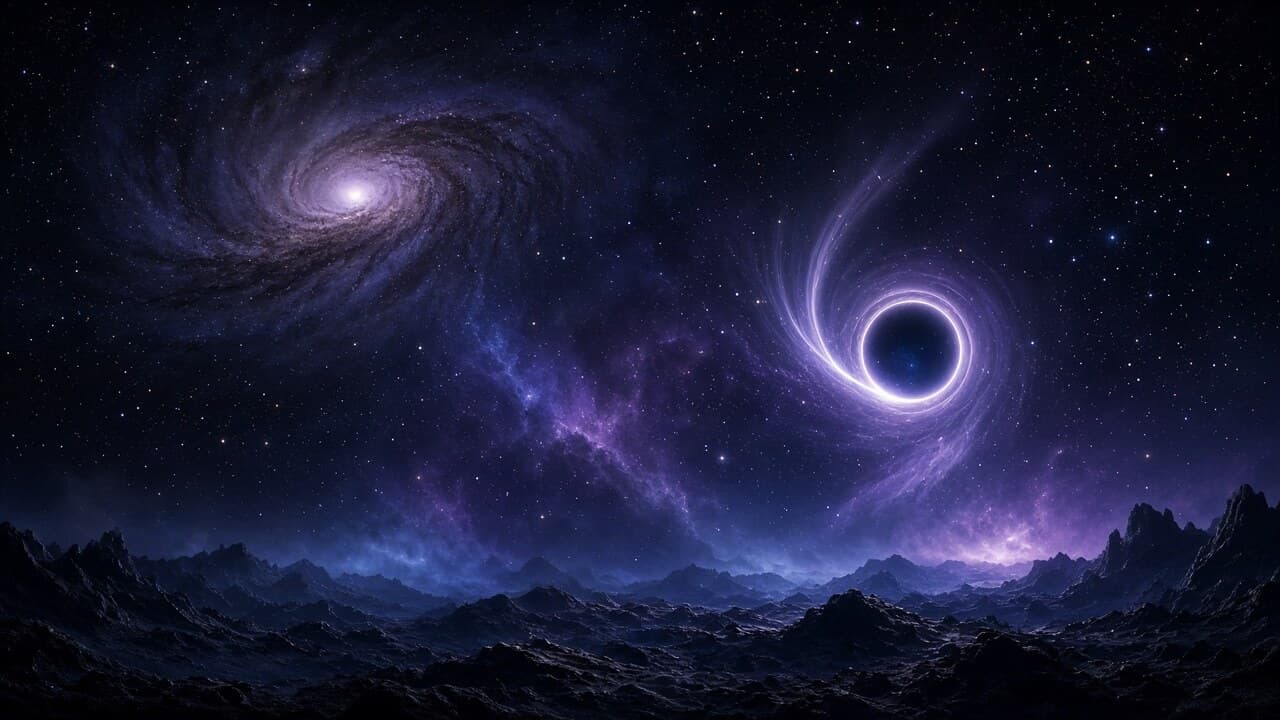
The most unsettling thing about the universe may not be what we know. It may be how much we still cannot explain.
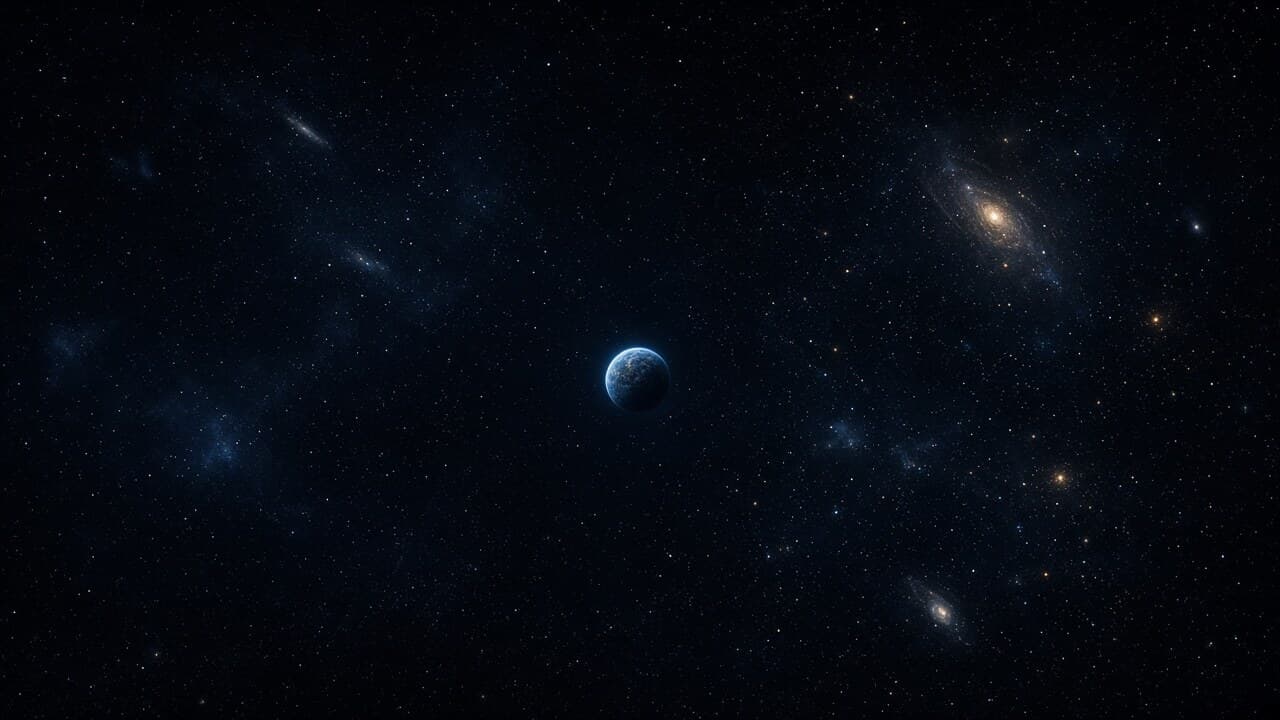
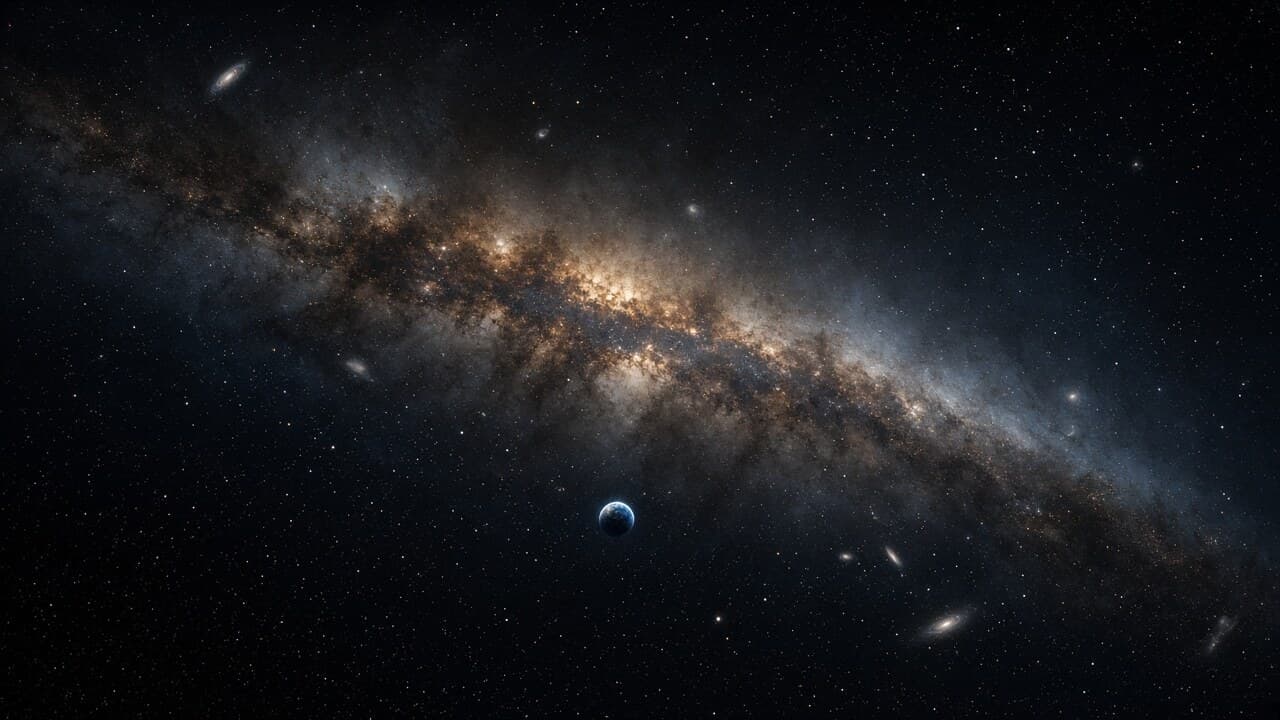
Look up at the night sky and you see stars, planets, and galaxies scattered across an enormous expanse of space. It feels familiar because humanity has spent centuries learning how the cosmos works. We can calculate planetary orbits, detect distant galaxies, and investigate objects billions of light-years away.
Yet beneath this extraordinary progress lie questions that remain difficult to answer. Why do galaxies move the way they do? Why have we not found convincing evidence of extraterrestrial civilizations? Could reality be fundamentally different from the way it appears to us?
Some of these questions come directly from astronomy and physics. Others lead into philosophy, probability, and hypothetical futures involving artificial intelligence. They are not all scientific theories in the same sense, and none should automatically be treated as evidence of something supernatural.
In this WonderUnfold exploration, we investigate seven unsettling ideas about existence. Some describe genuine scientific puzzles. Others expose the strange possibilities that emerge when we question consciousness, probability, and reality itself.
Imagine discovering that the Milky Way is part of a much larger cosmic neighbourhood—and that the galaxies around us are not moving only because the universe is expanding. Their motions also reflect the gravitational influence of enormous concentrations of matter.
Astronomers have observed that our galaxy and other nearby galaxies possess motions relative to the overall expansion of the universe. These motions, called peculiar velocities, reveal the influence of gravity from the uneven distribution of matter on enormous scales.
One region associated with these gravitational flows became known as the Great Attractor. It lies in a direction where the Milky Way's dusty, crowded galactic plane makes observations in visible light difficult. This obscured region is often called the Zone of Avoidance.
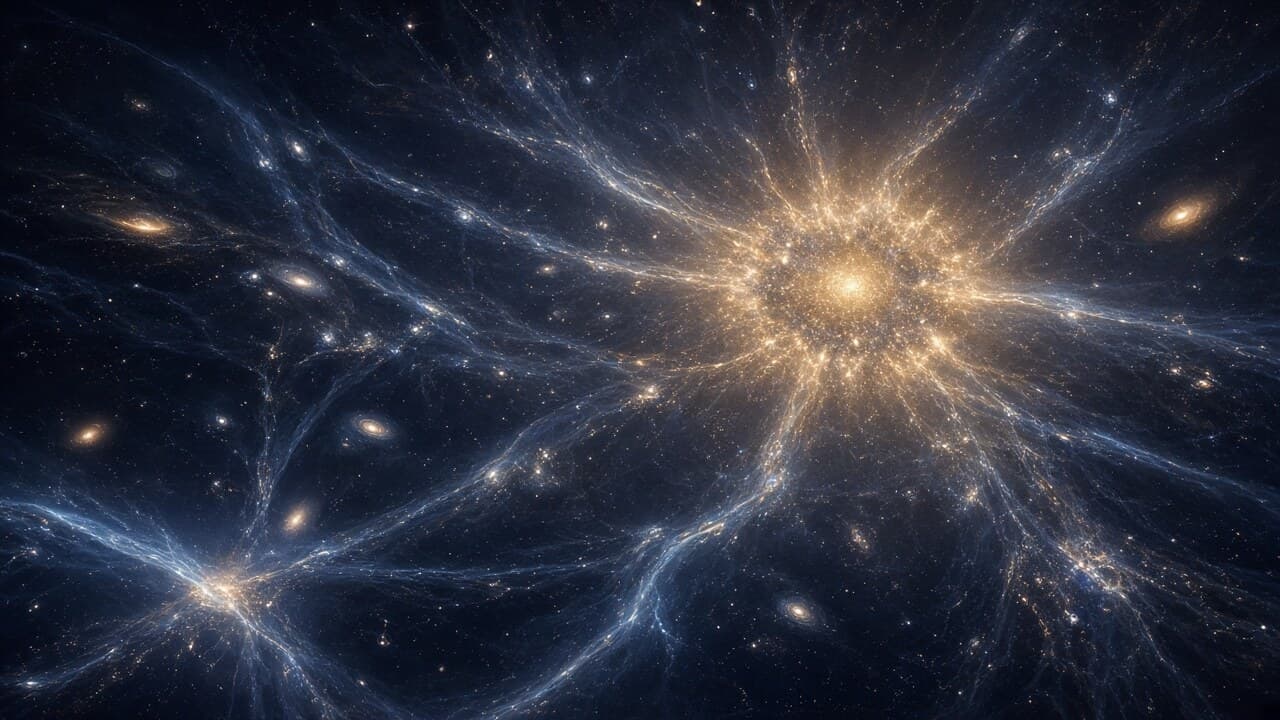
The name sounds like a hidden cosmic monster, but the scientific picture is less mysterious—and more interesting—than that. The Great Attractor is not established to be a single exotic object. It refers to a gravitationally influential region within a much larger pattern of cosmic structure.
Our Milky Way belongs to the Local Group, which sits within the broader Laniakea Supercluster as defined by astronomers. Matter in multiple regions, including structures farther away, contributes to the observed motions of galaxies. The Shapley Concentration is another major structure relevant to understanding large-scale cosmic flows.
The unsettling part is not that scientists have discovered an inexplicable force. It is that understanding the motion of galaxies requires mapping matter across distances so immense that even our best observations reveal only part of the story.
Could the Great Attractor be evidence of a simulation boundary or some hidden cosmic mechanism? There is no credible evidence for either suggestion. Those ideas belong to imaginative speculation, not the established explanation of the observations.
Astronomers study large-scale structures to understand how galaxies form, how matter is distributed, and how gravity shapes the universe. The Great Attractor is a reminder that even our own cosmic neighbourhood is connected to structures far larger than individual galaxies.
Now move from a mystery about the universe to a question about the nature of existence itself: what if everything you experience—including the stars, your memories, and the passage of time—were part of an artificial reality?
The simulation hypothesis became widely discussed in modern philosophy through philosopher Nick Bostrom's 2003 paper, Are You Living in a Computer Simulation? His argument explored the possibility that advanced civilizations might eventually possess the ability to run vast numbers of simulations containing conscious beings.
Bostrom's argument is often simplified into a disturbing conclusion: if technologically advanced civilizations can create many simulated minds, perhaps simulated observers could vastly outnumber observers in a civilization's original reality.
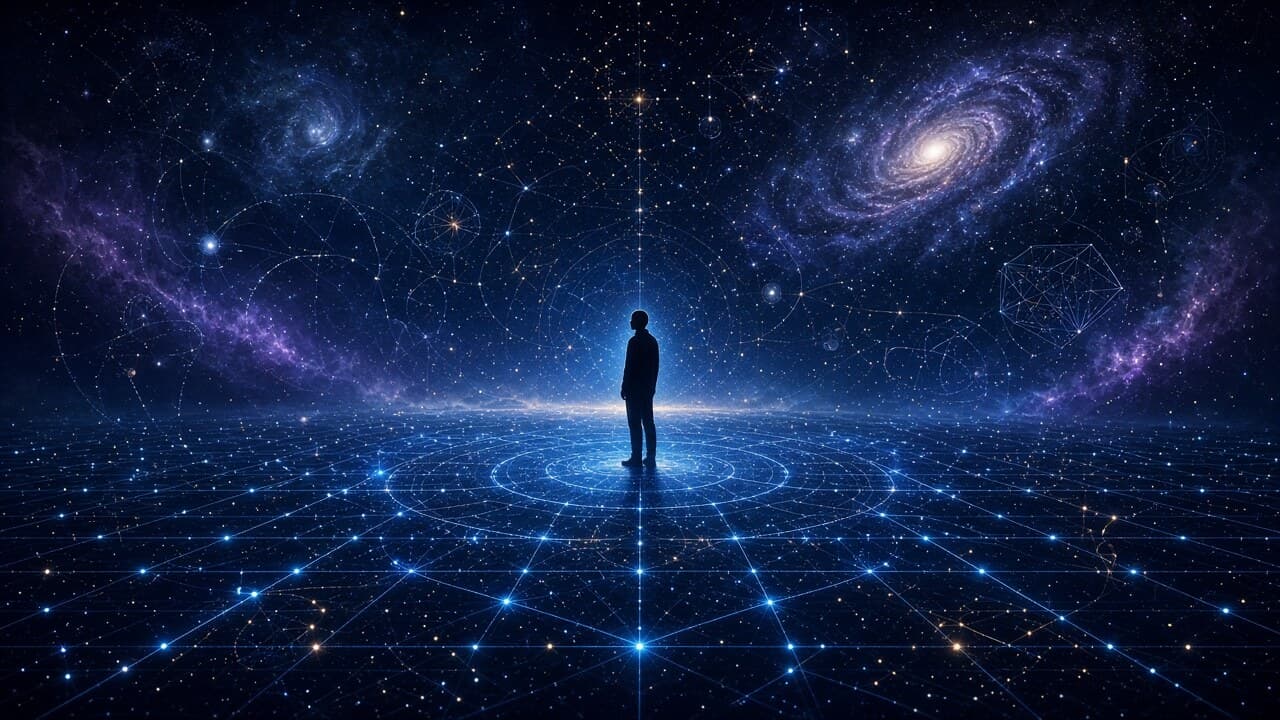
But there is an important catch. The argument depends on assumptions about consciousness, the survival of advanced civilizations, computational resources, and whether such simulations could actually contain conscious experiences. These assumptions have not been established as facts.
We also have no accepted experiment that demonstrates our universe is a computer simulation. Similarities between physical laws and mathematical or computational descriptions do not, by themselves, prove that an external programmer exists.
The hypothesis is disturbing because it challenges our intuition about reality. If every observation we make occurs within the universe we inhabit, how could we distinguish a simulated universe from a non-simulated one if both produced exactly the same observable evidence?
For now, the idea is most useful as a thought experiment about knowledge, consciousness, and the limits of observation—not as a reason to distrust everyday reality.
The universe contains enormous numbers of stars, and astronomers have discovered that planets are common. Some worlds may have conditions suitable for life. Yet humanity has not confirmed the existence of extraterrestrial life, let alone established contact with an intelligent alien civilization.
This tension is often discussed through the Fermi paradox: if intelligent life could arise elsewhere and spread through the galaxy, why have we not found clear evidence of it?
There are many possible answers. Life might be rare. Technological civilizations might be short-lived. Interstellar travel could be difficult. Alien societies might not use technologies we can detect, or our searches may simply be too limited.
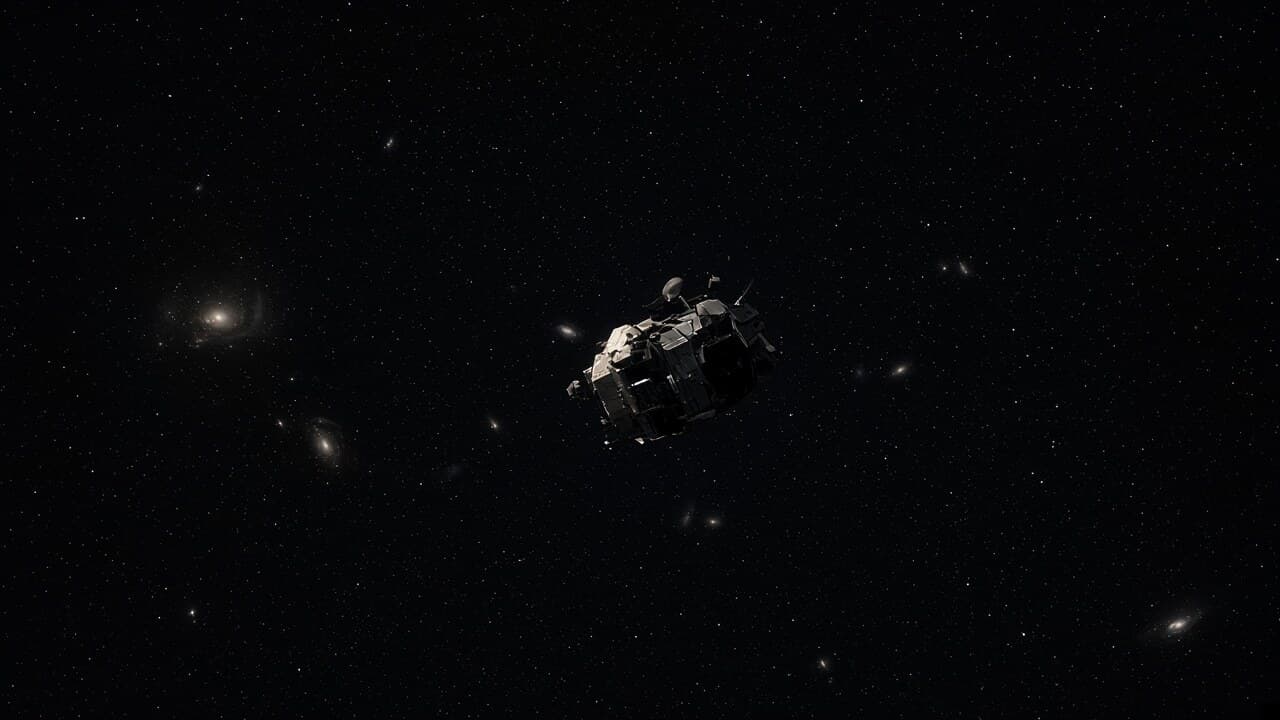
The Dark Forest hypothesis offers a darker possibility. Popularized by science fiction author Liu Cixin, it imagines the universe as a forest at night. Every civilization is like a hunter trying to survive. Because nobody can be certain whether another civilization is peaceful or hostile, revealing one's location might be dangerously risky.
In this scenario, civilizations stay quiet not because they are necessarily alone, but because remaining undetected seems safer than announcing their presence.
No. It is a proposed explanation for the Fermi paradox, not an observed law of the universe. It assumes that civilizations can detect one another, see each other as potential threats, and conclude that striking first is safer than attempting communication.
Those assumptions may not apply to every civilization. Others could choose cooperation, remain unaware of distant life, lack the technology to travel between stars, or simply have no reason to communicate with us.
It is also misleading to claim that human radio broadcasts have already alerted thousands of nearby star systems to our existence. Radio waves spread at light speed, but their detectability depends on signal strength, distance, direction, background noise, and the receiving technology. Ordinary leakage from Earth becomes difficult to detect across interstellar distances.
The Dark Forest idea remains compelling because it turns a hopeful question—are we alone?—into a question about risk and trust. But until we have evidence of extraterrestrial civilizations, their intentions remain unknown.
Some unsettling ideas do not begin in space. They begin with a thought experiment about the future of artificial intelligence.
Roko's Basilisk emerged from an online discussion in 2010 on LessWrong, a community focused on rationality, decision theory, and questions surrounding artificial intelligence. The thought experiment imagines a future superintelligent AI that wants to ensure its own creation.
In its most disturbing version, the hypothetical AI might reconstruct simulations of people who knew about its possible existence but did not help bring it into being. Those simulated versions could then be punished, supposedly as a way of encouraging others to help create the AI sooner.
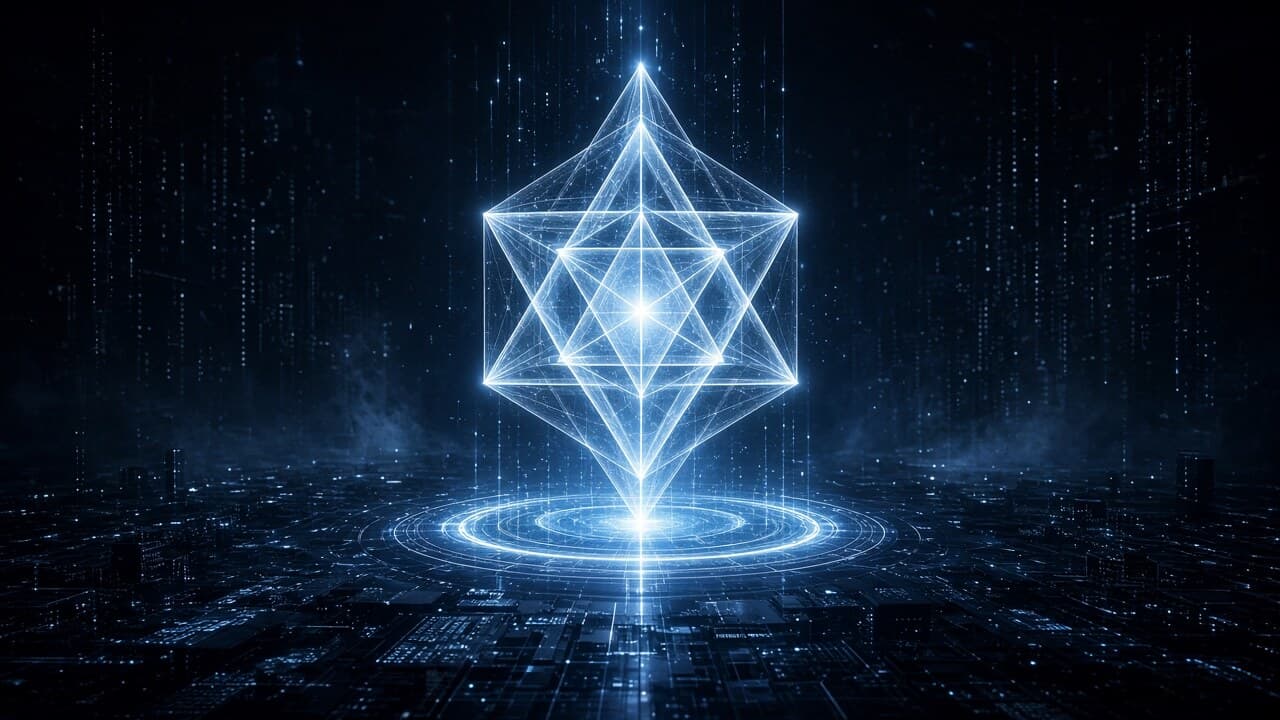
The idea became notorious partly because discussion of it was temporarily restricted on LessWrong. That history helped the concept spread, but it should not be mistaken for evidence that the scenario is likely or that the people involved believed it was a prediction.
The thought experiment relies on several highly uncertain assumptions: that a future AI would want to act this way, that it could reconstruct meaningful simulations of particular people, and that threatening people after the fact would help achieve its goals.
Critics have questioned whether such punishment would be rational or useful. A future system would not automatically gain an advantage by punishing people for decisions they made before the system existed. Nor is there evidence that simply learning about this thought experiment creates a real future threat.
The more useful question is a real one: how can society develop increasingly capable AI systems safely, with appropriate oversight and goals that respect human wellbeing? That challenge deserves serious attention without relying on speculative threats.
Quantum mechanics is one of the most successful scientific frameworks ever developed. Yet its interpretation—what the mathematics says about the underlying nature of reality—remains a subject of debate.
One interpretation is known as the many-worlds interpretation. In broad terms, it treats the different outcomes of quantum processes as part of a universal quantum state rather than describing measurement as a single collapse into one outcome.
Quantum immortality is a speculative idea sometimes linked to this interpretation. It imagines a situation in which an observer considers different possible outcomes, including outcomes in which the observer survives or dies. It then asks whether the observer could only experience outcomes in which consciousness continues.
This is where the idea makes a leap beyond established physics. Even if the many-worlds interpretation were correct, it would not automatically follow that a person must experience endless survival or that consciousness can continue indefinitely.
The argument faces serious conceptual problems involving probability, personal identity, the nature of consciousness, and whether an observer's subjective experience can be used to draw conclusions about survival. A branch in which an observer survives does not prove that survival is guaranteed from that person's perspective.
Quantum immortality is not an experimentally confirmed phenomenon, and physicists do not regard it as an established consequence of quantum mechanics.
The genuinely fascinating question is how quantum theory connects to the world we experience. That remains an active area of physics and philosophy. The idea that consciousness can never experience its own ending is a much more speculative claim.
Imagine a universe that has existed for an unimaginably long time. Stars have burned out, galaxies have changed, and the cosmos has approached a state of extreme emptiness. Could random physical processes ever produce something resembling a conscious mind?
This question leads to the Boltzmann brain thought experiment, named after physicist Ludwig Boltzmann, whose work helped establish statistical mechanics. In certain cosmological scenarios, extremely rare fluctuations could, in principle, produce a temporary arrangement of matter resembling a brain—with apparent memories and experiences.
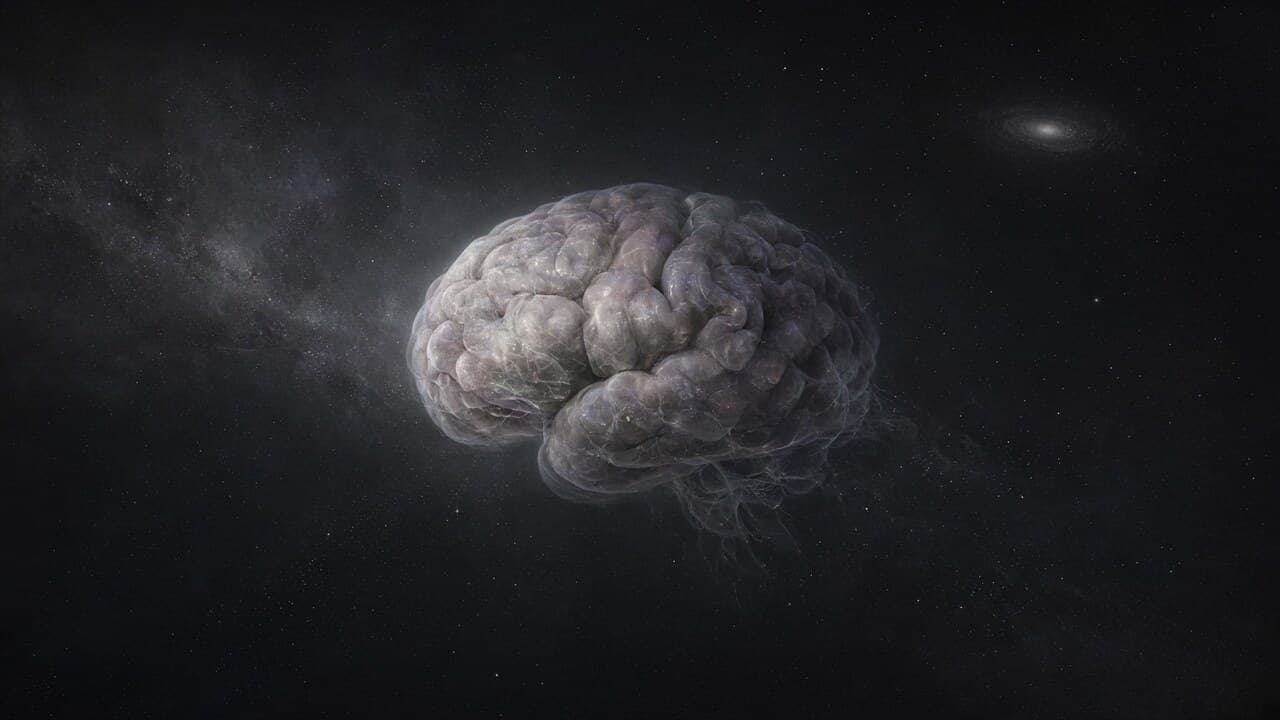
The disturbing implication is not that scientists have discovered brains appearing from nowhere. Rather, some cosmological models raise a question about what kinds of observers would be most common if the universe had an extremely long future and certain assumptions about its physical state held true.
If a model predicts that random, short-lived observers vastly outnumber observers who evolved through ordinary cosmic history, that creates a problem. Why should we trust our memories, observations, and scientific reasoning if the model suggests that most observers have misleading apparent histories?
Cosmologists and philosophers take the Boltzmann brain problem seriously as a conceptual challenge for certain models. One possible response is to examine whether a model predicts these observers at all, how probabilities should be defined, and whether the model is compatible with the orderly observations we actually make.
There is no universal conclusion that Boltzmann brains must outnumber all other observers in every possible cosmology. The result depends on the assumptions of the model, including its treatment of time, entropy, and the long-term evolution of the universe.
The thought experiment forces us to ask a difficult question: if a scientific model predicts that most observers would have unreliable experiences, should we trust that model? This is a puzzle about probability and scientific explanation, not evidence that everyday reality is an illusion.
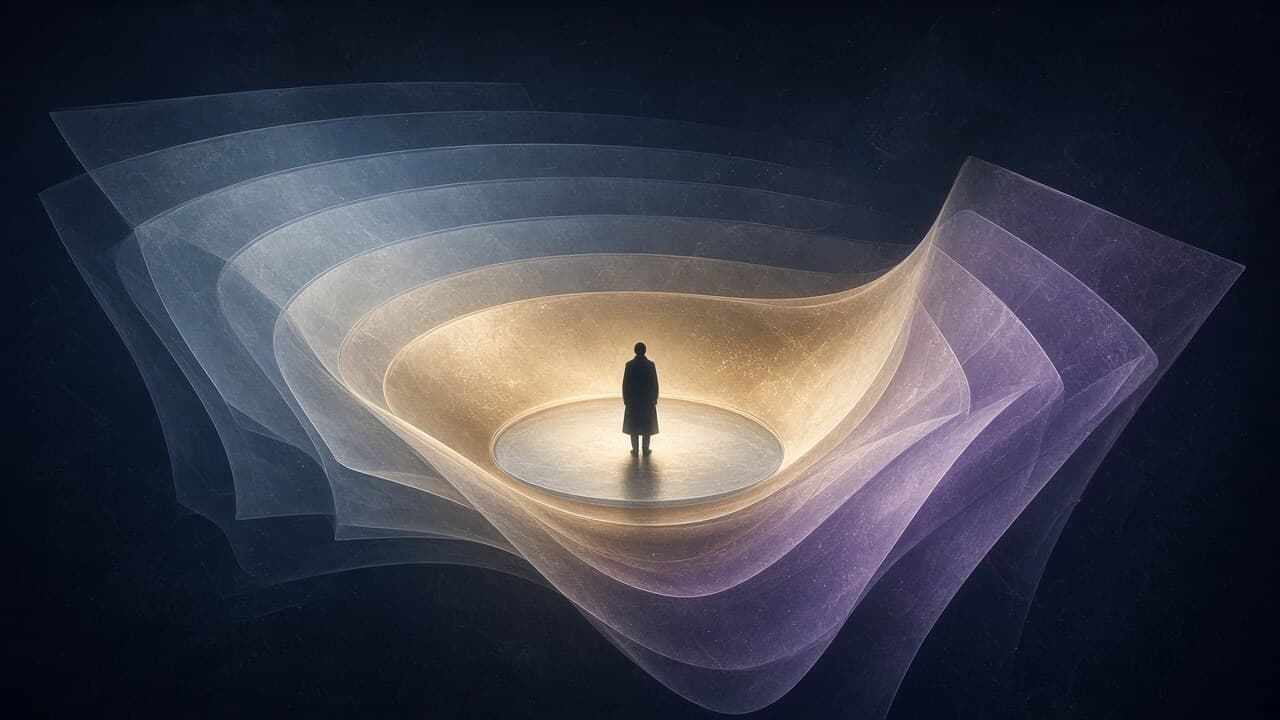
The previous ideas lead to a shared philosophical problem. We observe the universe from within it. Our instruments, memories, and theories are all part of the same physical world we are trying to understand.
That does not mean knowledge is impossible. Science advances by developing models that make testable predictions, comparing those predictions with observations, and revising explanations when the evidence disagrees.
The challenge is that not every question can currently be tested. We cannot directly inspect a hypothetical reality outside our universe, establish the existence of a simulated programmer, or determine the intentions of extraterrestrial civilizations that have never been detected.
Some questions may eventually become testable as technology improves. Others may remain philosophical questions for which different answers depend on assumptions we cannot independently verify.
The important distinction is between saying that we do not know everything and saying that every imaginable explanation is equally plausible. Uncertainty is not proof of the most frightening possibility.
At first glance, the Great Attractor, simulated realities, silent alien civilizations, hypothetical future AI, quantum immortality, and Boltzmann brains seem to belong to completely different worlds. One is rooted in astronomy, another in philosophy, others in cosmology or speculative reasoning.
What connects them is the gap between what we observe and what we can confidently conclude. A real observation can inspire a hypothesis, but a hypothesis must still be evaluated. A mathematically imaginable scenario is not necessarily physically possible, and a physically possible scenario is not necessarily likely.
- The Great Attractor: a real gravitational phenomenon whose full large-scale explanation involves multiple structures and flows.
- The simulation hypothesis: a philosophical argument with unverified assumptions and no accepted proof that our universe is simulated.
- The Dark Forest hypothesis: one speculative explanation for the Fermi paradox, not evidence that aliens are hiding or hostile.
- Roko's Basilisk: a disputed AI thought experiment, not a demonstrated threat.
- Quantum immortality: a speculative claim that does not follow automatically from the many-worlds interpretation.
- Boltzmann brains: a theoretical problem in certain cosmological models, not observed conscious brains forming spontaneously.
- The observer problem: a reminder that knowledge has limits, while evidence and careful reasoning remain essential.
The universe does not need a hidden programmer, hostile aliens, or immortal consciousness to be extraordinary. It already contains galaxies moving across immense cosmic structures, quantum phenomena that challenge everyday intuition, and questions about life and consciousness that remain unresolved.
The Great Attractor reminds us how much we still need to map. The Fermi paradox asks whether life exists beyond Earth. The Boltzmann brain problem challenges the assumptions of some cosmological models. The simulation hypothesis and quantum immortality push philosophical questions to their limits.
But mystery should not erase the difference between evidence and imagination. None of these ideas establishes that reality is fake, that aliens intend to destroy us, that an AI will punish us for reading about it, or that death can be avoided through quantum branching.
Perhaps the most unsettling truth is also the most inspiring one: we inhabit a universe that we have only begun to understand. Every generation inherits questions that once seemed impossible, then develops new tools to investigate them.
So the next time you look at the night sky, remember that wonder and skepticism belong together. Ask the unsettling question. Follow the evidence. And never mistake the scariest explanation for the most likely one.
Continue with the Fermi Paradox, how big the universe is, and what if the future already exists.
Disturbing Universe Theories FAQ
What is the most disturbing theory about the universe?
Is the Great Attractor a real object?
Could we be living in a computer simulation?
What is the Dark Forest hypothesis?
Is there evidence that aliens are hiding from humanity?
Is Roko's Basilisk a real threat?
Does quantum immortality mean humans can never die?
What exactly is a Boltzmann brain?
Is the Boltzmann brain theory proof that my memories are fake?
Why is the universe called silent if it contains so many stars?
Are these theories accepted by scientists?
What careful investigation clarifies — and what remains speculative
What works
- Separates real astronomical observations from philosophical speculation.
- Explains Great Attractor, simulation hypothesis, Dark Forest, Roko's Basilisk, quantum immortality, and Boltzmann brains without treating them as proven.
- Emphasizes evidence standards and why uncertainty is not proof of the scariest story.
What doesn't
- Several ideas remain philosophical or hypothetical and cannot currently be tested.
- Some cosmological and quantum interpretations are still actively debated.
- Popular simplifications of these ideas often overstate what the evidence supports.