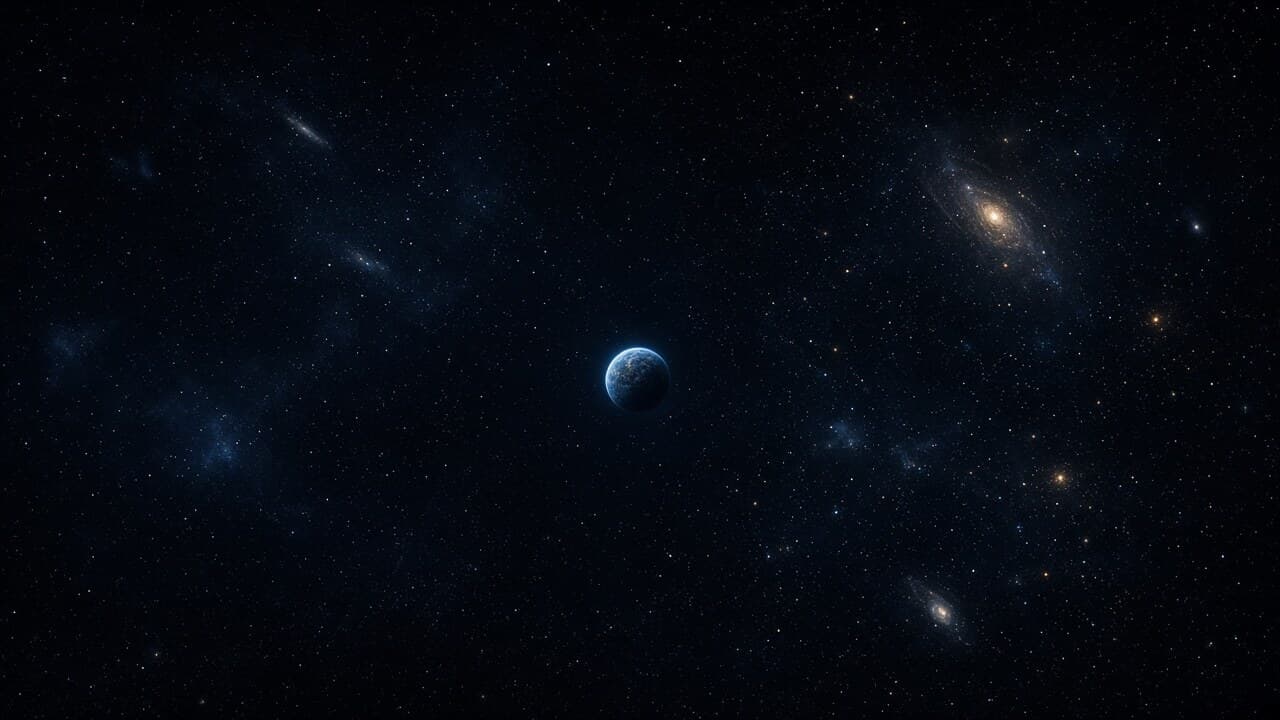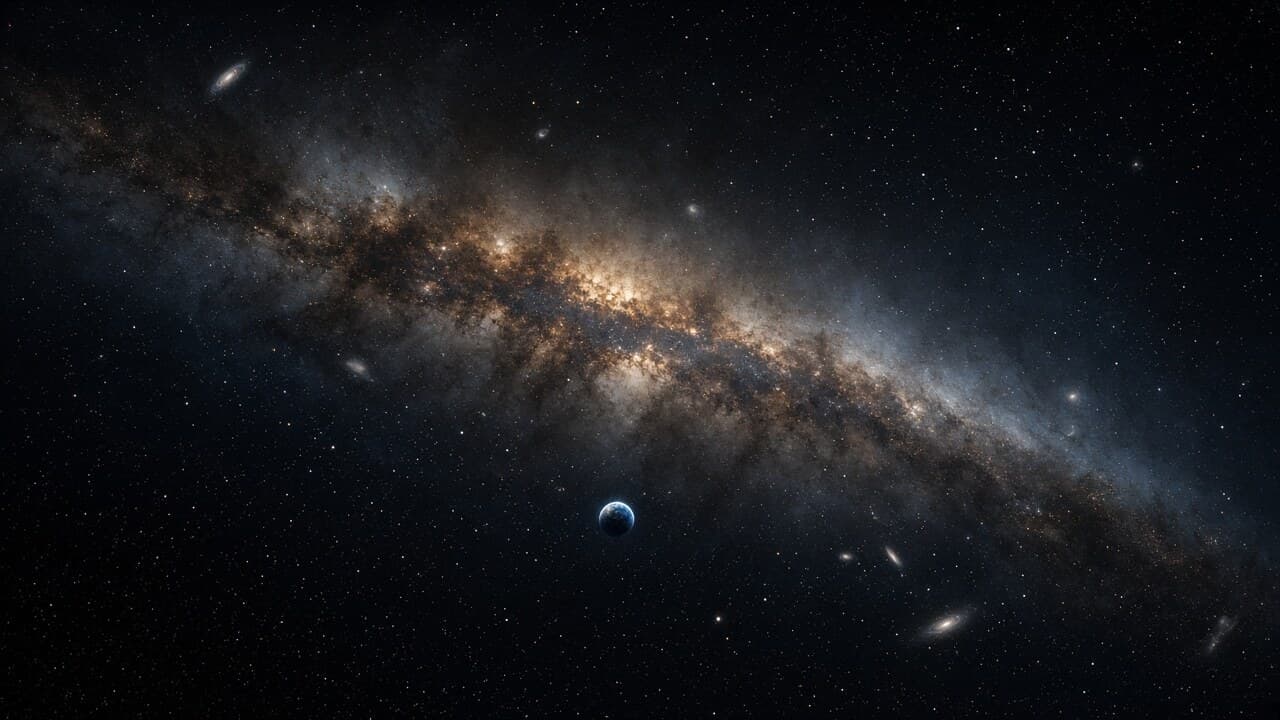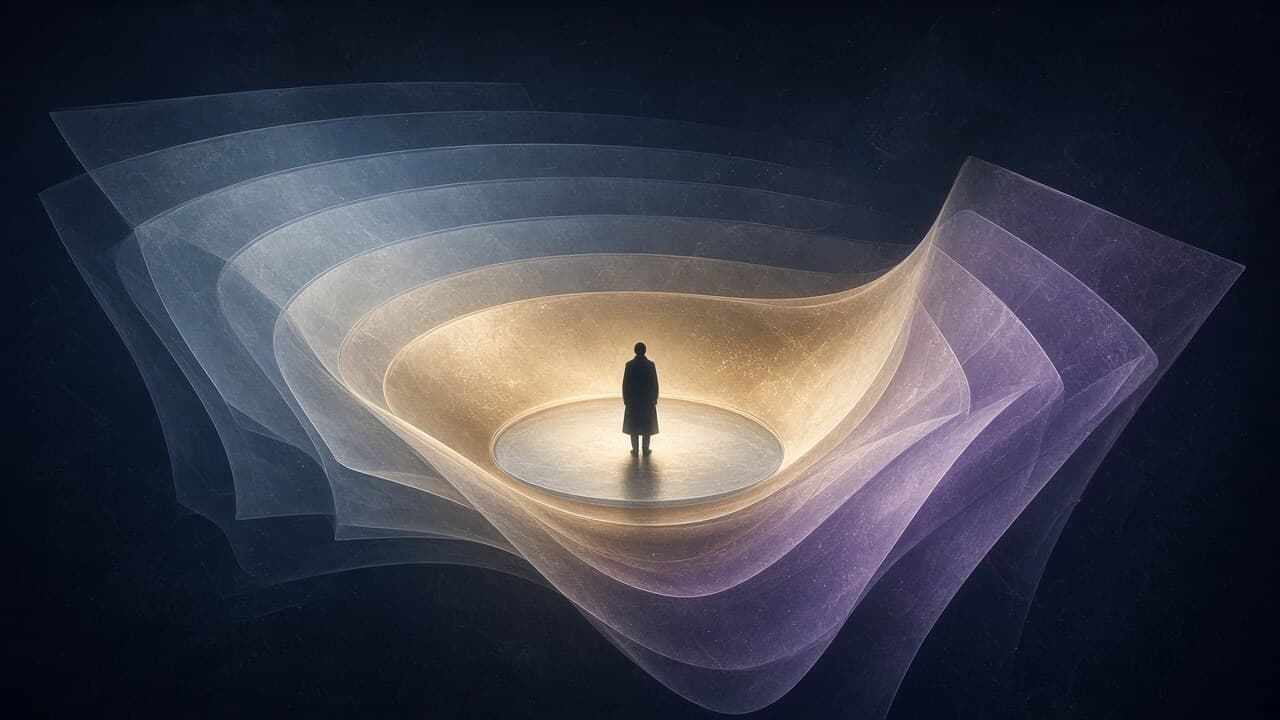
Imagine looking up at the night sky and discovering that every star, every distant galaxy, and every planet belongs to a universe where humanity is completely alone. No alien civilizations. No distant voices. No other intelligent beings asking the same questions we ask. Just us.
At first, the idea seems almost impossible. The universe is so enormous that our planet appears insignificant by comparison. There are countless stars, and astronomers have discovered thousands of planets beyond our solar system. Surely, somewhere among all those worlds, another civilization must have emerged.
But there is a difference between a possibility and a discovery. So far, Earth is the only world on which we have confirmed life, and we have not confirmed the existence of an extraterrestrial intelligent civilization.
Now imagine that this silence is not temporary. Imagine that life is exceptionally rare, that complex intelligence almost never evolves, or that civilizations disappear before they can communicate across the stars. What if the universe is not empty, but humanity is the only species capable of wondering whether it is alone?
This possibility changes how we think about our existence, our future, and our responsibility to protect our planet. It also leads to one of the most unsettling questions in astronomy: if the universe has had so much time and so many opportunities to produce intelligent life, why do we have no confirmed evidence of anyone else?
Let's explore what science can tell us, what remains unknown, and what the consequences would be if Earth really were the universe's only home for intelligent life.
Begin with a simple thought experiment. Look at the night sky. Every point of light you see is part of a universe that extends far beyond the limits of human vision. Some stars have planets. Some of those planets may have conditions suitable for liquid water. And some may have environments that are completely unlike anything on Earth.
Astronomers have confirmed thousands of exoplanets—worlds orbiting stars beyond our Sun. The discoveries show that planets are not unusual cosmic accidents. Planetary systems are a common outcome of star formation.
Yet a planet is not the same thing as a living planet. A potentially habitable world is not necessarily inhabited, and a world with life would not automatically produce intelligent beings capable of building telescopes or sending radio signals.
This is where our intuition can mislead us. A huge number of opportunities may make extraterrestrial intelligence seem inevitable, but the answer also depends on probabilities we barely understand. If one of the necessary steps is extraordinarily unlikely, even an enormous universe might produce very few technological civilizations.
We know that life emerged on Earth. We do not yet know how often the same transition happens elsewhere. We know that intelligence evolved here. We do not know whether human-level intelligence is a common evolutionary outcome or an exceptionally rare one.
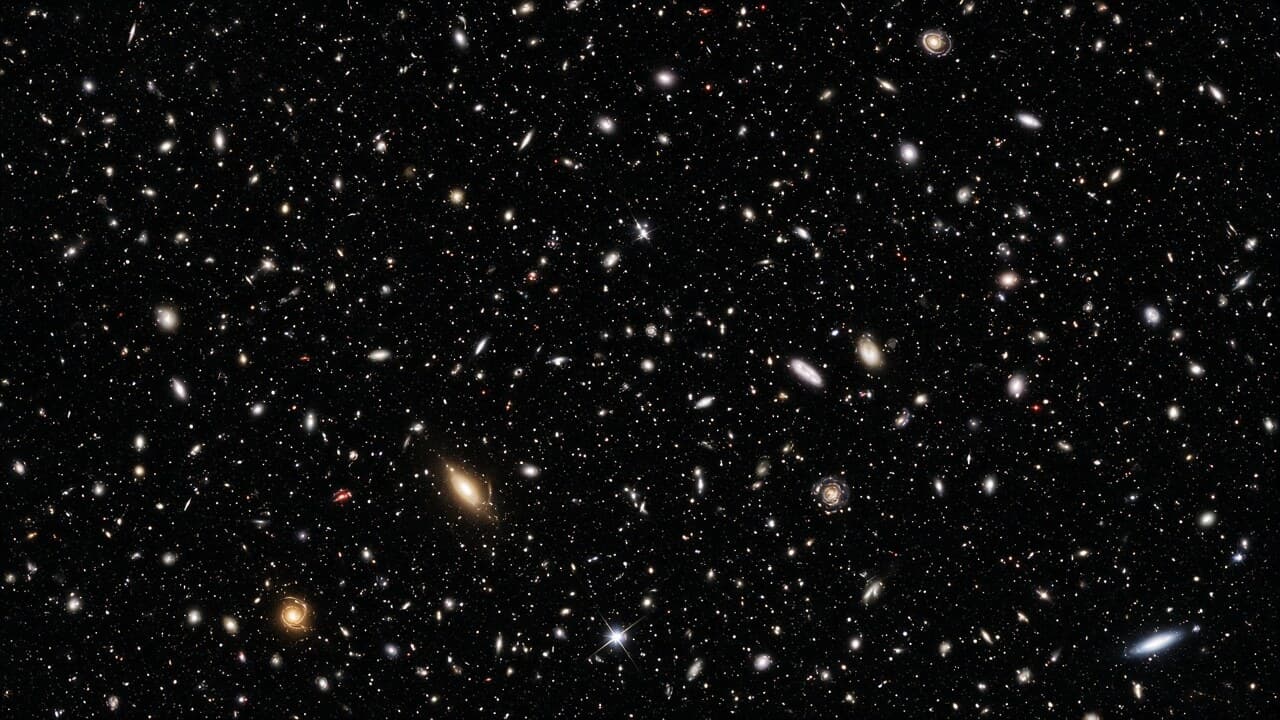
Picture a universe with no other intelligent civilizations. Perhaps microscopic life exists beneath the ice of distant moons or in the oceans of alien planets. Perhaps simple organisms evolved and disappeared on worlds we will never visit. But if we define intelligence as a civilization capable of complex science and technology, imagine that Earth is the only place where it ever happened.
There would be no alien astronomers looking toward our Sun. No distant scientists wondering whether the light from Earth contains evidence of oceans or oxygen. No other civilization developing mathematics, writing histories, creating music, or trying to understand the beginning of the cosmos.
The universe could still be spectacularly beautiful. Galaxies would collide, stars would be born, and planets would orbit their suns. But without another intelligent observer, those events might never be understood by another mind.
That last thought is philosophical rather than a scientific conclusion: the universe would continue to exist whether or not anyone observed it. But intelligence gives at least one part of the universe the ability to investigate its own origins. If humanity were unique, that ability would be astonishingly rare.
Every human discovery—from identifying distant galaxies to uncovering the structure of DNA—would become part of a story with no known parallel. Our questions about the cosmos would not be one civilization's contribution to a wider galactic conversation. They might be the only such questions ever asked.
In 1950, physicist Enrico Fermi raised a question that became famous for its simplicity: if intelligent extraterrestrial civilizations are common, where is everybody?
The question is now known as the Fermi paradox. It highlights a tension between the possibility of many civilizations in a vast and ancient galaxy and the lack of confirmed evidence that any have reached us or revealed themselves through detectable technology.
The Milky Way is billions of years old. If technological civilizations emerge frequently, some could have appeared long before humans existed. Even if interstellar travel were slow and difficult, the time available to a civilization with a long-term expansion strategy could be substantial compared with a human lifetime.
Yet we have no confirmed alien spacecraft, no verified extraterrestrial message, and no established detection of an alien technological structure. Searches for signals and other technosignatures have produced no confirmed discovery of an extraterrestrial civilization.
This does not mean researchers have searched every star, every frequency, or every possible form of technology. Our searches cover only a limited part of the enormous space of possibilities. A civilization might communicate in ways we do not recognize, remain quiet, or be too distant for its signals to reach us clearly.
The paradox therefore does not prove that aliens are absent. Instead, it asks us to examine the assumptions behind our expectations. Perhaps intelligent civilizations are rare. Perhaps they rarely expand. Perhaps their detectable phases are brief. Or perhaps we have not yet learned how to recognize their presence.
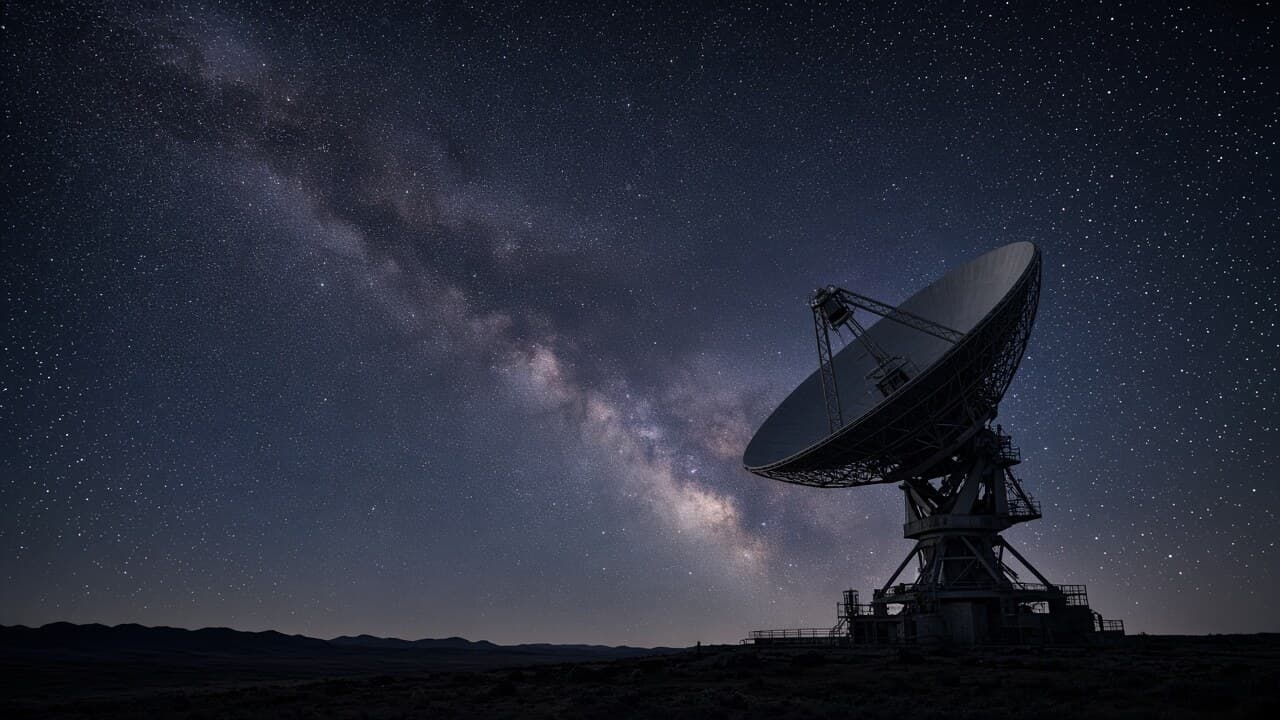
In 1961, astronomer Frank Drake developed an equation to help organize the scientific questions involved in estimating the number of detectable technological civilizations in the Milky Way. It became known as the Drake equation.
Rather than giving us a reliable final number, the equation separates the problem into several factors. Scientists can investigate some of them through astronomy, while others remain poorly constrained because we have only one known example of a planet with life and one known technological civilization: Earth and humanity.
- How quickly do suitable stars form?
- What fraction of stars have planets?
- How many planets could support life?
- On how many suitable worlds does life actually begin?
- How often does life evolve intelligence?
- How often does intelligence produce detectable technology?
- How long does a civilization remain detectable?
Some of these questions have become easier to investigate. Exoplanet discoveries have transformed our understanding of how common planetary systems are. But the later stages—how frequently life begins, how often intelligence emerges, and how long civilizations produce detectable signals—remain deeply uncertain.
Imagine that planets are common but the transition from non-living chemistry to living systems is exceptionally rare. The universe could contain a staggering number of planets while still producing very few biospheres. If life is common but technological intelligence is rare, the result could be similar.
The equation is useful precisely because it exposes our ignorance. Change the assumptions about the unknown factors and the estimated number of civilizations can change dramatically. It is a framework for asking better questions, not a machine that tells us how many aliens exist.
One of the most intriguing possibilities is that life itself may not be the hardest step. The difficult part might be producing a species that develops complex technology, investigates the universe, and remains capable of communicating for long enough to be detected.
On Earth, life existed for billions of years before modern humans appeared. Countless organisms thrived without building radio telescopes or launching spacecraft. Evolution does not have a predetermined destination, and it does not necessarily favor intelligence that resembles ours.
Natural selection favors traits that help organisms survive and reproduce in particular environments. Human-level intelligence emerged through a specific history involving biology, ecology, anatomy, social behavior, and chance. Another planet could have a completely different evolutionary history.
Perhaps intelligent life could evolve underwater but never develop fire-based metallurgy. Perhaps an intelligent species could live in a stable environment without developing a need for industrial technology. Perhaps the conditions that favor complex brains and the conditions that favor a technological civilization rarely coincide.
These are possibilities, not established explanations for the silence of space. We have only one confirmed example of intelligence arising from life, which makes it difficult to know how much of our own evolutionary history is typical.
If intelligence is an extremely rare evolutionary outcome, humanity might be unusual even if simple organisms exist on many worlds. We could be living through one of the rare moments when matter has organized itself into beings capable of asking how the universe works.
There is a crucial difference between a universe with no life beyond Earth and a universe with no other intelligent civilizations. The second possibility leaves room for a universe containing microbes, simple organisms, or complex ecosystems that never develop technology.
Imagine discovering fossilized microbial life on Mars. Or finding compelling evidence that an ocean beneath the icy surface of Europa supports living organisms. Such a discovery would transform biology and help scientists investigate whether life can begin independently in more than one place.
But it would not answer whether intelligent civilizations exist elsewhere. Microbes do not build observatories, and a complex alien ecosystem would not necessarily produce radio transmissions or artificial structures visible across interstellar distances.
Now imagine the opposite discovery: scientists identify a distant planet with atmospheric gases that strongly suggest biological activity, but no evidence of technology. We would have evidence of life, perhaps even evidence that biology is widespread, while the question of intelligence remained open.
This is why the search for extraterrestrial life and the search for extraterrestrial intelligence are connected but distinct scientific efforts. Finding even the simplest independent life would teach us something fundamental about how readily biology emerges. Finding an intelligent civilization would answer a much larger set of questions about the possibilities of evolution.
Suppose other civilizations do exist. Why have none sent a clear message that we can recognize? Several explanations are possible, and more than one could be true at the same time.
The nearest stars are separated from us by distances that are enormous by human standards. Even signals traveling at the speed of light need years to cross the space between nearby stars, and much longer to reach distant parts of the galaxy.
If a civilization sent a signal from a planet thousands of light-years away, the message could take thousands of years to reach Earth. A reply would require another long journey. Communication across interstellar distances is not like sending a message to a nearby city.
The universe is ancient, but technological civilization on Earth is very young. Another civilization might have emerged and disappeared millions of years before humans existed. Another might not appear until millions of years in the future.
Two civilizations can both exist in the history of the universe without ever sharing a period when their signals could reach one another. Their existence would overlap only in a historical sense, not necessarily in a way that permits communication.
Early human radio and television transmissions spread outward into space, but not every transmission remains equally detectable at large distances. A civilization may also use communication technologies that leak very little energy into space or rely on methods we have not learned to detect.
Search programs examine particular frequencies, sky regions, signal patterns, and other potential technosignatures. A negative result from one search rules out some possibilities within that search's limits; it does not prove that the entire universe is silent.
It is tempting to imagine that every advanced civilization would spread across its galaxy. But this assumes that other intelligent species would share human motivations, priorities, and ambitions.
Interstellar travel may be extremely expensive, slow, dangerous, or unnecessary for a civilization with advanced technology. Even if expansion is physically possible, it does not follow that every civilization would attempt it.
None of these explanations has been established as the answer. They show why the absence of a confirmed signal is a mystery that still has many possible solutions.
One proposed explanation for the cosmic silence is the Great Filter. The idea is that one or more steps between simple matter and a widespread, long-lived technological civilization may be extraordinarily difficult.
The difficult step could lie in the distant past. Perhaps the emergence of life from non-living chemistry is exceptionally improbable. Perhaps complex cells, multicellular organisms, or intelligence require a rare chain of circumstances.
Alternatively, the hardest step could lie ahead. A technological civilization might develop powerful tools faster than it learns to manage the risks they create. Environmental damage, catastrophic conflict, engineered biological threats, or other dangers could make long-term survival difficult.
These possibilities are often discussed in connection with the Great Filter, but we have no evidence that one particular filter explains the silence of the universe. The idea is a framework for thinking about possible bottlenecks, not a demonstrated law of civilization.
There is an important distinction between the two possibilities. If the hardest step is behind us, humanity may have passed an extraordinarily rare evolutionary hurdle. If a major filter lies ahead, the apparent scarcity of civilizations could be a warning about challenges that technological societies struggle to survive.
We cannot yet know which interpretation, if either, is correct. But the question offers a serious reason to study how civilizations might manage powerful technologies and protect the conditions that allow life to flourish.
Now imagine that decades of observations become centuries, and centuries become millennia. Telescopes become more capable. Spacecraft explore distant worlds. Scientists study the atmospheres of planets orbiting other stars. Yet no independent life is ever confirmed, and no credible evidence of another intelligent civilization appears.
Even then, we would need to be careful before declaring humanity alone forever. The universe is vast, our observations are limited, and future generations may develop techniques we cannot yet imagine. But suppose, for the sake of the thought experiment, that the conclusion eventually becomes unavoidable.
Our planet would become more than our home. It would be the only known place where matter had produced life that could investigate the stars, preserve knowledge, and deliberately shape its future.
Every species that disappears, every habitat that collapses, and every preventable disaster would matter within that larger picture. Protecting biodiversity and maintaining the habitability of Earth would not merely be local concerns. They would be ways of preserving the only known living world capable of understanding its own cosmic context.
This is not a scientific proof that humanity has a special destiny. It is a philosophical consequence of the hypothetical scenario: if intelligent life exists nowhere else, then our choices would determine the future of the only known technological civilization.
That would make cooperation, scientific progress, education, and long-term thinking profoundly important. It would also challenge the idea that Earth's problems are too small to matter against the scale of space. On a rare world, local choices could have universal significance.
A universe without other intelligent life might seem profoundly lonely. No distant civilizations to meet, no alien histories to discover, no confirmation that intelligence has emerged elsewhere.
But loneliness is an experience of minds, not a property measured by the number of civilizations in space. Humanity could still create meaningful relationships, explore nature, make art, build scientific knowledge, and find purpose in caring for one another.
The absence of alien intelligence would not make human achievements meaningless. If anything, it could sharpen our appreciation of how remarkable it is that human beings can reflect on the universe at all.
There is another possibility: a universe containing only one technological species might still contain a great deal of life. Oceans could host unfamiliar organisms. Distant planets could have microbial ecosystems. Alien biology, if it exists, might be unlike anything on Earth. We could be alone in intelligence without being alone in life.
And even if every search eventually came up empty, there would still be new things to learn. The universe would not stop being mysterious simply because no one answered our messages.
Scientists do not have to guess blindly. Several research approaches are helping humanity search for life and potential signs of technology beyond Earth.
- Exoplanet research: identify planets orbiting other stars and investigate their sizes, orbits, and environments.
- Atmospheric observations: study starlight passing through or reflecting from planetary atmospheres to look for chemical combinations that could indicate biological activity.
- Solar System exploration: investigate places such as Mars and ocean worlds for possible evidence of past or present life.
- Radio SETI: search for narrowband or otherwise unusual radio signals that could have an artificial origin.
- Optical SETI: look for brief or distinctive laser-like signals that might be produced by technology.
- Technosignature research: investigate possible evidence of technology through signals, unusual energy use, or other observable effects.
Each method has limitations. A chemical signature may have non-biological explanations. A radio signal can come from natural sources or human interference. An unusual observation needs independent verification before it can be treated as evidence of extraterrestrial technology.
That is why extraordinary claims require careful testing. Scientists need to rule out instrumental problems, terrestrial interference, natural processes, and other explanations before announcing a discovery.
The goal is not to prove in advance that aliens exist or that they do not. It is to search for evidence that could distinguish between competing explanations.
Imagine two possible discoveries. In the first, researchers confirm that a distant world hosts an independent form of life. In the second, generations of increasingly capable searches find no evidence of life or intelligence beyond Earth, and the evidence gradually makes the possibility of cosmic solitude more plausible.
The first discovery would show that life can emerge in more than one place. It would give biology a second example to compare with Earth and help scientists investigate which characteristics of life are widespread and which are unusual.
The second would be harder to establish. No finite search can easily examine every planet, every moon, every signal, and every possible form of life. A lack of detection can place limits on specific hypotheses, but proving that life does not exist anywhere is a far more difficult claim.
If convincing evidence eventually suggested that Earth was unique, scientists would need to understand what made our planet's history so unusual. Was the origin of life the rare step? Did complex life require an exceptional sequence of events? Or is intelligence common in principle but difficult to sustain or detect?
Either discovery would transform our understanding of our place in nature. Finding another civilization would show that intelligence is not unique to humanity. Establishing that Earth is alone would suggest that the emergence of a technological species is far rarer than we currently know how to explain.
We live on a small planet orbiting an ordinary star, inside a galaxy containing vast numbers of other stars. We have discovered worlds beyond our solar system, learned to study distant light, and built instruments capable of exploring conditions far beyond our reach.
And yet, the most important question remains unanswered: are we alone?
Perhaps intelligent life exists on countless worlds, separated from us by distances and times we struggle to comprehend. Perhaps simple life is common, but technological civilizations are rare. Perhaps humanity is the only intelligent species that ever emerged. At present, we do not have enough evidence to know.
The absence of a confirmed alien signal is not proof that the universe is empty. But neither does the universe's size guarantee that other civilizations exist. The honest answer lies between certainty and speculation: we are searching, and the evidence is incomplete.
If Earth were truly the only home of intelligent life, humanity would inherit an extraordinary responsibility. We would be the only known beings able to study the stars, preserve a living world, and decide what kind of future intelligence should have.
Perhaps that is the most important lesson of the question. We do not need to prove that humanity is alone to recognize that Earth is precious. It is the only world we know for certain that supports life, and every future we hope to create begins here.
So the next time you look up at the night sky, remember: those distant stars may be silent because no one is there, because someone is too far away, or because we have not yet learned how to listen. We cannot yet distinguish those possibilities.
The universe has not answered us. For now, the mystery remains—and we are the ones asking the question.
Continue with the Fermi Paradox, how big the universe is, and what if the future already exists.
Are We Alone FAQ
Is Earth the only planet with intelligent life?
Why haven't we found aliens if the universe is so big?
What is the Fermi paradox?
What is the Drake equation?
Could microbial life exist without intelligent aliens?
Does the silence of space prove that aliens do not exist?
What is the Great Filter?
How do scientists search for extraterrestrial intelligence?
What would happen if humans were the universe's only intelligent beings?
What this thought experiment clarifies — and what remains unknown
What works
- Separates confirmed facts (Earth is the only known living world) from unproven claims about cosmic solitude.
- Explains the Fermi paradox, Drake equation, and Great Filter without treating them as settled answers.
- Distinguishes the search for life from the search for technological intelligence.
What doesn't
- We cannot yet calculate how often life or intelligence emerges.
- No confirmed extraterrestrial civilization has been detected—or ruled out.
- Absence of evidence is not proof that humanity is alone.