The universe may contain trillions of stars, but that does not mean humanity can simply travel between them.
For centuries, humans have imagined a future where civilisations spread from planet to planet and eventually from star to star. It feels like the natural destiny of an intelligent species: build better spacecraft, travel farther, and keep going.
But there is a fundamental problem. Space is not merely very large. It is so enormous that our intuition completely fails when we try to understand its scale. And once we combine those distances with the laws of physics, the dream of becoming an interstellar civilisation becomes much more complicated.
The barrier may not be a physical wall surrounding the Solar System. It may simply be the combination of distance, speed, energy, radiation, dust, time, and the astonishing emptiness between stars.
Human brains evolved to deal with distances that matter to everyday survival: something nearby, something across a valley, or perhaps something beyond the next mountain. Cosmic distances are completely different.
The difference between "very far away" and "a million times farther away" is difficult to intuitively grasp. Both sound like "really far" to us, even though the physical difference is enormous.
To understand the problem, we need to start with the most important factor: speed.
The fastest humans have ever travelled were the astronauts returning from the Moon during the Apollo missions, reaching roughly 40,000 kilometres per hour.
That sounds incredibly fast. But the fastest human-made object is in another league.
NASA's Parker Solar Probe can reach roughly 635,000 kilometres per hour as it dives close to the Sun. It achieves this extraordinary speed by repeatedly using planetary gravity and the Sun's gravitational field.
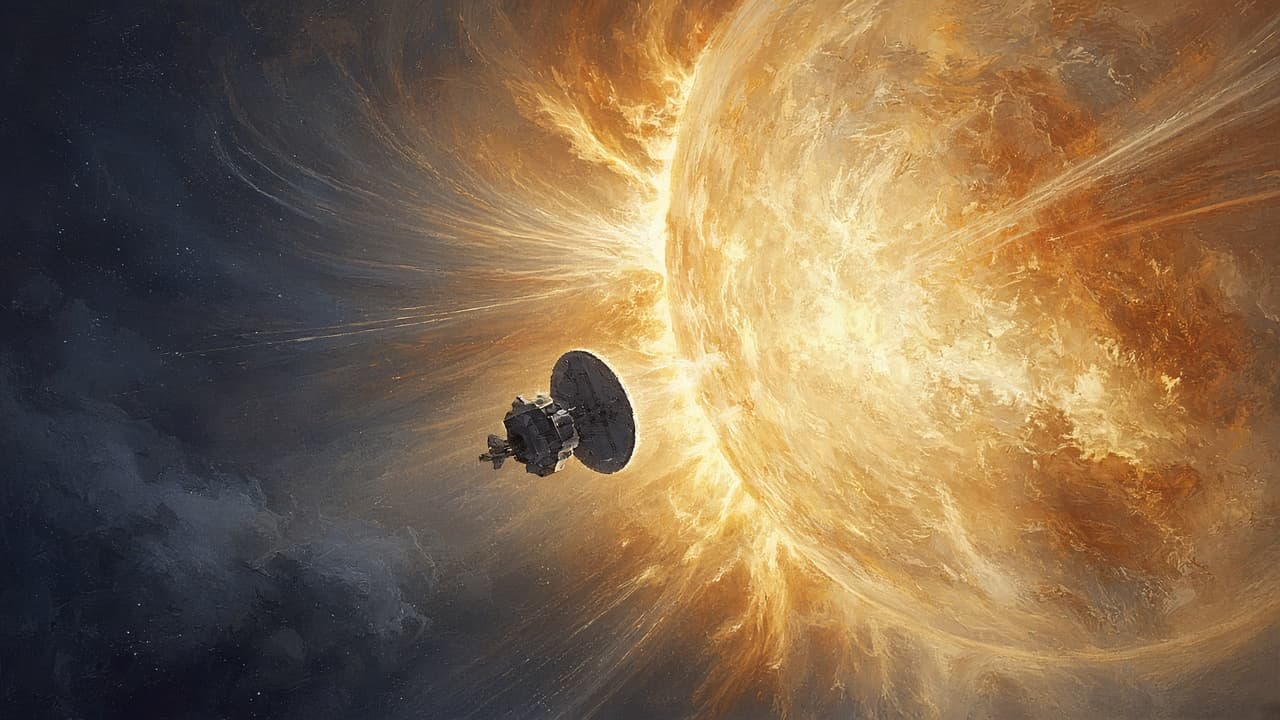
635,000 km/h
Parker Solar Probe's approximate peak speed — extraordinary by human standards, tiny compared with the distances between stars
NASA
At that speed, a spacecraft could travel around Earth in minutes and reach the Moon in well under an hour. So let's imagine something extraordinary: a human spacecraft capable of travelling that fast.
At Parker Solar Probe-like speeds, Mars could theoretically be reached much faster than with today's conventional missions. Pluto would take around a year, and crossing the heliopause would take additional years.
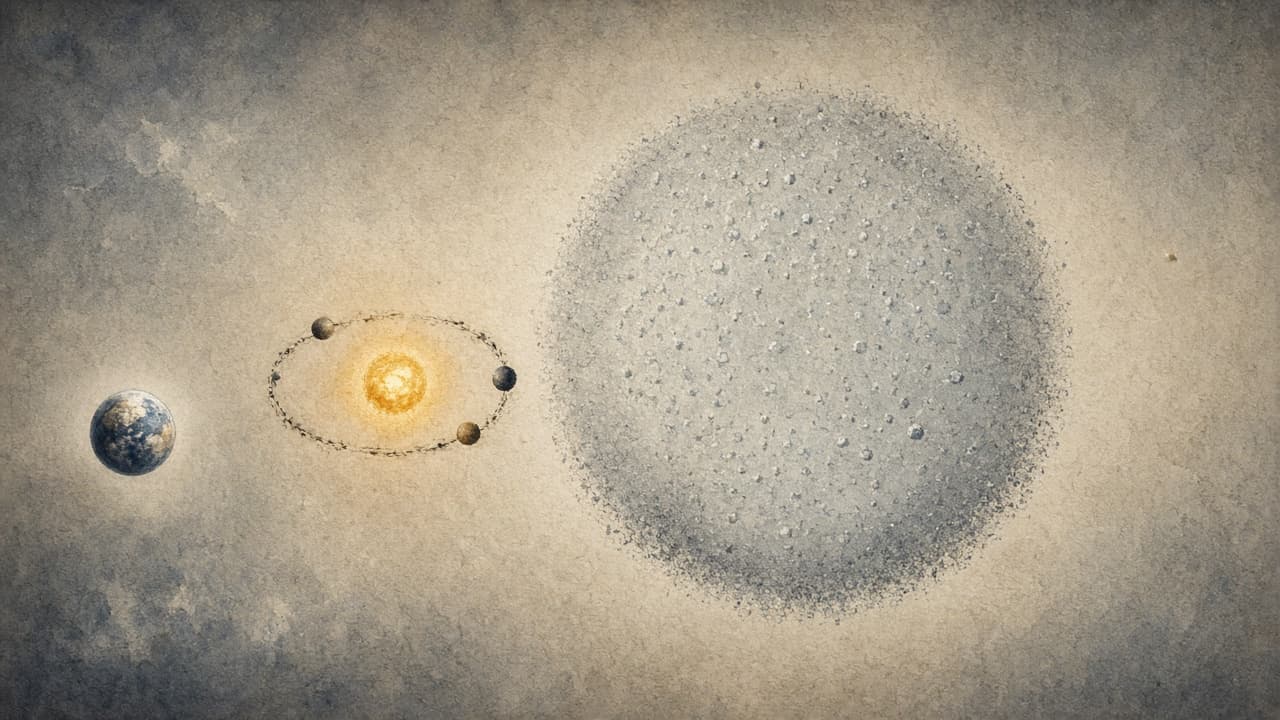
But then comes the Oort Cloud.
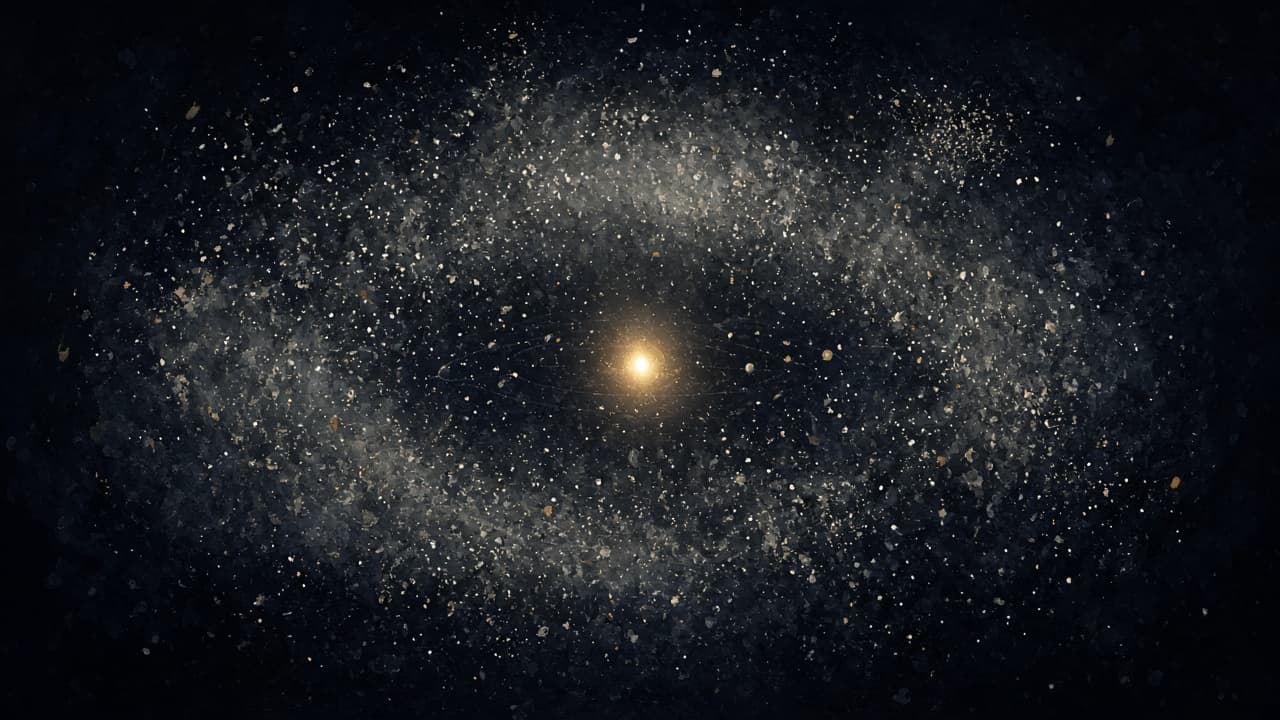
If we consider the outer Oort Cloud to be the true boundary of the Solar System, even this incredibly fast spacecraft could require roughly 2,500 years to reach it.
And after travelling for thousands of years, we would discover something deeply frustrating: there is almost nothing waiting for us there.
The obvious answer is to build a much faster spacecraft.
Unfortunately, we currently know of no practical, non-magical way to travel faster than light. Ideas such as warp drives and teleportation remain speculative, and humans cannot simply be frozen and transported across space with existing technology.
But there is a more interesting possibility. Propulsion systems based on concepts such as nuclear fusion or antimatter could, in principle, allow spacecraft to reach a substantial fraction of the speed of light.
Let's make an extremely optimistic assumption. Imagine humanity develops a spacecraft capable of travelling at 20% of the speed of light.
20%
Fraction of light speed — about 60,000 km/s, or 216 million km/h
~20 years
Travel time to Alpha Centauri at that speed, ignoring acceleration and braking
That is around 60,000 kilometres per second, or roughly 216 million kilometres per hour.
At this speed, the edge of the Solar System could be reached in only a few days. The outer Oort Cloud could potentially be reached in around eight years.
And Alpha Centauri, our nearest stellar system, would be roughly a 20-year journey.
There is a problem with travelling extremely fast through space: space is not actually empty.
Between stars are energetic particles, gas, dust, atoms and larger objects. At ordinary spacecraft speeds, these particles are manageable. At 20% of the speed of light, they become a serious threat.
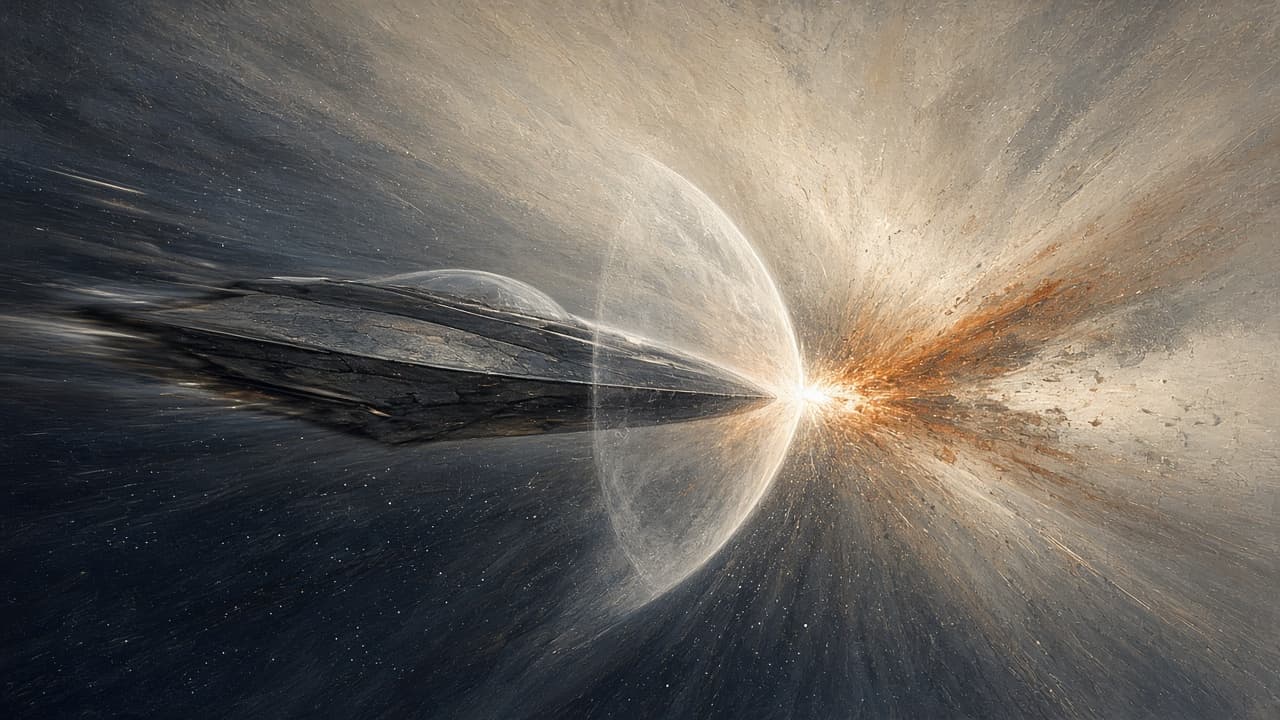
An individual atom striking a spacecraft at this speed can deposit enough energy to damage the spacecraft's protective material. Over a long journey, countless microscopic impacts could gradually erode the hull.
Engineers could attempt to solve this with thick protective shielding or sacrificial layers designed to absorb and disperse incoming particles.
A grain of dust becomes much more dangerous when the spacecraft is travelling at a substantial fraction of light speed. The impact could release enough energy to rapidly heat and vaporise the particle while damaging the spacecraft's shield.
And the bigger the object, the worse the consequences become.
A small rock travelling toward a spacecraft at relativistic speed would not behave like an ordinary collision. Its kinetic energy would be enormous.
Suppose we somehow solve propulsion and shielding. We now have a spacecraft that can travel between stars in decades.
Our first destination would probably be the Alpha Centauri system.
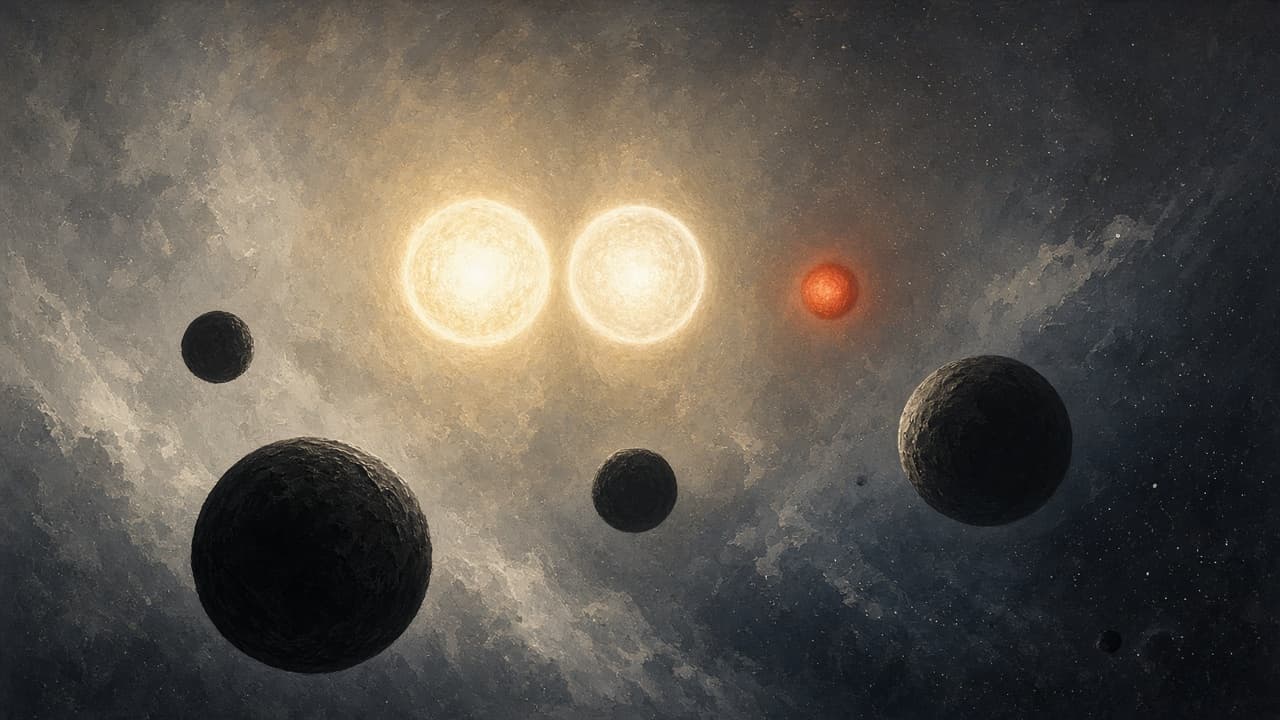
The problem is that being close does not mean being useful for human settlement. The nearest stellar systems may contain planets that are extremely hostile to life as we know it.
A crew could spend twenty years travelling to another star, only to discover worlds that are scientifically fascinating but completely unsuitable for humans.
Imagine travelling your entire life and then arriving at a Mars.
Some nearby planets orbit within the habitable zones of their stars. This means that, under certain assumptions, conditions could allow liquid water to exist on the surface.
But the habitable zone is only one piece of the puzzle.
Mars is inside the Sun's habitable zone, yet its surface is extremely hostile to humans. A planet's atmosphere, magnetic field, temperature, chemistry, geological activity and radiation environment all matter.
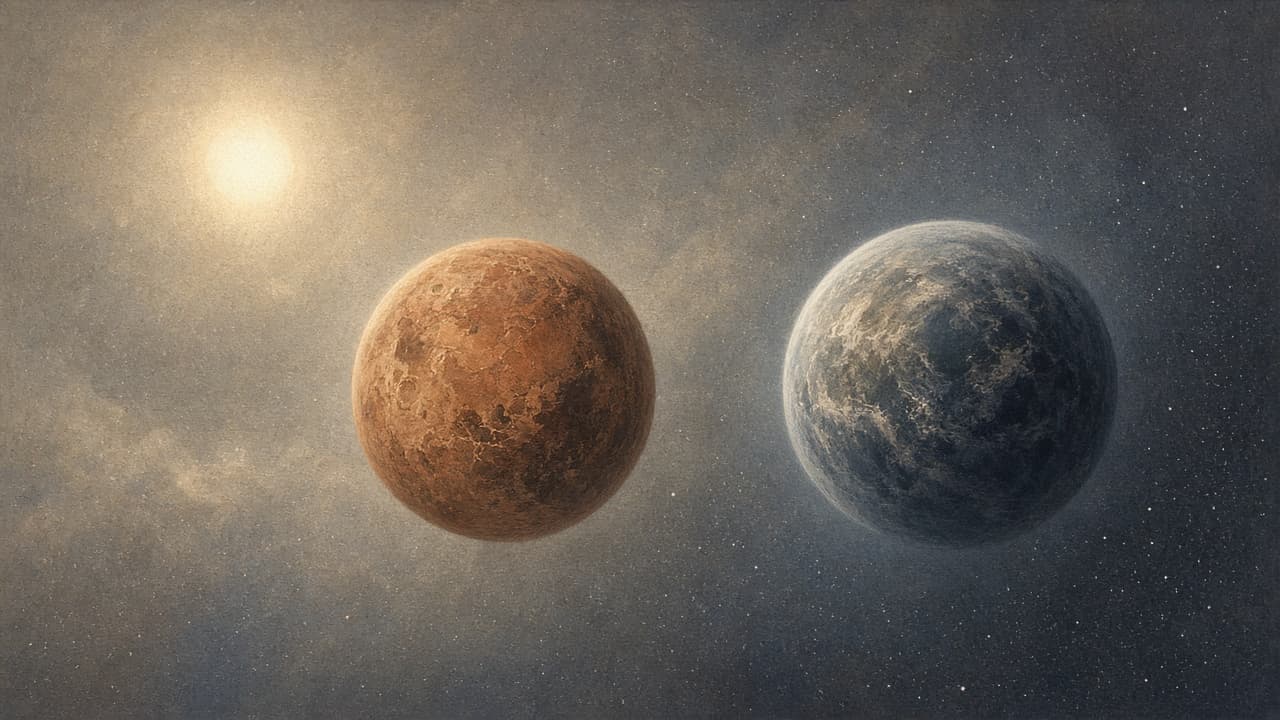
Even planets that appear Earth-like from afar come with no guarantee that they would actually support human life.
There may be planets around other stars with oceans, atmospheres and environments that are genuinely interesting targets for future exploration.
Some might even contain microbial life or other forms of biology.
But there is a cruel trade-off. The more interesting a destination becomes, the farther away it may be.
If a potentially habitable planet is dozens, hundreds or thousands of light-years away, even a spacecraft travelling at a significant fraction of the speed of light could require centuries or thousands of years to reach it.
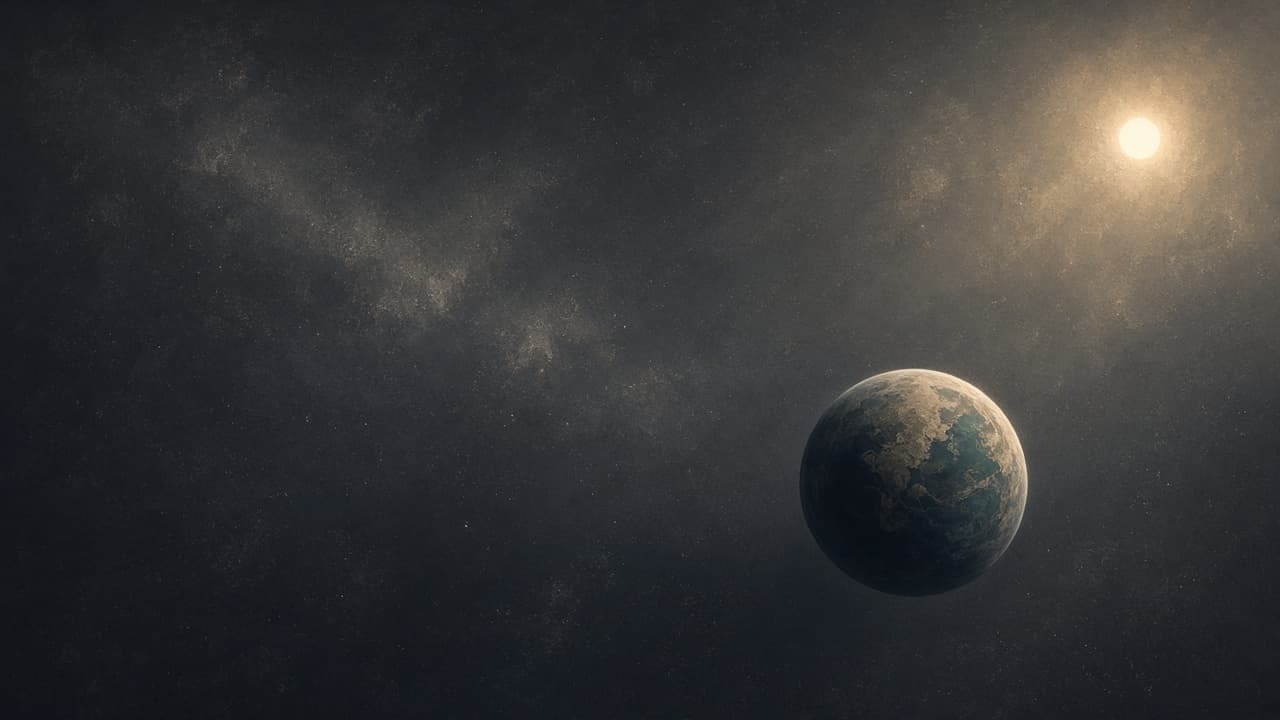
Imagine expanding our travel range to the stars within our immediate stellar neighbourhood.
The region remains tiny compared with the Milky Way. Most of the nearby stars are red dwarfs, and the planets around them can present extremely hostile environments.
This means that becoming capable of travelling several light-years does not suddenly open up a galaxy full of Earth-like worlds.
25 ly
Approximate diameter of the nearby stellar neighbourhood discussed here — still a microscopic fraction of the Milky Way
The Milky Way contains hundreds of billions of stars. Yet the region immediately surrounding the Solar System represents only a microscopic portion of that enormous galaxy.
Possibly.
A future civilisation could be technologically unrecognisable compared with us. It might develop propulsion systems far beyond today's capabilities, radically improve life support, solve biological ageing, or discover new ways of preserving humans during extremely long journeys.
Another possibility would be sending autonomous artificial intelligence systems carrying genetic material or embryos instead of transporting adult humans.
Future civilisations could also possess telescopes powerful enough to carefully identify promising destinations before committing to journeys lasting centuries.
But even then, maintaining a connected civilisation across interstellar distances would be extraordinarily difficult.
Suppose a human crew travels to Alpha Centauri in twenty years. The story does not end when they arrive.
A radio signal travelling at the speed of light would still require roughly four years to reach Earth from Alpha Centauri. A response from Earth would take another four years.
This means an ordinary conversation between the two civilisations would involve an unavoidable delay of roughly eight years for a question and response.
Interstellar travel is difficult because several enormous problems appear at the same time.
- The distances between stars are enormous.
- The speed of light creates a fundamental limit under known physics.
- High-speed spacecraft require extraordinary amounts of energy.
- Interstellar dust and particles become dangerous at high velocities.
- Radiation threatens long-duration human missions.
- Nearby planets may not be habitable.
- Potentially attractive destinations may be hundreds or thousands of light-years away.
- Communication between distant civilisations would always involve significant delays.
What might help, and what still stands in the way
What works
- Future propulsion technologies could potentially allow spacecraft to travel at a substantial fraction of light speed.
- Advanced shielding could potentially reduce the danger from interstellar particles.
- Future telescopes could help identify promising destinations before missions are launched.
- Robotic or AI-based missions could potentially travel farther than biological humans.
What doesn't
- Known physics imposes severe limits on travel speed.
- The energy requirements for relativistic spacecraft are enormous.
- Dust and particles become increasingly dangerous as spacecraft speed increases.
- Nearby star systems may not contain worlds suitable for human settlement.
- The most promising potentially habitable worlds may be extremely far away.
- Long-distance communication would remain limited by the speed of light.
The longer we think about deep space, the stranger the problem becomes.
The distances are enormous. The physics of high-speed travel is unforgiving. And even if we solve the engineering problems, the nearest destinations may not contain anything worth the decades-long journey.
Our current rockets, computers and energy systems are nowhere near what would be required for a practical human interstellar civilisation.
There is an important reason not to treat the future as settled.
Technology has repeatedly surprised humanity. In 1903, the New York Times published an editorial questioning the possibility of powered flight and suggesting that achieving it could take an extraordinarily long time.
Only 69 days after that editorial, the Wright brothers achieved the first successful powered flight. Sixty-six years later, humans landed on the Moon.
That history does not prove that interstellar travel will become possible. But it is a useful reminder that predicting the limits of future technology is extraordinarily difficult.
There is one final possibility: perhaps the future of humanity is not primarily about travelling farther into space.
Maybe our assumptions about civilisation, intelligence, biology and technology are fundamentally incomplete.
We do not know what technologies future civilisations may discover, what forms of intelligence they may create, or what problems they may eventually consider solvable.
Humanity has always expanded its horizon. We crossed oceans, built aircraft, reached orbit and eventually walked on another world. It is tempting to assume that the next step must be the stars.
But interstellar space presents a completely different challenge. The distances are vast, the physics is unforgiving, and the destinations immediately around us may not offer the worlds we imagine.
Maybe humanity really will remain confined to a tiny region of the cosmos. Or maybe a future civilisation will develop technology so transformative that today's limitations become as outdated as the dreams of early aviation.
We genuinely don't know.
And perhaps that uncertainty is the most exciting part. The universe has already surprised us many times. There is no guarantee that it has finished.