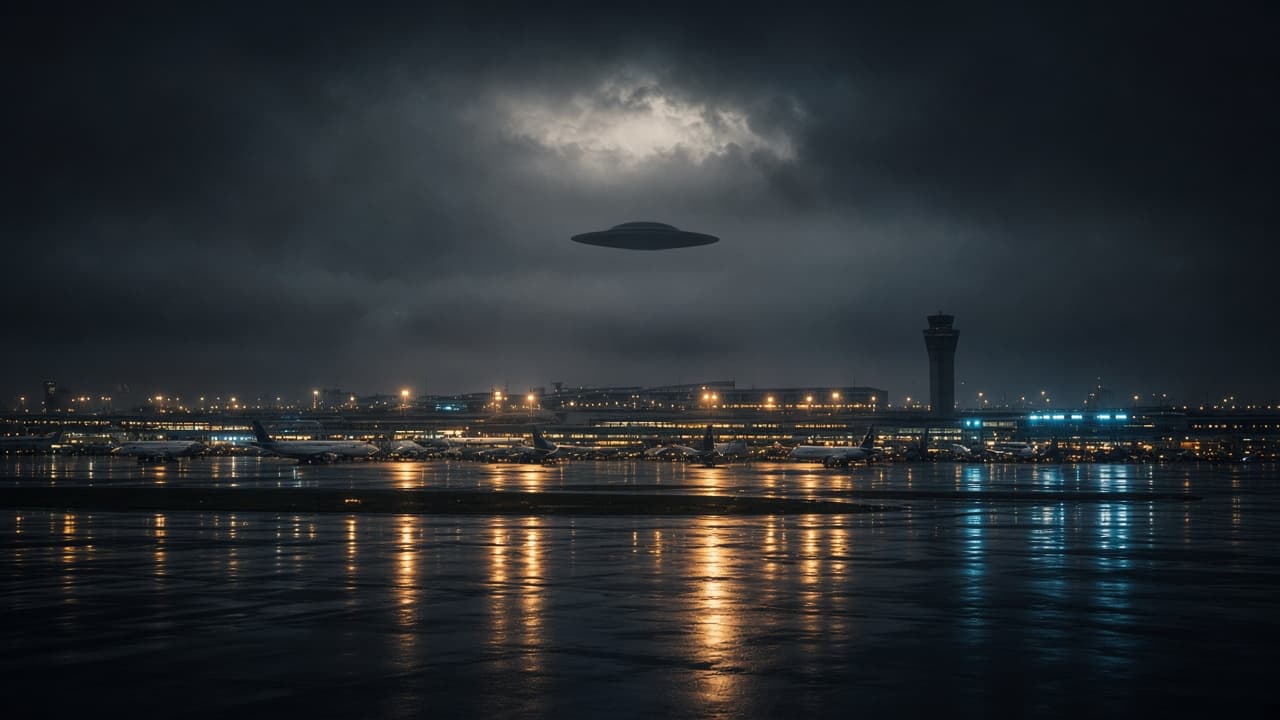
What if some of the strangest stories in human history aren't simply about visitors from outer space—but about how humans experience reality itself?
For decades, people around the world have reported unexplained lights in the sky, strange craft, encounters with mysterious beings, missing periods of time, and experiences they describe as alien abductions.
Some of these stories involve a single witness. Others involve dozens of people. A few attracted psychiatrists, historians, journalists, artists, academics and UFO researchers who tried to understand what actually happened.
One of the most influential figures in this story was John E. Mack, a Harvard psychiatrist who became deeply interested in people claiming alien encounters. His work raised an uncomfortable question: what if these experiences are real to the people who experience them, even when we cannot establish exactly what caused them?
One widely discussed case involved Deb Kauble, whose reported encounter included something particularly unusual: a large physical mark left on her lawn.
According to accounts popularized in documentary and abduction literature, UFO investigator and author Budd Hopkins considered the case among the most significant he had encountered. The story became more complicated because there were additional witnesses: a neighbor reportedly saw a large flash of light around the same time, while the neighbor's mother also reported seeing a large orb of light.
For Hopkins, those details made the case more interesting than a story involving only one person's memory. He eventually approached the family and expressed interest in documenting the case. That documentation became part of a growing body of literature surrounding alleged UFO abduction experiences.
Budd Hopkins was originally known as an artist and sculptor before becoming deeply involved in UFO investigations. He later published books about alleged alien abduction experiences, including Intruders.
As his work became more widely known, people contacted him with their own stories. Some witnesses described enormous objects hovering over their homes. Others described being taken aboard strange craft or encountering beings with unusual physical characteristics.
Hopkins eventually came into contact with John Mack. That meeting helped push abduction research into a more clinical and academic conversation — and into sharper controversy.
When John Mack first heard about Hopkins and the stories surrounding UFO abductions, he was reportedly skeptical. Mack was a psychiatrist at Harvard Medical School, and alien abduction sat far outside conventional psychiatric thinking.
Instead of immediately accepting or rejecting the stories, Mack began examining the people who reported them. Hopkins gave him letters from people describing unusual experiences. Mack reviewed them, found the material extraordinarily strange, and began interviewing alleged experiencers himself.
The people he encountered came from many backgrounds: doctors, lawyers, social workers, blue-collar workers and other professionals. Mack also explored possible psychological explanations. Accounts of the work describe psychological testing used in an effort to identify delusions, psychosis or other conditions that might account for the reported memories.
Mack became increasingly interested in the fact that many people described remarkably similar experiences. But similarity alone does not establish a common external cause. That distinction is essential.
- Experience vs. explanation
- A reported encounter can be a sincere, vivid human experience while its cause — extraterrestrial, psychological, cultural, neurological, or unknown — remains unsettled.
One of the most fascinating — and controversial — aspects of alleged abduction research is the role of memory.
Some people reported their experiences spontaneously. Others used relaxation techniques or forms of regression to explore memories they believed had been inaccessible. That creates a scientific question: can a person's memory accurately reconstruct an unusual event that happened years earlier?
Human memory is not a perfect recording device. It can be influenced by expectations, conversations, cultural ideas, suggestion, dreams and later information.
One argument made by supporters of the abduction phenomenon is that people who had never met sometimes described similar experiences.
- Strange beings
- Large dark eyes
- Bright lights
- Unusual craft
- Paralysis or inability to move
- Telepathic communication
- Being taken somewhere
- Missing or distorted time
- Medical or physical examinations
For researchers such as Mack, recurring patterns were significant. But there are at least two ways to interpret them.
| Interpretation | What It Suggests | What It Requires |
|---|---|---|
| Common underlying phenomenon | Similar reports reflect a shared external or anomalous cause | Independent evidence beyond matching testimony |
| Shared cultural imagery | People independently draw on familiar UFO and abduction motifs | Careful attention to media, suggestion and expectation |
Science therefore faces a difficult problem: when many people report similar experiences, does that demonstrate a shared external event — or can humans independently construct similar experiences? The evidence remains contested.
Another major moment came with Whitley Strieber's 1987 book Communion. The book became famous partly because of its striking cover: a mysterious humanoid figure with enormous dark eyes.
The image reportedly had a profound effect on many readers. Thousands of people wrote to Strieber and his wife, Anne, describing experiences they believed were similar. Some included drawings.
The volume of letters became another piece of the larger cultural phenomenon. It also introduced a sharper question: can an image influence how people interpret memories or experiences they previously struggled to understand?
One of the most discussed multi-witness cases is the 1994 Ariel School incident in Ruwa, Zimbabwe. More than 60 schoolchildren reportedly claimed to have witnessed a strange object near their school.
According to the children's accounts, they saw a UFO and unusual beings with large eyes. Some also reported receiving what they interpreted as telepathic messages. John Mack traveled to Zimbabwe to speak with some of the children.
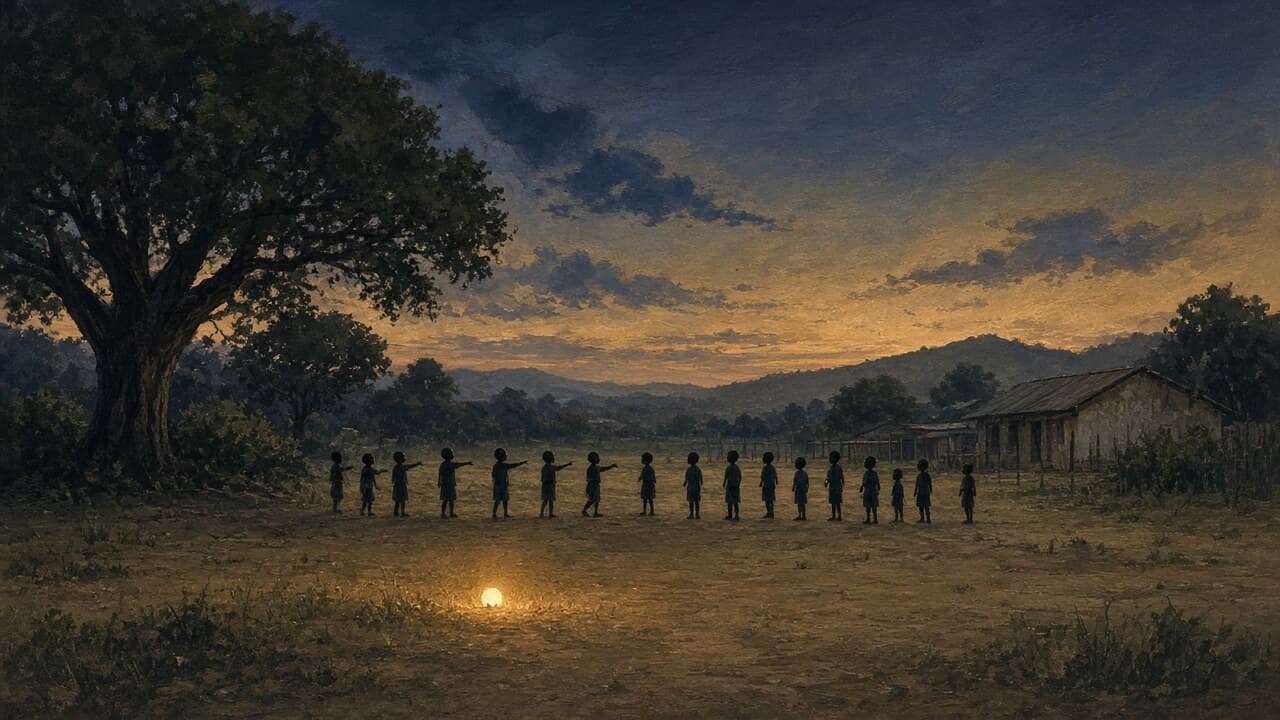
The case remains controversial. Supporters point to the number of witnesses and similarities between descriptions. Skeptics suggest the children may have influenced one another or interpreted an ordinary event through a shared framework.
One of the most interesting ideas in this debate is that unusual experiences may be interpreted through the culture of the person experiencing them.
Imagine two people experiencing something they cannot explain. One lives in a society where UFOs and extraterrestrials are common cultural ideas. Another lives in a deeply religious society where visions of supernatural figures are culturally familiar. Could the same underlying experience be interpreted differently?
This idea connects UFO reports with anthropology and the study of religious experience. Cultures throughout history have described encounters with mysterious non-human beings. The names and appearances change. The interpretation changes. But the basic human experience of encountering something perceived as beyond ordinary reality appears repeatedly.
A historical example often brought into this conversation is the 1917 Fatima phenomenon in Portugal. Three children reported visions associated with the Virgin Mary. Large numbers of people eventually gathered for what became known as the Miracle of the Sun. Witnesses reported unusual visual effects involving light, colors and the appearance of the sun.
The event became deeply associated with Catholic religious belief. From a modern UFO perspective, some researchers have compared aspects of the phenomenon with descriptions of unusual aerial encounters.
Another multi-person case often discussed in this literature occurred on September 1, 1969, in the Great Barrington area of Massachusetts. Multiple people reportedly contacted a local radio station that evening describing strange lights and unusual events.
Later testimonies became part of efforts to document what witnesses remembered. Some accounts involved people who claimed to have seen a strange object. Others described experiences they interpreted as abductions.
One witness, Tom Warner, recalled being ten years old at the time. He described hearing what he interpreted as a telepathic voice telling him to go home, then seeing a strange phenomenon and feeling as though a beam prevented him from moving. Other witnesses described a huge light over Lake Mansfield, with unusual colors and movements.
These accounts are fascinating — but witness testimony is not the same thing as independent physical confirmation.
The UFO question is larger than "Are aliens visiting Earth?" It touches deeper questions: What is consciousness? How reliable is human memory? Can people experience things science does not yet understand? How much does culture influence perception? Could there be phenomena current scientific models cannot adequately explain?
This is where Mack's position remains interesting. He did not begin as someone committed to the extraterrestrial explanation. His work led him toward a stance in which he believed the experiences deserved serious consideration, while acknowledging that their ultimate nature was uncertain.
Taking someone's experience seriously does not necessarily mean accepting their interpretation of that experience as proven fact.
The most intriguing possibility may not be that UFOs prove extraterrestrial life. It may be that these stories reveal how limited our understanding of consciousness and perception remains.
People can experience incredibly vivid events during dreams, altered states of consciousness, religious experiences, sleep paralysis, trauma, memory reconstruction and other unusual states. At the same time, there are reports of unexplained observations that remain difficult to categorize.
These two facts can exist simultaneously. We do not have to choose only between "Everything is aliens" and "Everything is imagination." There may be many different phenomena hiding behind the same label.
There is currently no established scientific evidence demonstrating that extraterrestrial beings routinely abduct humans.
There are, however, thousands of people who sincerely report extraordinary experiences. Some cases involve multiple witnesses. Some have historical documentation. Some include physical claims. Others rely almost entirely on personal memories.
The challenge is determining what caused those experiences. That remains unresolved — and that may be what makes the subject so compelling. The mystery isn't simply about creatures from another planet. It's about the boundary between perception and reality, memory and experience, science and belief.
Unresolved
Status of a definitive cause for alleged abduction reports
No settled scientific consensus
Human history is filled with stories about encounters with something beyond ourselves. Ancient cultures described beings from the sky. Religious traditions recorded visions and apparitions. Modern societies describe spacecraft, extraterrestrials and unexplained aerial phenomena.
The language changes with time. The underlying mystery remains.
- Maybe some stories point to something outside our current understanding.
- Maybe many can eventually be explained through psychology, neuroscience, atmospheric phenomena, astronomy or social influence.
- Maybe some will remain unexplained.
For now, the most honest conclusion is also the most interesting one: we don't know exactly what is happening. And sometimes the most fascinating discoveries begin with admitting that we don't know.
Key Moments in This Story
1917
Fatima
Large crowds report unusual solar and light phenomena associated with religious visions in Portugal.
1969
Great Barrington
Multiple people in Massachusetts report strange lights and later describe unusual encounter memories.
1980s
Hopkins & Intruders
Budd Hopkins popularizes investigation and publication of alleged abduction cases.
1987
Communion
Whitley Strieber's book and cover image become a major cultural reference point for encounter imagery.
1990s
John Mack
A Harvard psychiatrist investigates experiencers and argues the reports deserve serious attention.
1994
Ariel School
Dozens of schoolchildren in Zimbabwe report a strange object and beings near their school.
The universe is enormous, human consciousness is still poorly understood, and our ability to explain every unusual experience is limited.
That doesn't mean every unexplained event is extraterrestrial. But it also reminds us that unexplained does not have to mean uninteresting.
The real question may not be "Are aliens here?" It may be: how much of reality have we yet to understand?
What this reading clarifies — and what it cannot
What works
- Takes reported experiences seriously as human data without collapsing them into one answer.
- Separates sincere testimony from independently verified cause.
- Connects modern UFO stories with memory science, culture and religious history.
- Shows why multi-witness cases attract attention while remaining contested.
What doesn't
- No established scientific proof that extraterrestrial beings abduct humans.
- Memory-based cases are vulnerable to suggestion and cultural influence.
- Documentary and popular accounts can overstate certainty.
- Physical claims associated with some cases are often incomplete or hard to independently verify.