For thousands of years, humans have told stories about a force of evil hiding behind the visible world. But is the Devil an actual supernatural being—or one of humanity's oldest ways of explaining darkness, suffering and temptation?
The idea of the Devil is far older and more complicated than the familiar image of a red figure with horns and a pitchfork. Across different cultures and religions, supernatural beings associated with evil, temptation, chaos or spiritual danger have appeared in remarkably different forms.
Stories of Satan, demons and possession have also survived into the modern world. Religious communities continue to perform exorcisms, people continue to report encounters with supernatural entities, and legendary locations such as Devils Tower and the New Jersey Pine Barrens remain surrounded by stories of mystery.
But there is an important distinction: historical evidence can demonstrate that people believed these things, recorded these experiences and performed these rituals. That is not the same as scientifically proving that a supernatural Devil exists.
Every human society has had to confront suffering, violence, disease, disaster and the apparently random nature of tragedy. One response has been to imagine forces beyond humanity that influence events in the world.
In some traditions, evil is understood primarily as a human choice. In others, supernatural beings play an important role. The Devil became one of the most influential versions of this idea in Western religious culture.
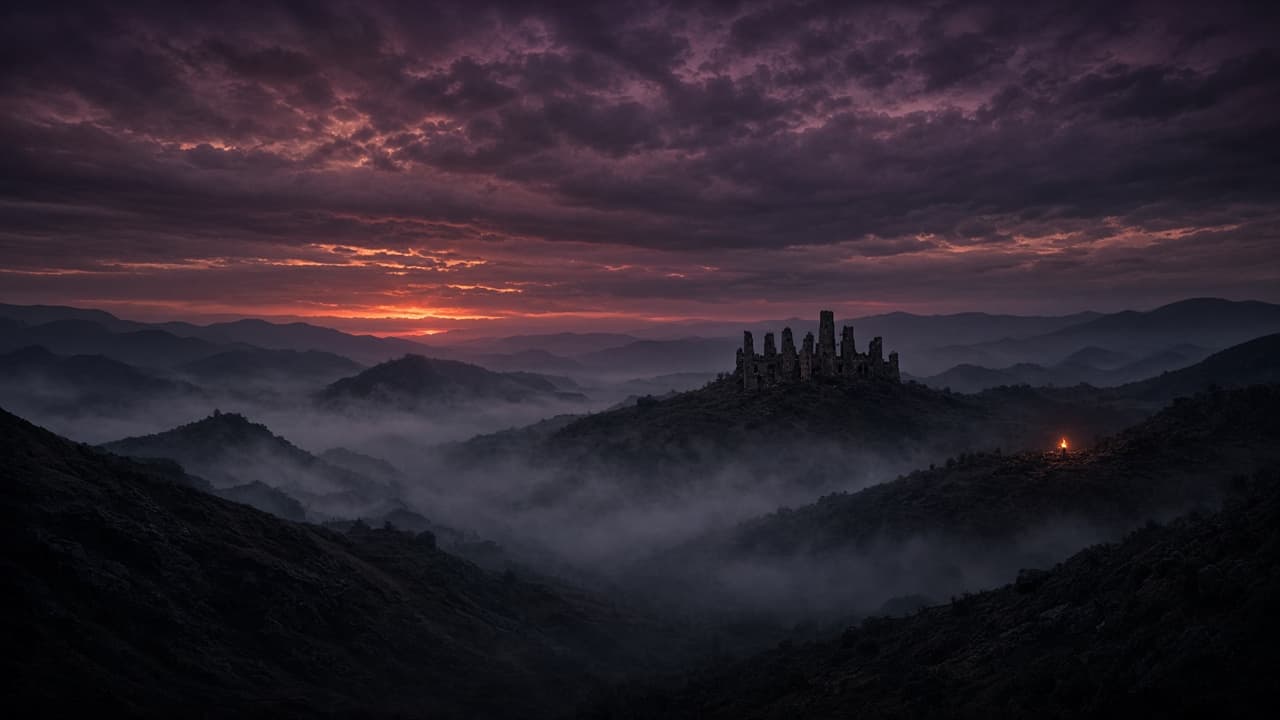
One of the locations highlighted in the documentary is the Valley of Hinnom, just outside ancient Jerusalem. Biblical texts associate the valley with practices that were condemned by Israelite religious authorities, including child sacrifice.
The documentary presents the valley as part of the historical development of ideas surrounding evil, punishment and Satan. Over time, the name associated with the valley became closely connected with concepts of hell in later religious thought.
The modern image of Satan combines ideas that developed over centuries. The word and concept associated with Satan have roots in ancient religious traditions, while later Christian theology developed a much more elaborate picture of the Devil as an opponent of God and a tempter of humanity.
The documentary also points out that Satan has been associated with several names and figures, including Lucifer, Beelzebub and the Prince of Darkness. These identifications are not always interchangeable across historical periods or religious traditions.
Different religions contain different concepts of evil or supernatural opposition. In Buddhism, Mara represents a powerful force associated with temptation and obstruction. In Islam, Iblis is the figure associated with rebellion against God. Christian traditions developed their own understanding of Satan as a fallen spiritual being.
This is important because the phrase 'the Devil' can hide a complicated history. Similar ideas do not necessarily mean that all cultures were describing exactly the same supernatural entity.
| Tradition | Figure | General Role |
|---|---|---|
| Christianity | Satan | Adversary, tempter and embodiment of evil |
| Islam | Iblis | A rebellious being who refuses God's command |
| Buddhism | Mara | Figure associated with temptation and obstruction |
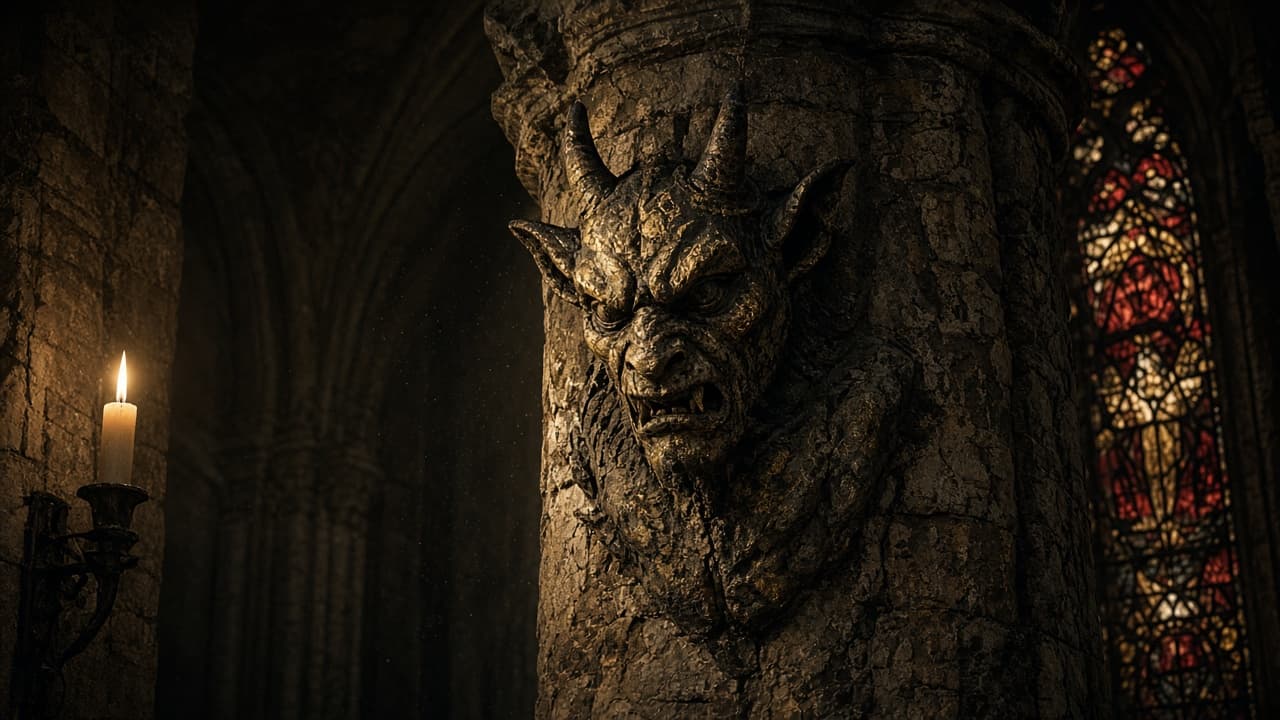
The familiar horned, red, monstrous Devil is not a simple description found unchanged throughout ancient scripture. Medieval and later European art helped transform the Devil into a recognizable visual character.
Artists frequently portrayed supernatural evil using combinations of human and animal features: horns, wings, claws, tails and frightening faces. These images became powerful cultural symbols and eventually shaped the Devil that appears in modern films, books, games and popular culture.
Few subjects make the question of whether demons are real more emotionally powerful than exorcism. Rituals intended to remove evil spirits have existed across different cultures and religious traditions for centuries.
In Christian traditions, exorcism is understood as a religious act rather than a magic trick. Catholic teaching includes formal procedures for exorcism and emphasizes that alleged possession must be approached cautiously and distinguished from medical or psychological conditions.
How a Religious Exorcism Is Understood
Recognition
A person or religious authority interprets unusual behavior or experiences as potentially involving a spiritual problem.
Investigation
Traditional Catholic guidance emphasizes caution and distinguishing suspected possession from illness or psychological conditions.
Ritual Prayer
An authorized religious practitioner may perform prayers and rites intended to invoke divine protection and drive away an evil spirit.
Aftercare
Religious and, where appropriate, psychological support may continue after the ritual.
It depends on what kind of evidence we mean. Exorcism is strong evidence that people and religious institutions genuinely believe in demonic forces and have developed rituals around that belief. It is not, by itself, controlled scientific evidence establishing the existence of supernatural beings.
The documentary features accounts from people involved in exorcism who describe extraordinary events, including unusual physical strength and alleged levitation. These stories are presented as testimony from individuals who believe they witnessed supernatural phenomena.
Extraordinary testimony can be fascinating, but testimony is not the same as independently verified evidence. A dramatic event can be honestly reported while the observer is still mistaken about its cause.
The central mystery is not simply what people claim to have witnessed, but what evidence can independently establish about what actually happened.
In northeastern Wyoming, an enormous rock formation rises dramatically above the surrounding landscape. Its appearance is so unusual that it has inspired sacred traditions, folklore, scientific curiosity and even extraterrestrial stories.
The documentary presents Devils Tower as an example of a natural feature whose extraordinary appearance can invite supernatural interpretations. Native American communities have their own sacred traditions and origin stories connected to the landscape, while the modern name 'Devils Tower' has a complicated history.
The National Park Service explains that Devils Tower is an igneous formation made of phonolite porphyry. Geologists agree that magma intruded underground and later became exposed as surrounding rock was eroded away, although details of the original intrusion remain debated.
867 ft
Height of Devils Tower above the surrounding landscape
National Park Service
If Satan represents supernatural evil in religious tradition, the Jersey Devil represents something different: a regional monster legend that has survived for generations.
According to the New Jersey Historical Society, the most common version of the story traces the creature to a woman named Deborah Leeds and her supposed thirteenth child. Different versions of the legend tell the story differently, but the child is said to have transformed into a strange creature and escaped into the Pine Barrens.
The creature is usually described as having a horse-like head, horns, wings, a long body, unusual legs and a frightening cry.
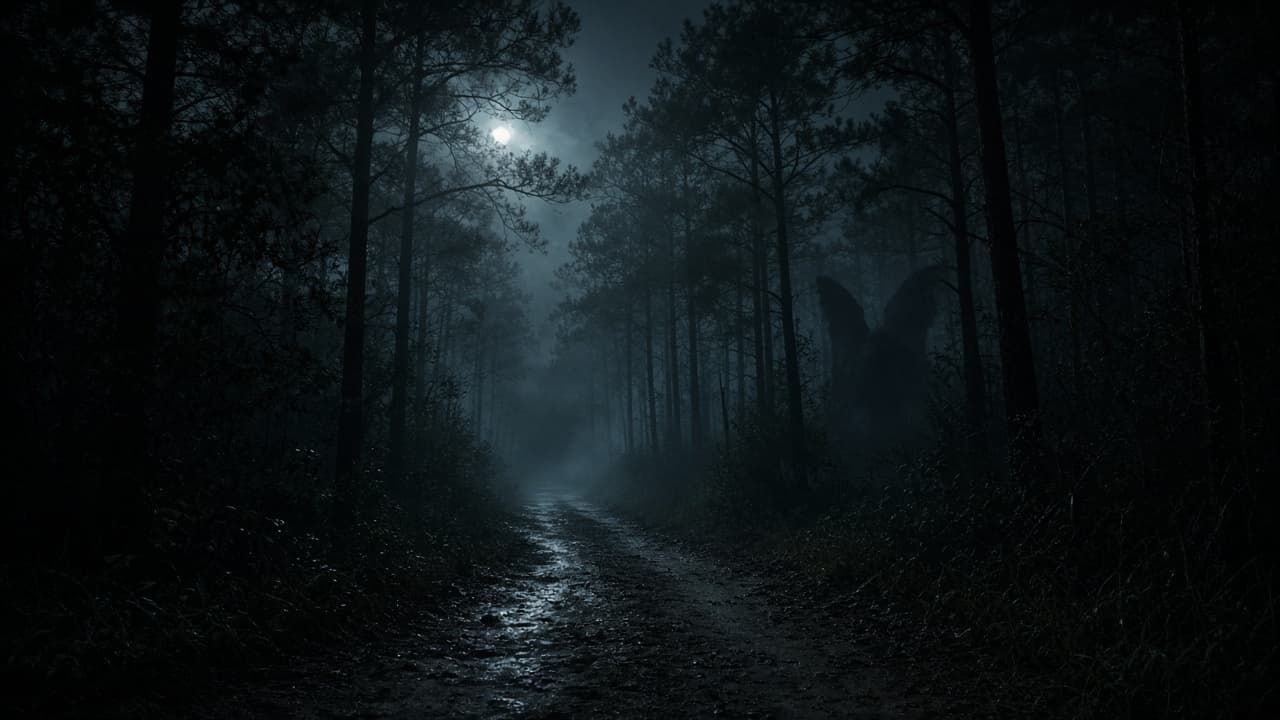
January 1909 became the most famous period in Jersey Devil history. Numerous reports appeared across New Jersey and neighboring areas describing sightings, strange tracks and encounters with a creature believed to be the Jersey Devil.
The reports generated widespread fear and attracted national attention. The New Jersey Historical Society records that hundreds, possibly thousands, of people claimed to have seen the creature around this period.
A Brief History of the Jersey Devil
1700s
Origins of the Legend
Traditional accounts connect the creature to the Leeds family and the birth of a thirteenth child.
1800s
Sightings Continue
Stories and alleged encounters become part of local folklore.
1909
The Great Panic
A wave of reported sightings spreads through New Jersey and neighboring areas.
Today
Legend Lives On
The Jersey Devil remains a major part of New Jersey folklore and popular culture.
There is extensive evidence that people reported seeing something unusual. There are historical newspaper reports, eyewitness stories and descriptions passed through generations.
What is missing is something much more difficult: independently verified physical evidence demonstrating that a previously unknown winged creature matching the legend actually existed.
| Question | What We Know | What Remains Unproven |
|---|---|---|
| Did people report encounters? | Yes | No major uncertainty about the existence of the reports |
| Did the legend influence culture? | Yes | Not applicable |
| Was a supernatural creature physically verified? | No verified specimen | The creature's biological existence remains unestablished |
There may be a deeper mystery beneath all these stories. Humans are exceptionally good at finding patterns, assigning agency and creating explanations for events that are difficult to understand.
When something frightening happens in darkness, an unexplained illness appears, a person behaves in an unfamiliar way, or a landscape looks impossibly strange, the human mind naturally searches for a cause.
- Fear can make ambiguous sounds and shapes appear threatening.
- Cultural traditions influence how people interpret unusual experiences.
- Stories become more dramatic as they are repeated across generations.
- Religious beliefs provide frameworks for understanding suffering and evil.
- Unexplained natural phenomena can become surrounded by supernatural interpretations.
Science is designed to investigate claims about the observable world using evidence that can be tested, measured and independently evaluated. Supernatural claims often operate outside those boundaries, which creates a fundamental difference between scientific investigation and religious belief.
That does not mean every spiritual belief can simply be dismissed. It means the standards of evidence are different. A religious tradition may accept revelation, scripture or spiritual experience as meaningful evidence, while science requires testable observations and reproducible results.
| Perspective | Interpretation | Type of Evidence |
|---|---|---|
| Religious | Satan is a real spiritual being or force | Scripture, theology and religious experience |
| Cultural | The Devil represents humanity's ideas about evil and temptation | History, folklore, art and anthropology |
| Scientific | Supernatural existence requires independently testable evidence | Observation, measurement and reproducible evidence |
The honest answer depends on what you mean by 'real.' The Devil is unquestionably real as a historical and cultural idea. Millions of people across history have believed in Satan or comparable supernatural forces, and those beliefs have shaped religions, laws, art, literature and societies.
Several religious traditions also sincerely maintain that supernatural evil is real. For example, Catholic teaching explicitly includes belief in the Devil and maintains a formal rite of exorcism.
But if the question is whether science has established the physical existence of a supernatural Devil, the evidence presented in these stories does not establish that conclusion.
- Extraordinary Evidence
- Evidence strong enough to justify a claim that conflicts with well-established explanations or requires a major revision of our understanding of reality.
There is something fascinating about the persistence of these stories. Ancient people described demons. Medieval artists gave the Devil a recognizable face. Religious communities developed rituals for confronting evil spirits. Modern witnesses report strange creatures and unexplained encounters.
Perhaps some stories began with misunderstood natural events. Perhaps others grew through folklore and storytelling. Some experiences may have psychological or medical explanations. And for believers, there remains another possibility: that not everything real can be captured by scientific instruments.
The evidence does not allow us to collapse all of these possibilities into one answer.
Maybe the most interesting mystery isn't whether a horned creature is hiding somewhere in the darkness.
Maybe it is why humans, separated by oceans, languages and thousands of years of history, repeatedly create stories about supernatural forces that tempt us, punish us, possess us or hunt us.
The Devil may be a supernatural being, a religious concept, a cultural symbol—or a combination of ideas that changed dramatically over time. What history can show us is that the belief is extraordinarily powerful.
What these stories can and cannot establish
What works
- The history of Satan and devil legends reveals how different cultures understand evil.
- Historical reports provide valuable evidence about human beliefs and experiences.
- Places such as Devils Tower and the Pine Barrens show how landscapes can become powerful centers of mythology.
- The subject creates an interesting intersection of religion, history, psychology, folklore and science.
What doesn't
- Eyewitness testimony alone cannot establish supernatural causation.
- Many famous paranormal stories have competing explanations.
- Folklore changes as stories are repeated across generations.
- There is no scientifically verified physical evidence establishing the existence of a supernatural Devil.
After thousands of years, the question remains strangely alive: is evil simply part of human nature, or is there something beyond humanity influencing the world?
The stories of Satan, exorcism, Devils Tower and the Jersey Devil do not provide one definitive answer. Instead, they reveal something perhaps even more interesting: how humans turn fear, mystery and the unknown into stories that can survive for centuries.
Whether you see the Devil as a spiritual reality, a symbol of evil or a cultural creation, one fact is difficult to deny—the idea of the Devil has had an extraordinary influence on human civilization.