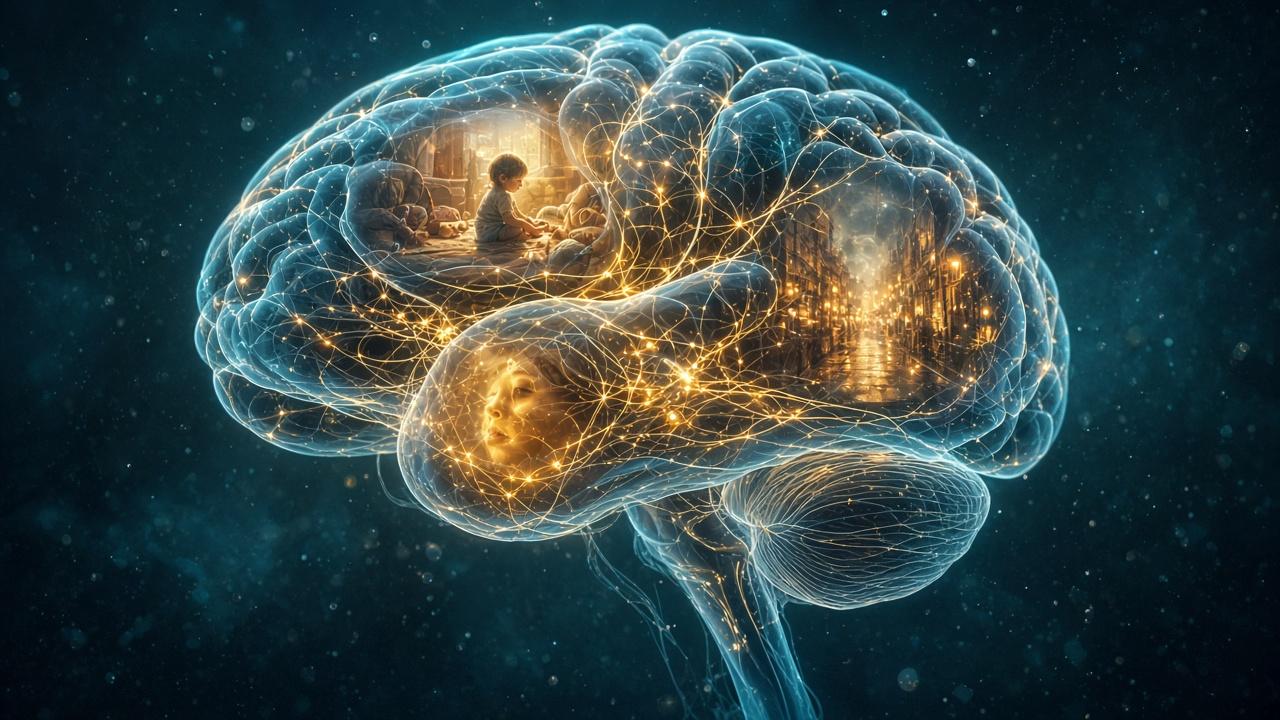
Memories are strange biological machinery. They let you experience a moment that has already ended — the taste of a kitchen you no longer live in, a joke that still works, a face you have not seen in years. With them, your brain can encode, store and retrieve information about the world and about yourself.
They are not static like photographs. Each time a memory comes under the spotlight of attention, it can soften. Details shift. The feeling attached to it can change. That is a little unsettling, because memories are a large part of what makes you you. They are the personal lore a lot of identity is based on, and the material your future decisions draw from.
So what does it mean if they change? And more fundamentally: what is a memory? How is a moment in time stored in living tissue?
The human brain is one of the most complex objects we know. Scientific models of it are useful, but they are not a perfect copy of the thing itself. Still, a few numbers help set the scale.
What lets you think and feel is a network of roughly 86 billion neurons. They are not simple switches. Each is an electrochemical cell that sends and receives signals across synapses — tiny gaps where an electrical impulse is converted into chemical messengers, crosses the gap, and is converted back into electricity on the other side. That is how neurons talk.
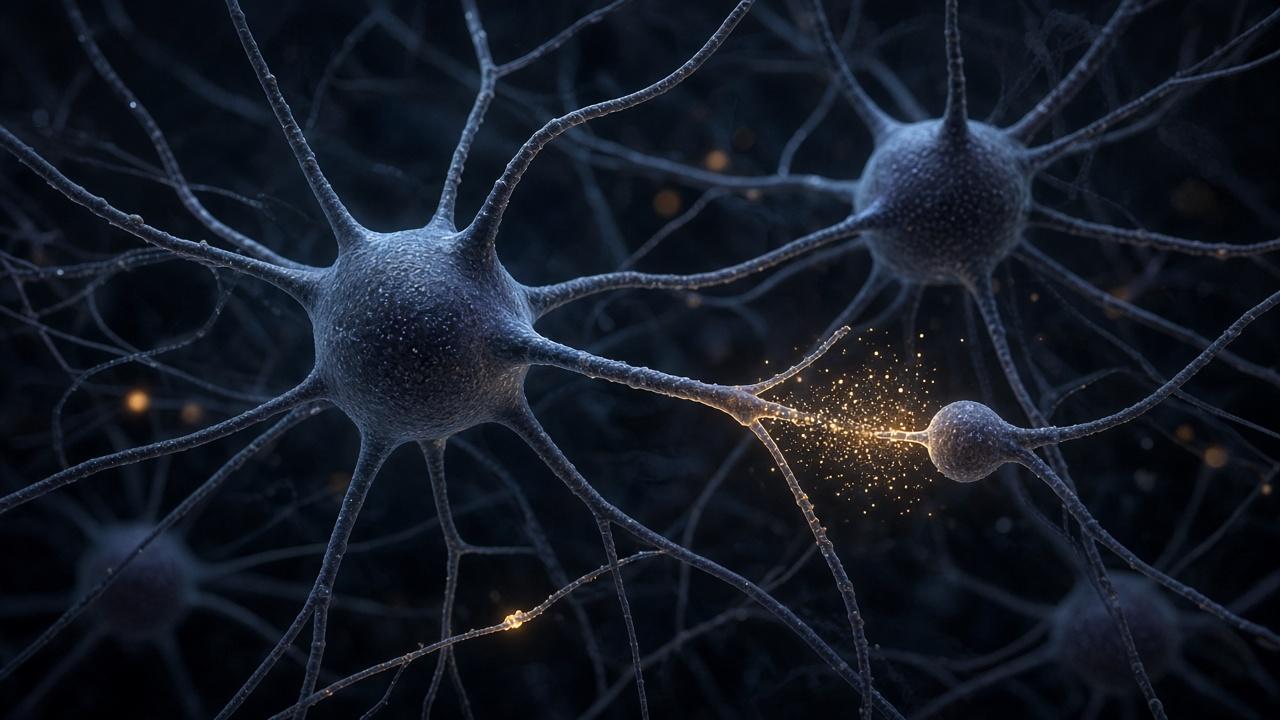
It is a busy conversation. A typical neuron may connect with thousands of others. Together they form hundreds of trillions of synapses — far more connections than there are galaxies in the observable universe. From that web, the experience of being a person emerges.
To make anything lasting out of that chaos, some connections have to change. When neurons fire together, their synapses can strengthen. The next time one of them is active, its partners are more likely to join in. Zoom out, and patterns appear: groups of cells that have become easier to recruit as a set.
Your cortex is packed with local processing units that handle tiny pieces of incoming information: a patch of light or dark, a location in space, the feel of a texture, the sound of a word. Different regions specialize. Visual cortex, auditory cortex, language networks and systems that track the body and emotion all contribute different fragments.
Any moment you perceive is assembled from those fragments. As you read this, your eyes drive visual circuits, language areas decode the words, and other networks keep a running sense of posture, mood and meaning. Deeper brain systems evaluate the stream, boosting what seems important and turning down what does not.
When those very different circuits fire in a coordinated way, they can form what neuroscientists often call a cell assembly or neuronal ensemble: a temporary coalition of cells whose joint activity corresponds to the experience you are having right now. That coalition is you, in this moment — reading, thinking about memory, sitting in a particular room.
On its own, that activity is still weather. It is more like ripples on water than a carved inscription. Without a way to make some of it physical and lasting, you would be trapped in the present.
Your brain cannot give full attention to everything happening inside and outside you. Different patterns compete. At any moment, one coalition tends to dominate. That is roughly what you are aware of right now.
When a pattern wins, two important things can happen. First, the neurons in that coalition can be bathed in chemical signals that make their synapses more ready to change, tying them more tightly together. Second, a structure deep in the medial temporal lobe — the hippocampus — can come online.
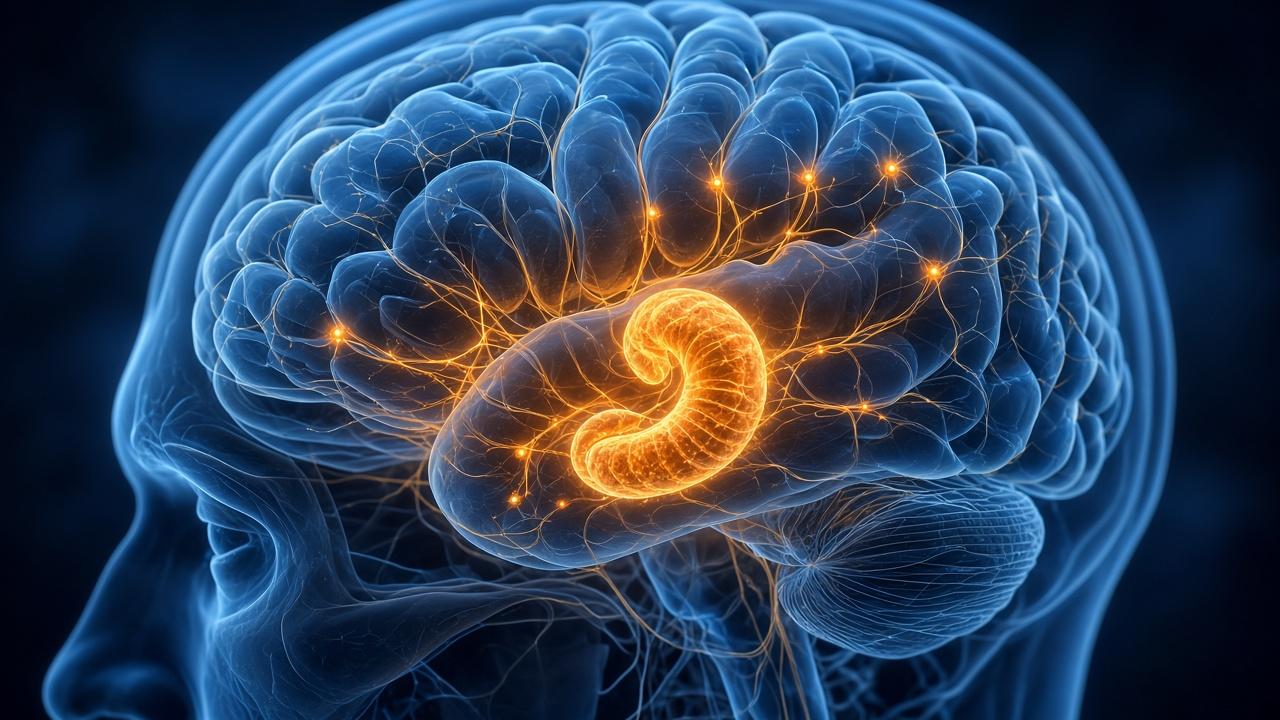
The details are still being worked out, and no single cartoon captures the whole process. In a useful simplification, the hippocampus helps create an index: a compressed record of which distributed cortical pattern was active, bound together with associated context. The memory is not a miniature video stored in one cell. It is a reactivation pattern spanning many regions.
Once that pattern can be triggered again, you can relive a moment that no longer exists in the world. Activate enough of the original coalition — a smell, a phrase, a place — and the rest can come with it.
The first version is fragile. Without reinforcement, the hippocampal index can fade and the synapses can weaken. That is why you forget most of your life. You do not remember how coffee tasted on an ordinary Monday months ago. Most of experience happens once, in the moment you live it.
For a recent pattern to become a lasting memory, it has to keep winning. There are several well-studied ways that happens.
Routine is easy to discard. Walking the usual route while half-listening to a familiar podcast may never generate a strong enough signal. A sudden, unexpected event — something your brain cannot immediately file as ordinary — can drive a much stronger response. Novelty tags the moment as worth keeping.
Reactivating the pattern after it forms is another route. Thinking about an event, telling it, studying it, or encountering it again rehearses the same coalition. That is close to what happens when you try to learn a skill or a set of facts: repetition is not just a study trick. It is a biological request to keep those synapses.
Emotion is an older system than human storytelling. It evolved to guide behaviour: avoid danger, find food, stay with allies, reproduce. You experience that as something feeling good or bad. When feeling is strong, older brain systems treat the moment as important for survival — whether or not the later story of the event is accurate.
That is why so many of the memories that survive have an emotional flavour: humiliation, joy, grief, love. Strong activation, repetition and emotion do related work. They push the relevant neurons to change more dramatically — growing or strengthening synapses so the coalition fires together more easily next time.
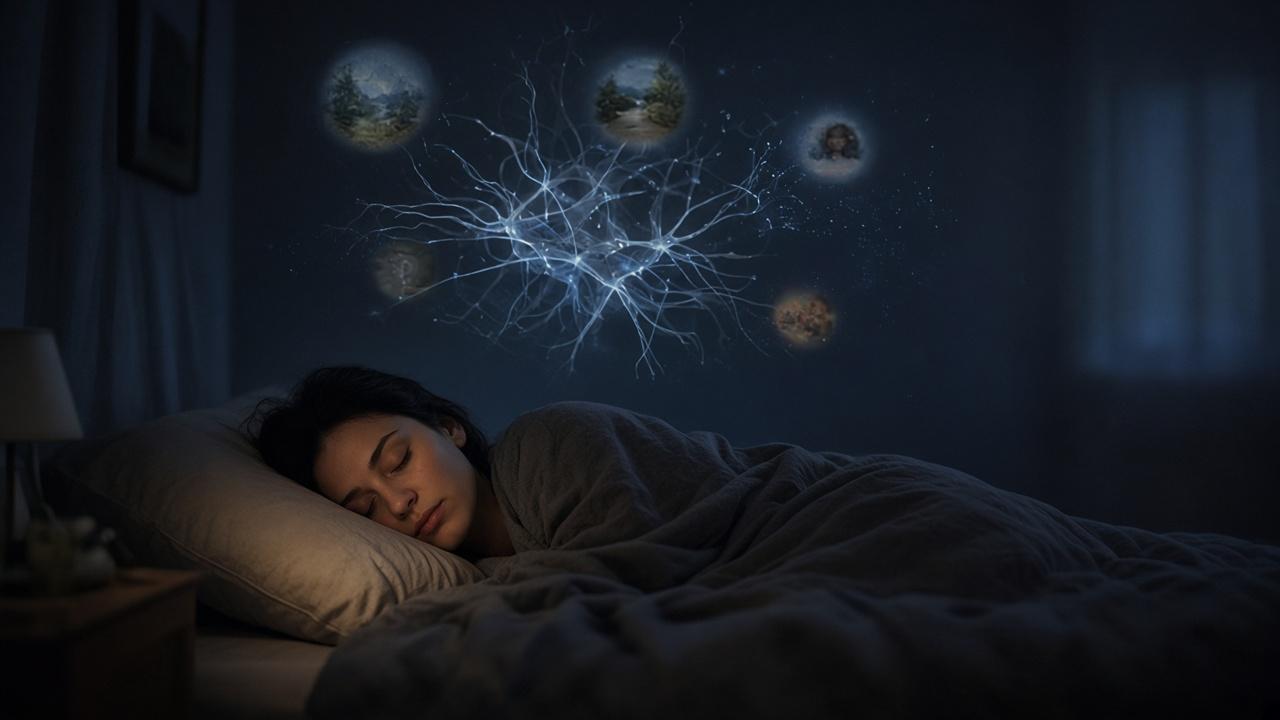
A lot of that stabilization happens while you sleep. The hippocampus can replay recent activity, helping the cortex keep a more durable version of the pattern and making it easier to retrieve later. This is one reason sleep is not optional homework. If you do not sleep enough, you do not merely feel tired. You keep less of what the day tried to store.
That matters for studying as much as it matters for life. Cramming through the night can feel like effort. Biology often treats it as a way to spend time encoding material that will not be there in the morning.
To recall something, you usually need a cue that was part of the original pattern: a smell, a sound, a word, a place. The hippocampus can search its index, find a matching assembly, and help reactivate it. The past experience is retrieved. So far, so good.

But recalling is not like loading a video file and pressing play. Under attention, the pattern can become plastic again. The neurons involved can once more be in a chemical state that allows structural change. This process is often discussed as reconsolidation: after retrieval, a memory can be restabilized — and in that window, it can be updated.
Context matters. The original event may have happened when you were tired, surprised and late. You may recall it later among friends, turning it into a funnier story. That new setting is not a separate comment sitting beside the memory. New connections can form. Some synapses weaken. Others reconfigure. The remembered scene can become more absurd, more heroic, more painful, or more neat than the original ever was.
This is not usually a deliberate rewrite. The brain is incorporating the present into the past. Over time, even important memories can shift, combine with others, or grow details that were never there. Memory is deeply intertwined with learning. It was not designed as a courtroom transcript of the world.
Ironically, the more often you actively remember something, the less of the original experience may remain. A memory you know extremely well is not guaranteed to be correct. It may simply have a strong, vivid assembly. Confidence is a feeling the brain can generate. Accuracy is a different question.
The process is usually slow. Your identity is not going to dissolve today because a synapse changed. It is a gradual shift in the overall patterns inside your mind. You are who you are now. A future version of you will think and feel differently about some of the things you are living through.
That update loop is also one reason talking through painful memories in a safe setting can help some people. Revisiting a hurtful event with new context, support and more useful interpretations is not magic. In biological terms, it can be a chance for the same circuitry to restabilize in a less overwhelming form. It is not a guarantee, a DIY protocol, or a substitute for professional care. It is a reminder that memory is not sealed concrete.
Memories may be the lore of a life and the basis for the next choice. They are also editable tissue. With time, sleep, new experience and, when needed, help, the story a brain tells itself can change — not because the past was deleted, but because the living pattern that stands for the past was never a perfect copy in the first place.
Neuroscience can explain a lot about how experience becomes a change in cells. It cannot yet point to a complete, neuron-by-neuron archive of your childhood. We do not have a machine that downloads a memory like a file. We do not fully understand how a distributed pattern becomes a felt moment of the past. The gaps are real, and they matter.
- Synaptic change and coordinated neuronal activity are central to storing and retrieving information.
- The hippocampus is crucial for forming many new episodic memories, but lasting traces also depend on wider cortical networks.
- Sleep supports consolidation; chronic sleep loss is linked with weaker retention.
- Retrieval can return a memory to a labile state, allowing it to be updated.
- There is still no complete account of how subjective recollection arises from these circuits.
The useful picture is therefore both humbling and strangely hopeful. You are not a stack of unchanging recordings. You are a brain that keeps a workable past — strong enough to learn from, flexible enough to revise, and incomplete enough that certainty should stay a little cautious.
Memory FAQ
How are memories stored in the brain?
Where in the brain are memories kept?
What does the hippocampus do?
Why do we forget most of our lives?
Does sleep help memory?
Why do emotional memories last longer?
Does remembering change a memory?
If I remember something vividly, is it true?
Can therapy change memories?
What this picture of memory explains — and where it still stops
What works
- Separates the popular 'brain as hard drive' metaphor from how synaptic patterns actually work.
- Connects encoding, the hippocampus, sleep, emotion and reconsolidation without treating them as magic.
- Makes a practical point: a strong memory can still be reconstructed.
What doesn't
- The exact mapping from a felt recollection to a specific set of synapses is still incomplete.
- Different memory systems (episodic, semantic, procedural) are simplified in a single narrative.
- Reconsolidation research is important, but it does not mean every recollection rewrites the past in a dramatic way.