Imagine dying during a dangerous mission on another planet. Instead of a funeral, your employer prints a new body, restores your memories, and sends you back to work. The next morning, you wake up with the same face, the same personality, and the memories of the person who died. Would you still be you?
That is the unsettling idea at the heart of Mickey 17, the science-fiction film directed by Bong Joon Ho and starring Robert Pattinson. Its central character, Mickey Barnes, takes a job in which dying is part of the assignment. The premise explores what happens when technology makes a human body seem replaceable.
The film pushes us toward a question that is becoming more interesting as artificial intelligence and biotechnology advance: what would it take to recreate a person after death?
At first, the answer sounds straightforward. Copy the DNA, grow a body, save the memories, and restore them in the new version. But each of those steps represents a different scientific challenge. DNA does not contain a complete recording of someone's life. Growing living tissue is not the same as manufacturing a complete human. And recreating someone's behaviour does not prove that their original consciousness has survived.
Researchers are already making progress in areas that touch parts of this vision. AI helps scientists analyse biological data and study neural circuits. Stem-cell research creates models of human tissues. Brain-computer interfaces translate certain patterns of brain activity into computer commands. Scientists can also clone some animals, although reproductive human cloning has not been demonstrated as a safe or successful technology.
So, could Mickey 17 become real? The most accurate answer is that some individual technologies are real, others are experimental, and the complete system shown in the film remains science fiction.
The most fascinating part is discovering exactly where reality ends—and what would need to happen before that boundary could move.
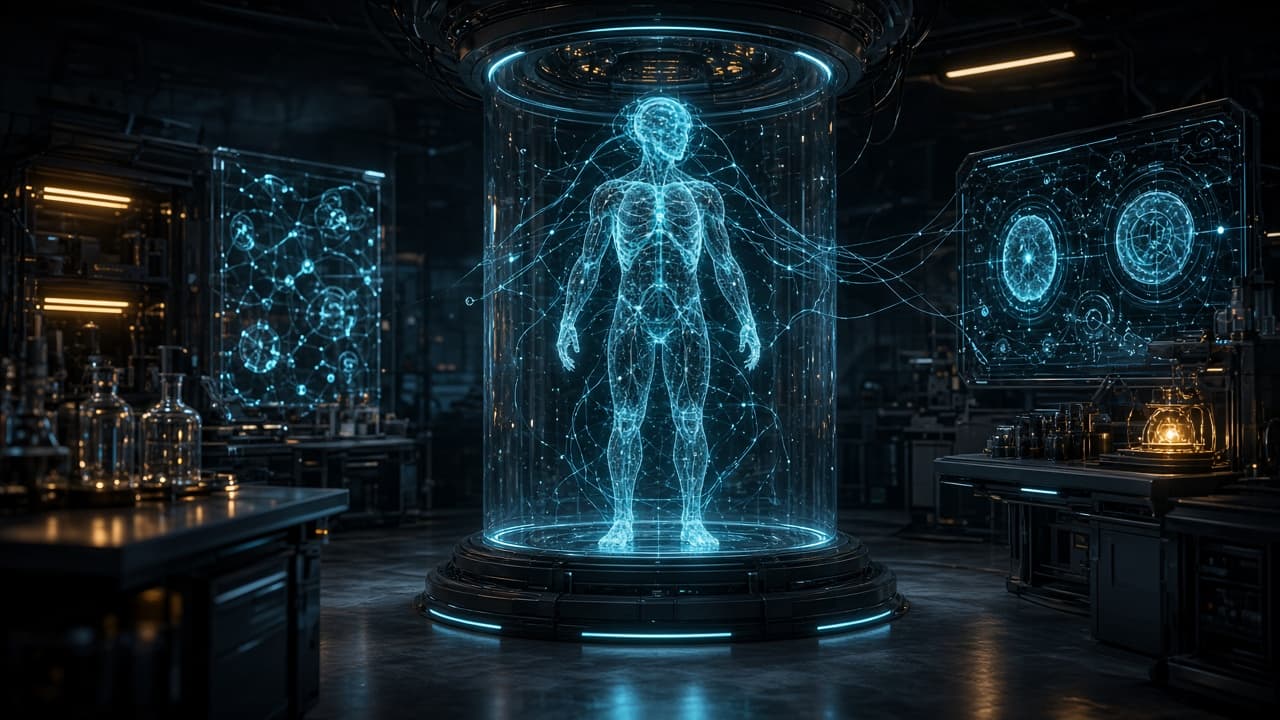
In Mickey 17, Mickey Barnes joins a space expedition and becomes an expendable worker. When one version dies, a replacement can be produced, allowing the mission to continue. The premise turns death into an unsettling workplace procedure rather than an irreversible event.
The concept becomes even more disturbing when we consider what makes each new version Mickey. Is it the same DNA? The same face? The same memories? Or is a person something more than the biological material and information used to reconstruct them?
This is where the film connects with several real areas of research: cloning, regenerative medicine, brain science, AI-assisted biology and digital identity. But the film combines them into one seamless technology, while actual science treats them as separate problems.
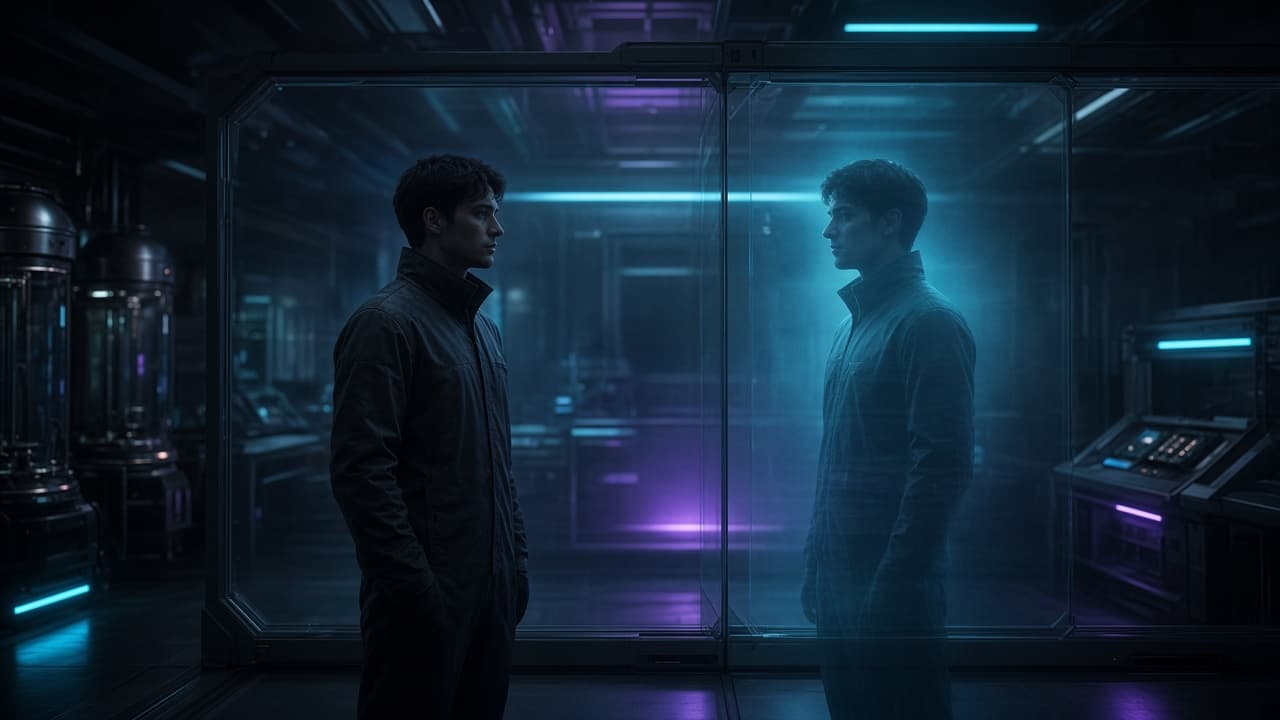
To understand how realistic this future could be, we need to separate three goals: recreating a body, recreating a mind, and preserving the identity of the person who existed before.
Artificial intelligence has changed how researchers can analyse biological information. Machine-learning systems can help identify patterns in molecular data, predict aspects of protein structure, interpret medical images and prioritise experiments. These tools can help scientists explore possibilities that would be difficult to investigate manually.
The important distinction is that predicting a biological structure or analysing a dataset is not the same as constructing a complete organism. Living bodies depend on intricate relationships between cells, tissues, blood vessels, hormones, immune responses, development and the environment.
A computer model can suggest how part of a biological system might behave. Scientists still need experiments to establish whether the prediction is correct, whether it works in living tissue, and whether it is safe.
Imagine asking an AI to design a human body. Even if it could produce a remarkably detailed digital model, that model would not automatically become a functioning organism. Researchers would still need reliable ways to develop and organise the necessary cells, support their growth, establish complex organ systems and ensure that the whole body functions together.
This is why AI could become an important enabling technology for future biotechnology without being the magic ingredient that makes Mickey 17 possible.
Cloning sounds like the closest real-world equivalent to producing another Mickey. However, the word covers different processes, and understanding the difference is essential.
Scientists have cloned animals using techniques such as somatic cell nuclear transfer. In a simplified version of this process, the nucleus of an egg cell is replaced with the nucleus from another body cell. Under suitable conditions, the reconstructed egg can be stimulated to begin developing.
The famous sheep Dolly, born in 1996, demonstrated that a mammal could be cloned from an adult body cell. Animal cloning has since been achieved in multiple species, although the process can be inefficient and can involve serious developmental and health problems.
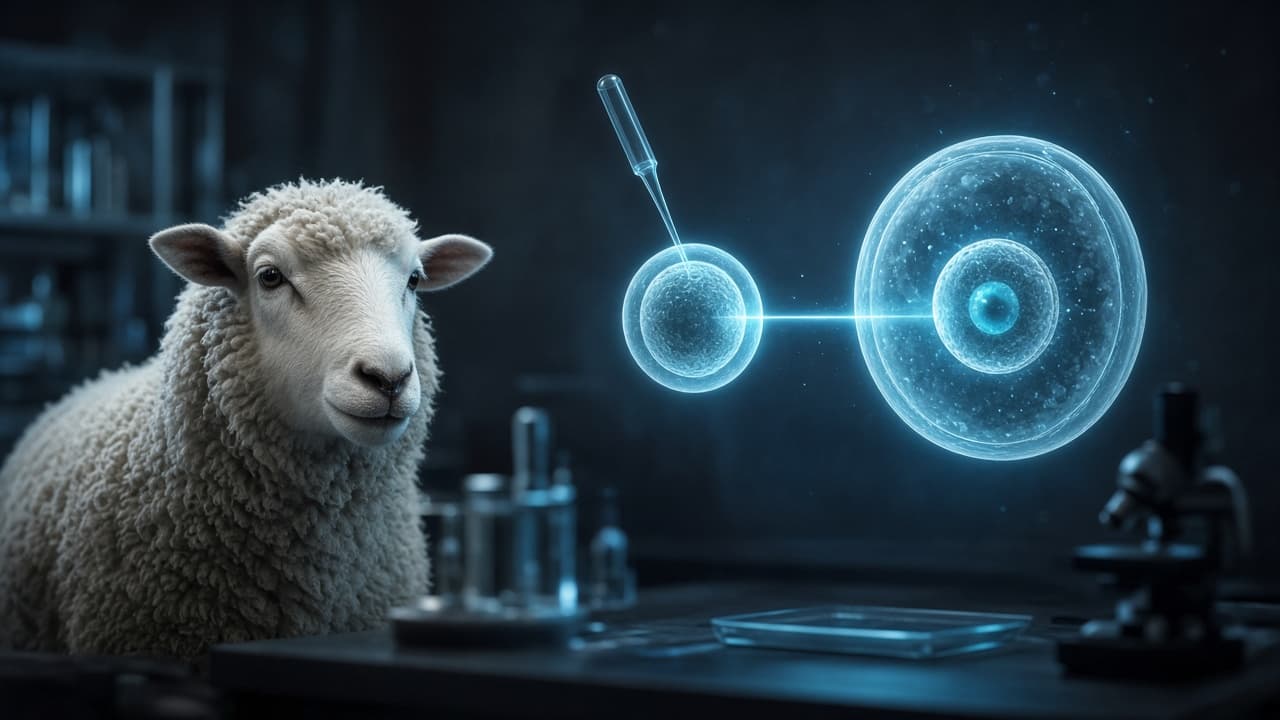
But a genetic clone is not a restored version of the original person. A clone would have a closely matching nuclear genome, but would develop through its own biological life, with its own experiences, learning, relationships and memories.
Imagine cloning an adult musician. The new individual would not automatically know every song the original musician had learned, remember their childhood, or recognise the people they loved. Those memories emerge from the development and activity of a brain, not simply from the DNA sequence.
There is another major obstacle: human reproductive cloning has not been established as a safe, successful medical practice. A National Academies review concluded that it should not be attempted at the time of its assessment because animal evidence indicated serious safety risks.
Therefore, cloning is a genuine scientific achievement, but using it to create a safe human replacement is not an available technology. Even if reproductive cloning were someday technically possible, it would solve only part of the problem shown in Mickey 17.
Your DNA influences many characteristics of your body, but it does not store a complete record of every conversation, experience, skill or relationship you have had. Memories depend on changes in neural networks and the way the brain processes and retrieves information.
A genetic copy could share many inherited characteristics with another individual, yet still be a different person. That is why cloning a body and reconstructing a mind must be treated as separate challenges.
The next part of the Mickey 17 puzzle is biological manufacturing. Instead of cloning an entire person, could scientists grow replacement organs and tissues until the body becomes something that can be repaired or reconstructed?
Research into stem cells and regenerative medicine is already exploring ways to grow or repair specific types of human tissue. Scientists can grow cells in controlled environments and create organoids: three-dimensional structures that reproduce some features of organs or tissues.
Brain organoids, for example, can reproduce selected features of developing neural tissue and help researchers study disease and development. They are valuable experimental models, but they are not miniature human beings or complete working brains.
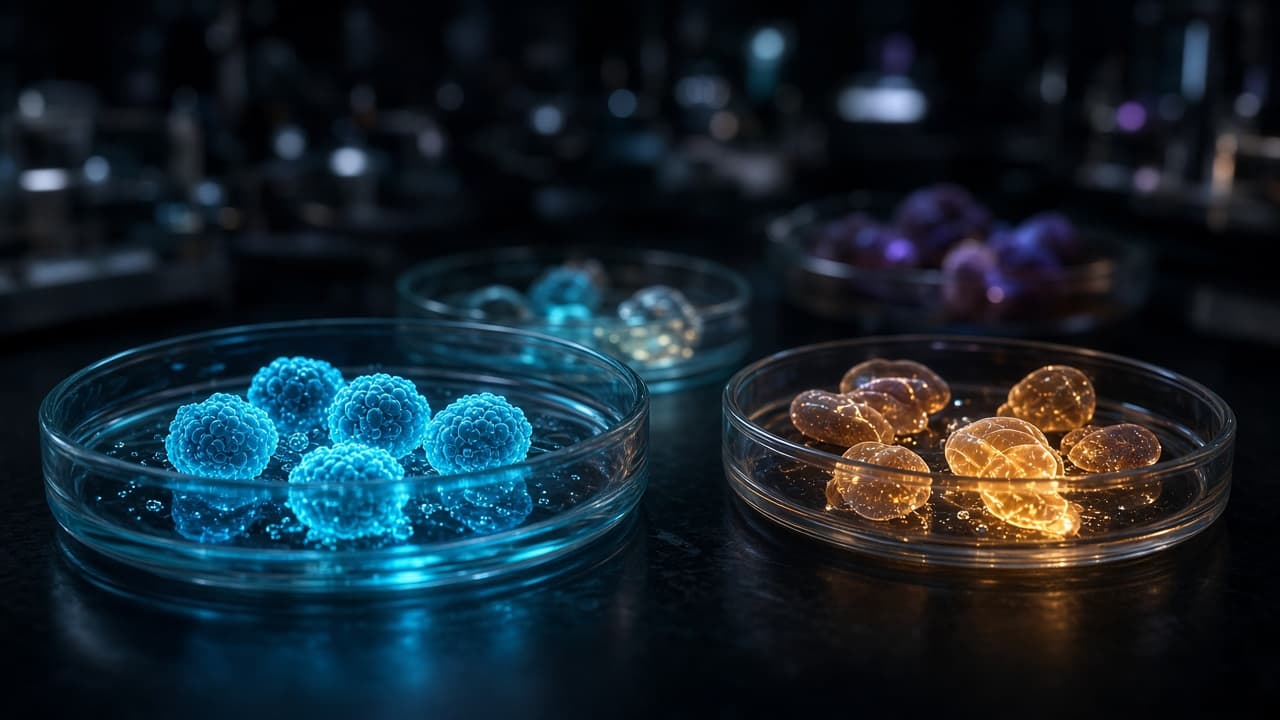
Another promising field is 3D bioprinting, which uses biological materials and cells to construct tissue-like structures. Research is advancing in tissue engineering, disease modelling and the development of more complex biological constructs.
However, building large, living tissues remains difficult. Cells need oxygen and nutrients, waste must be removed, and tissues require the right architecture and connections to function. Complex organs also depend on blood vessels, nerves and specialised cell populations working together.
A printed structure that resembles a piece of tissue is not necessarily a fully functional transplant. Producing an entire human body with mature organs, a functioning nervous system and the capacity to survive independently would be vastly more complicated.
So, could future biotechnology help replace damaged organs or regenerate more complex tissues? Research makes that a meaningful direction to explore. Could we print a complete replacement Mickey tomorrow? No. Current science is nowhere near demonstrating that capability.
This is the point where Mickey 17 moves far beyond present-day biotechnology. A new body would not be enough. For the replacement to behave like the previous Mickey, the system would need to restore a highly detailed version of his memories, knowledge, personality and learned behaviour.
Human memory is not stored in a single folder inside the brain. Different forms of memory involve distributed neural systems, and learning changes the strengths and patterns of connections between neurons. Memories are reconstructed through brain activity rather than played back from one simple recording.
Scientists can study neural activity, measure some brain signals and investigate how specific memories are encoded. But understanding parts of these processes is very different from reading a person's entire mental history and writing it into another brain.
A true memory-transfer system would need to identify the relevant information in the original brain, understand how that information is represented, reproduce the necessary neural organisation in another brain, and ensure that the reconstructed system functions as intended.
We cannot currently perform that sequence for a human being. We do not have a complete map of an individual person's brain at the required level of functional detail, a validated method for extracting all their memories, or a technique for writing those memories into a new brain.
AI might help scientists interpret increasingly complex neural data in the future. But an AI system that can imitate how a person talks is not the same as a system that has recovered that person's memories from their brain.
Brain-computer interfaces, often called BCIs, create communication pathways between neural activity and external devices. Some research systems can decode patterns associated with intended movement or speech and translate them into computer commands.
These technologies could help people with certain disabilities communicate or control assistive devices. They also offer researchers a way to study how signals in the brain relate to movement, perception and intention.
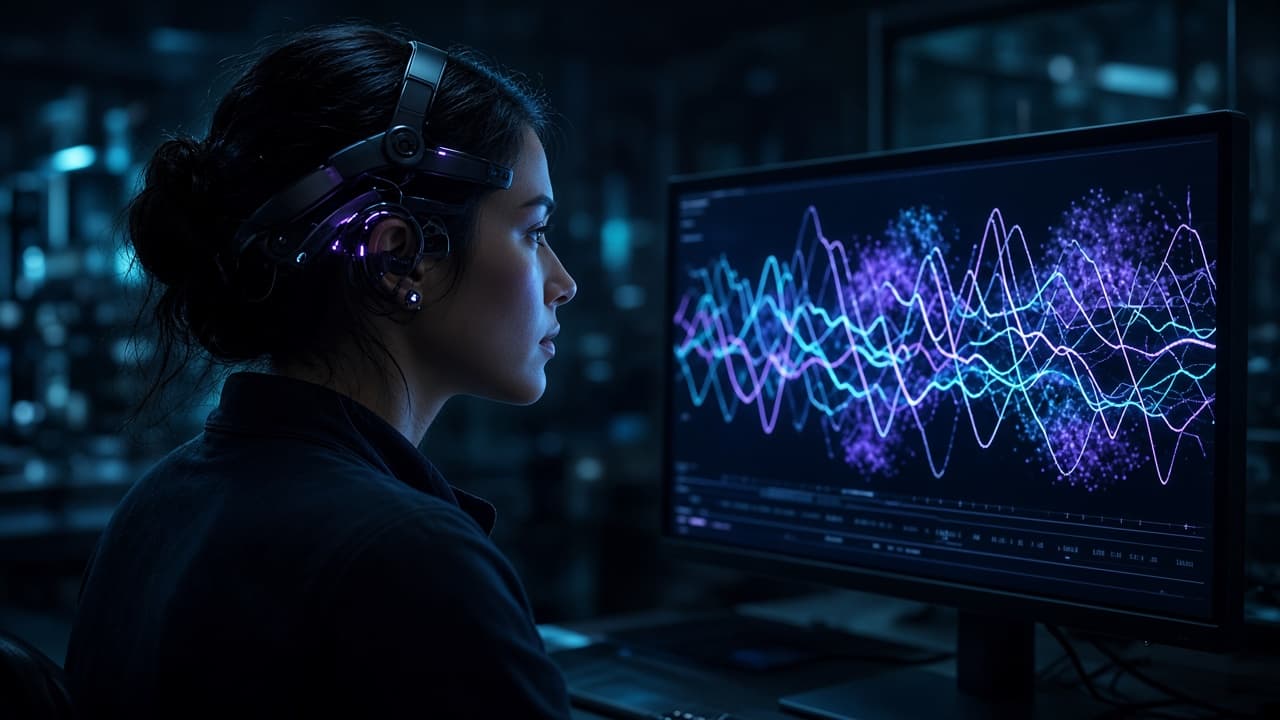
It is tempting to imagine the next step as a device that reads every thought, saves it, and uploads it to a replacement body. But that is not what current BCIs do.
A system that decodes a limited set of signals for a specific task has a very different job from a system that understands all the information represented across a human brain. Neural recordings also depend on where and how they are collected, and the interpretation of brain signals remains an active research challenge.
BCIs are an important part of the wider neuroscience story, but they are not a shortcut to digital immortality. They show that brain activity can be connected to machines in meaningful ways, not that the mind can be copied wholesale.
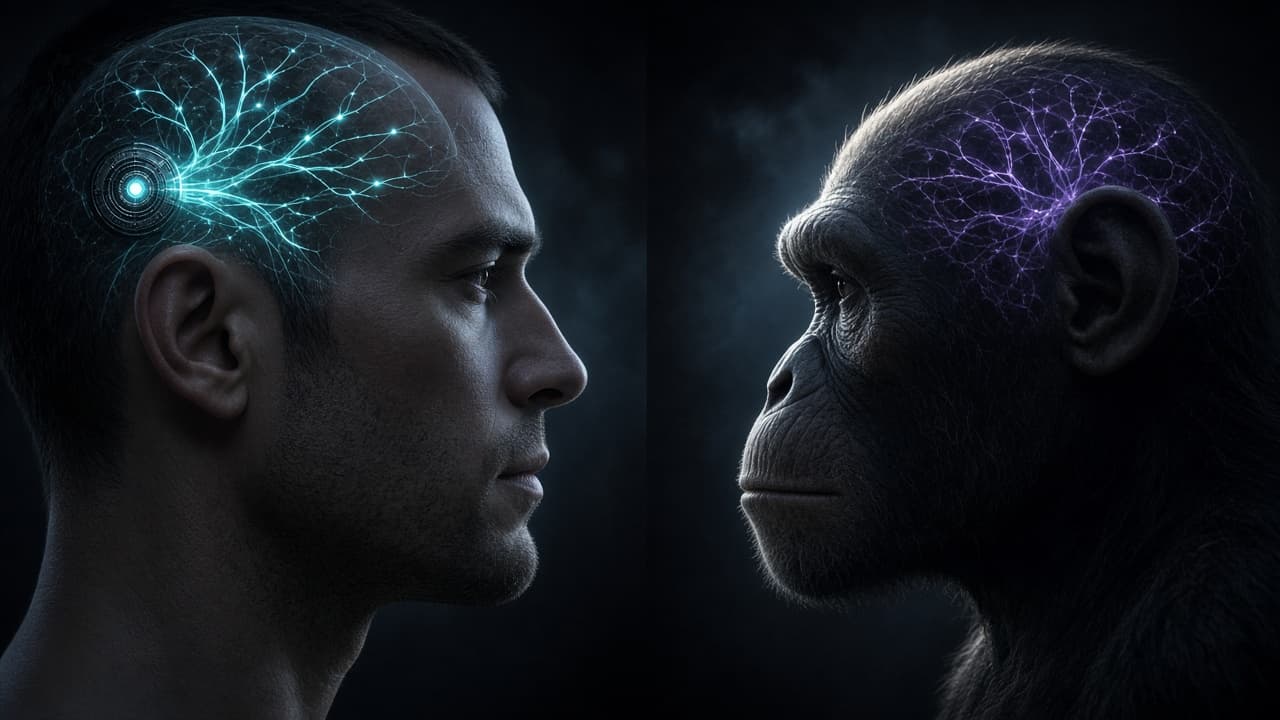
Now imagine abandoning the replacement body entirely. What if scientists could reconstruct your brain digitally and run a model that remembered your life, spoke like you, and responded to the world as you might?
This idea is commonly called mind uploading or whole-brain emulation. In principle, it would require researchers to capture enough information about an individual brain, understand the relevant processes, build a sufficiently faithful computational model, and run that model on a computer.
Researchers are making progress in mapping neural circuits and modelling aspects of brain function in small organisms. AI tools can assist with analysing large datasets, and new experiments are helping scientists understand how the organisation of neural networks relates to behaviour.
But the human brain is extraordinarily complex. It contains tens of billions of neurons, alongside a vast number of connections and supporting biological processes. Scientists still do not know exactly what level of detail would be required to reproduce an individual's memories, personality and conscious experience faithfully.
A 2026 discussion by researchers at MIT's McGovern Institute highlighted both the technical barriers and the unresolved philosophical questions. Mapping the brain at sufficient detail is a major challenge, and even a successful computational reconstruction would not automatically settle whether the person's subjective experience had continued.
There is a distinction between creating a digital system that convincingly behaves like you and proving that you have survived inside it. A digital version might tell your stories, recognise your family and imitate your mannerisms. Those abilities alone would not establish that your original conscious experience had transferred.
Consider a thought experiment. A machine scans your brain and creates an exceptionally accurate digital copy. The copy wakes up, recognises your friends and remembers your childhood. At the same time, your biological body remains alive.
Which one is the real you? Both could claim to have your memories. Both could feel certain about their past. But the existence of a convincing copy does not tell us whether one stream of consciousness has continued or whether a new individual with matching memories has begun.
Now imagine that the biological person dies during the process. The digital version still wakes up. Has the original person survived, or has a new entity inherited their information? Science has no established test that resolves this question.
This is not merely a philosophical detail. If mind uploading ever becomes technically plausible, the answer could affect laws, medical decisions, family relationships, consent, ownership and the rights of digital entities.
AI systems can already generate text, images, voices and conversational responses resembling those of real people. With enough recordings and other digital material, a system may imitate a person's communication style and recall details that appear in the available data.
This can be emotionally powerful. A digital recreation might answer familiar questions, tell old stories or reproduce a loved one's voice. But it is important to distinguish a simulation built from records from the original person.
An AI reconstruction can only use information it has access to, along with patterns learned during training. It may generate plausible details that the person never said or believed. Its confidence should not be mistaken for evidence that it possesses the original person's memories or consciousness.
If a person's complete mental state was never recorded, an AI cannot simply retrieve it from nowhere. A large collection of photographs, messages, interviews and videos may support a convincing digital likeness, but that is not the same as recovering the biological brain.
The distinction will become increasingly important as digital memorials and AI companions become more realistic. These tools may help people preserve stories and memories, but they should not be presented as proven methods of resurrecting the dead.
A real-world Mickey 17 system would require several breakthroughs to work together. Solving only one problem would not be enough.
- Reliable biological reconstruction: scientists would need a safe and repeatable way to create or repair a body with fully functioning organs and tissues.
- Precise neural mapping: researchers would need to capture the structure and relevant functional state of an individual's brain at extraordinary detail.
- Memory reconstruction: the information underlying memories, learned skills and personality would need to be identified and reproduced reliably.
- Brain restoration or emulation: a new biological brain or computational system would need to recreate the required functions and integrate them into a working system.
- Identity and consciousness tests: science would need better ways to assess what a successful reconstruction actually means, while recognising that behavioural similarity alone cannot prove personal continuity.
- Safety and governance: the technology would need safeguards addressing consent, medical risks, privacy, ownership and the rights of any recreated individual.
These steps are not a guaranteed roadmap. Some may require discoveries that are difficult to predict, and scientists may find that certain assumptions about memory, consciousness or biological reconstruction are incomplete.
The most important point is that AI, cloning and regenerative medicine are not interchangeable technologies. A future breakthrough in one area would not automatically solve the others.
Mickey 17 is unsettling because it treats a person as a replaceable resource. If recreating a body ever became possible, the ethical consequences could be as significant as the technical achievement.
Who would control the process? Could an employer demand that a worker accept repeated replacement? Would a recreated person have the same legal identity, debts, relationships and rights as the original? Could someone be copied without consent?
If a digital copy or biological reconstruction had memories and preferences resembling those of a previous person, it would raise further questions. Could it refuse to work? Would it be a new individual? Who would decide whether it could be switched off?
These are hypothetical questions about a technology that does not currently exist in the form shown in the film. Nevertheless, debates over AI rights, genetic technologies, medical consent and personal data already show why new capabilities need thoughtful rules.
The ability to create something that resembles a human does not automatically settle how it should be treated. The closer technology comes to reproducing human capabilities, the more important it becomes to distinguish technical possibility from moral permission.
There is no reliable date for when a Mickey 17-style system could exist, and current science does not support predicting that it will necessarily become possible. A more useful approach is to assess the separate technologies.
- AI systems that help researchers analyse biological data and study neural activity.
- Cloning of certain animal species using established laboratory techniques.
- Stem-cell methods for producing specialised cells and studying tissue development.
- Brain-computer interfaces that translate selected neural signals into computer commands.
- Digital AI systems that imitate aspects of a person's voice, writing style or conversational behaviour.
- Growing more complex tissues and organoids for disease research and potential regenerative applications.
- Developing increasingly capable brain-computer interfaces and methods for interpreting neural signals.
- Mapping neural circuits and building computational models of aspects of brain function.
- Using AI to accelerate parts of drug discovery, biological modelling and experimental design.
- Printing a complete, healthy human body on demand.
- Transferring a person's entire memory and personality into a replacement biological brain.
- Restoring a dead person as the same continuous conscious individual.
- Repeatedly regenerating a person with reliable memory restoration after every death.
- Proving that a digital copy or biological duplicate is the original person's continuing consciousness.
This is the most honest way to view the future. Science is advancing rapidly in individual areas, but a collection of promising technologies is not the same as a complete, integrated capability.
Could Mickey 17 become real? Parts of the technology have real scientific foundations. Animal cloning exists. Scientists can grow selected types of cells and organoids. AI can accelerate biological research, and brain-computer interfaces can translate certain neural signals into useful commands.
But the film's complete promise—a replacement human body that can be produced after death and restored with the previous person's memories—is far beyond what science can currently do.
The most difficult challenge may not be building a body. It may be understanding how memories and identity emerge from a living brain, and deciding what evidence would show that a recreated person is truly the same individual.
AI may help researchers make important discoveries in neuroscience and biotechnology. Those discoveries could transform medicine, improve organ replacement and deepen our understanding of the brain. But we should not confuse progress in those areas with proof that immortality is around the corner.
Perhaps the most unsettling question raised by Mickey 17 is not whether we can create another version of a person. It is whether a perfect copy, with the same memories and personality, would mean that the original person had survived.
Until science can answer that question—and overcome the enormous technical barriers that come before it—the world of Mickey 17 remains a provocative thought experiment rather than an emerging medical procedure.