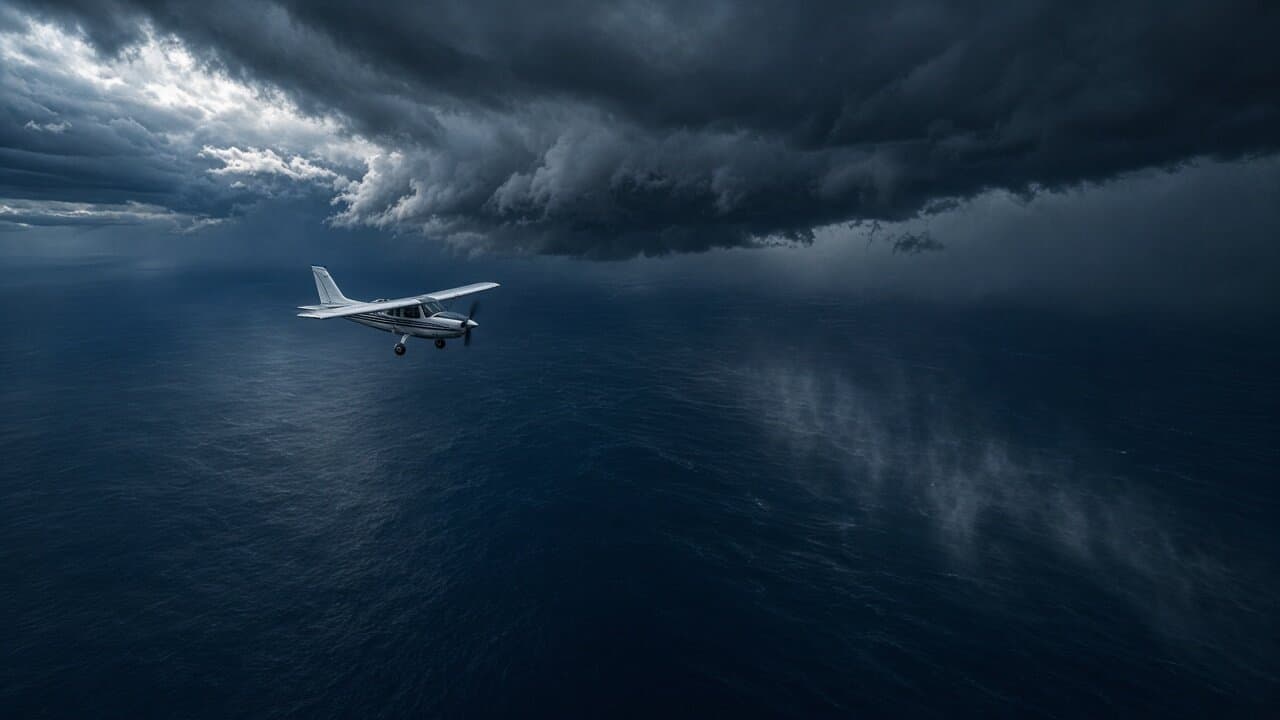
Imagine being thousands of feet above the Atlantic Ocean when your instruments begin to confuse you, the coastline disappears from view, and you realize you may not know where you are. You call for help. Then the radio goes silent. No confirmed wreckage is ever recovered.
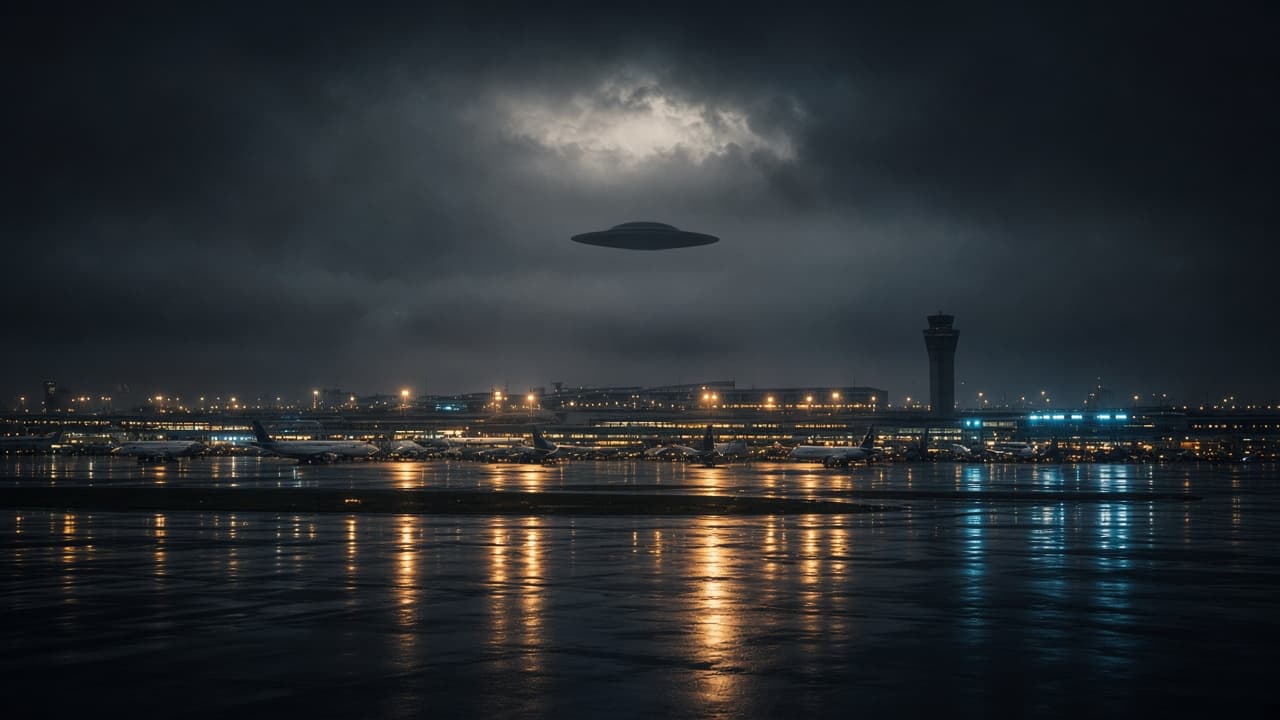
For decades, stories like these have made the Bermuda Triangle one of the most recognizable mysteries on Earth. The region, commonly described as the stretch of Atlantic Ocean between Florida, Bermuda, and Puerto Rico, has been associated with missing aircraft, vanished ships, strange compass readings, and theories involving everything from magnetic anomalies to extraterrestrial visitors.
Some of the incidents behind the legend are real tragedies. In others, details became distorted as newspaper stories, books, and television documentaries repeated them. A few disappearances remain genuinely unresolved, but an unresolved accident is not automatically evidence of an extraordinary force.
So what happens when we examine the evidence instead of the legend? This investigation follows several famous cases, looks at the scientists and investigators who have tried to explain them, and asks a more important question: Is the Bermuda Triangle an exceptional danger zone, or have ordinary hazards and decades of storytelling created an extraordinary reputation?
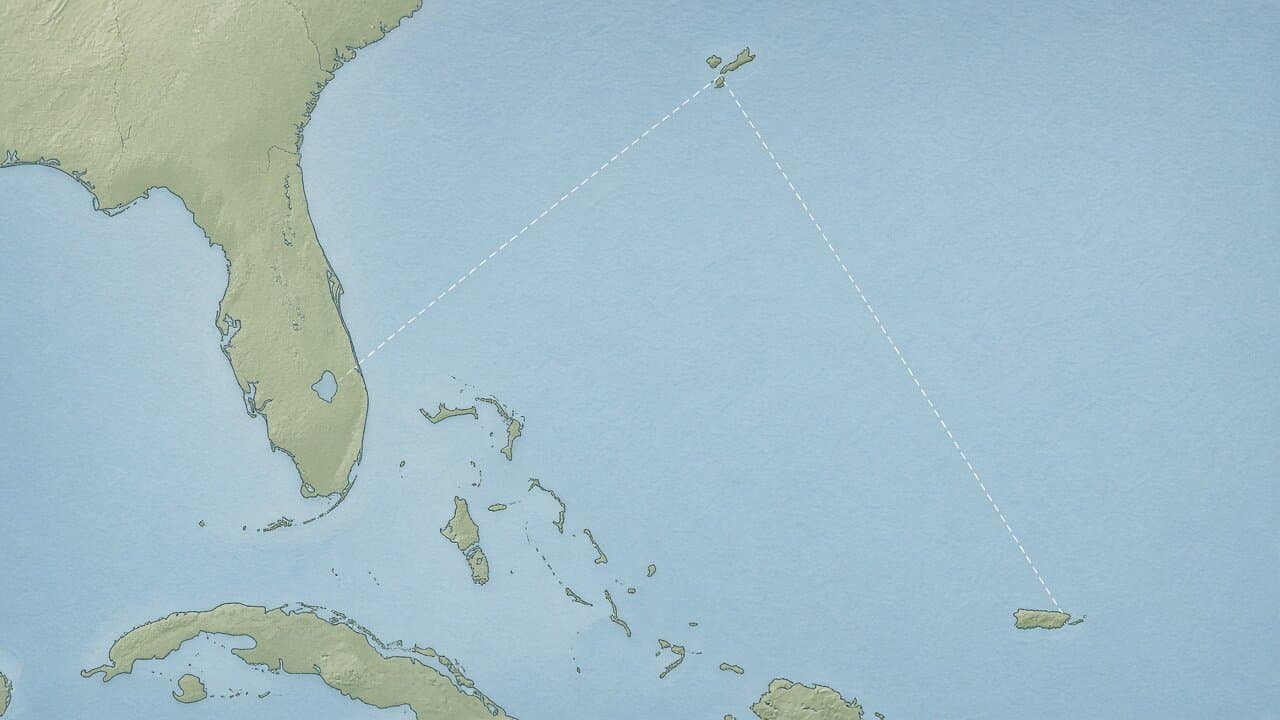
The Bermuda Triangle is generally placed between the southeastern coast of Florida, the island of Bermuda, and Puerto Rico. Depending on the author, its boundaries can extend across different portions of the western North Atlantic and Caribbean approaches.
That uncertainty matters. The Bermuda Triangle is not an officially defined ocean region with an agreed boundary. The U.S. Board on Geographic Names does not recognize it as an official geographic name, and the U.S. Coast Guard does not treat it as a distinct maritime danger zone.
Ships and aircraft routinely travel through these waters. South Florida, the Bahamas, the Caribbean, and Bermuda are connected by busy commercial, military, and recreational routes. Where traffic is frequent, accidents will happen—and some will occur far from land, where rescue and recovery are difficult.
On December 5, 1945, five U.S. Navy TBM Avenger torpedo bombers departed Naval Air Station Fort Lauderdale, Florida, on a routine navigation and bombing training mission over the Bahamas. The group became known as Flight 19, and its disappearance would become the defining story of the Bermuda Triangle.
The mission was led by Lieutenant Charles C. Taylor, an experienced naval aviator. The aircraft were supposed to carry out a training exercise, navigate across the islands, and return to Florida. But during the flight, radio transmissions indicated that the pilots were experiencing navigation difficulties and could not confidently identify their position.
The intercepted communications became central to the mystery. The pilots reported difficulty determining their direction and locating familiar landmarks. As the situation deteriorated, the group appeared increasingly disoriented. The aircraft eventually disappeared over the Atlantic, and no confirmed wreckage or remains of the 14 people aboard the five Avengers were recovered.
The U.S. Navy's historical accounts describe navigation problems and possible disorientation as central elements of the tragedy. One reconstruction suggests Taylor may have mistaken the northern Bahamas for the Florida Keys. If he believed the aircraft were in a different location, his decisions about which direction to fly could have taken the group farther out over open water instead of toward safety.
A pilot can be experienced and still make a disastrous navigation error, particularly when visual landmarks are uncertain, several aircraft are communicating under pressure, and fuel is running low. Once a group loses confidence in its position, conflicting interpretations can compound the problem.
This remains a reconstruction, not a confirmed account of every moment. The aircraft were never conclusively located, and investigators could not establish the exact final sequence of events. The important distinction is that a plausible aviation explanation exists even though the physical evidence is incomplete.
The tragedy became even more haunting when a Martin PBM Mariner flying boat carrying 13 people was dispatched to search for the missing aircraft. It also failed to return.
The Navy's historical review notes that the Mariner may have suffered an in-flight fire or explosion. These aircraft had a known risk involving gasoline vapors accumulating in the bilges, and reports of a flaming aircraft were consistent with a sudden catastrophic event. The precise cause of the loss, however, was not conclusively established.
The loss of six aircraft and 27 people during one operation created a powerful story. But the two losses should not be treated as proof of a single mysterious force: the rescue aircraft was a separate flight with its own potential mechanical hazards.
27
People lost in the Flight 19 tragedy
U.S. Navy, Naval History and Heritage Command
Almost three decades before Flight 19, the disappearance of the USS Cyclops created another maritime mystery. The U.S. Navy collier, a large vessel used to transport coal and other bulk cargo, disappeared in March 1918 with 306 people aboard.
The ship was carrying a heavy cargo of manganese ore on its voyage toward Baltimore. It never arrived, and no confirmed wreckage or distress call established its fate. The disappearance remains one of the largest losses of life in U.S. Navy peacetime disaster history.
The circumstances generated many theories. Some considered whether enemy action during the First World War was responsible; others proposed structural failure, cargo-related problems, or other maritime causes. Searches through German wartime records did not establish that a German submarine had sunk the ship.
The ship's precise fate remains unknown. A heavily loaded vessel can be vulnerable to severe weather, structural problems, or cargo-related instability, but without the wreck or decisive records, no single explanation can be declared proven in this case.
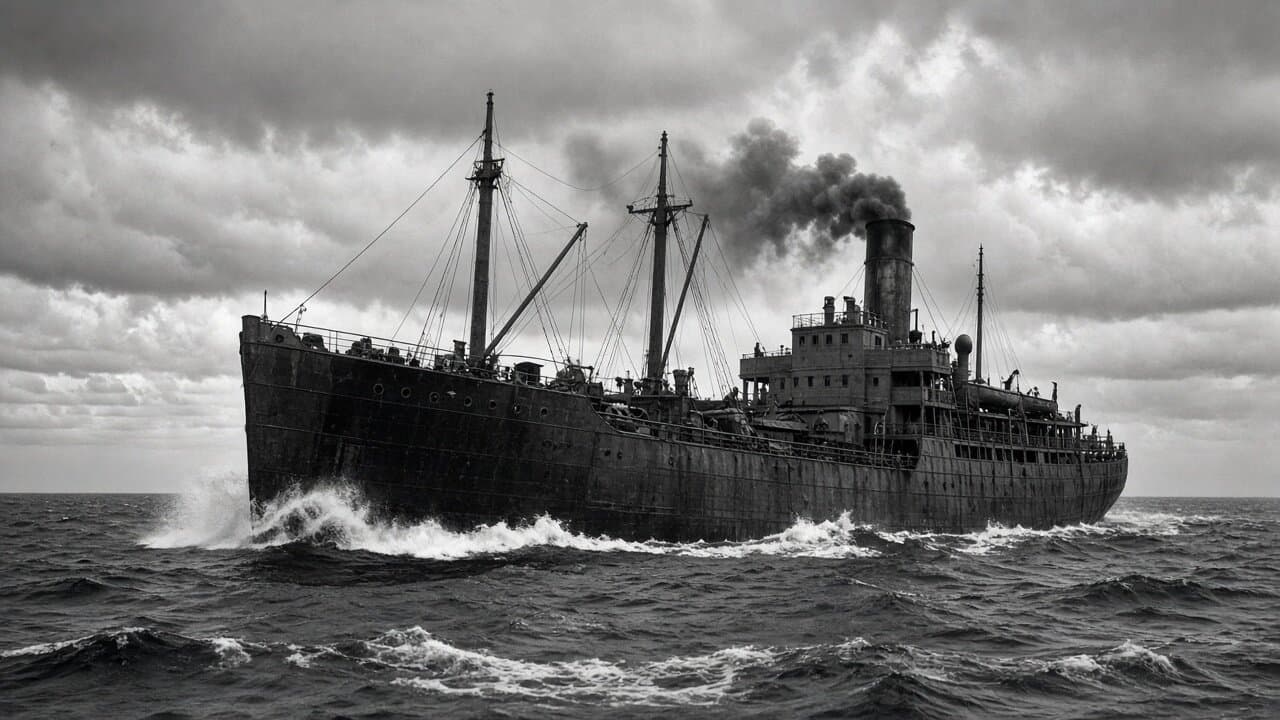
In February 1963, the tanker SS Marine Sulphur Queen disappeared while carrying molten sulphur. The vessel had 39 people aboard, and its last known communications placed it in the Florida Straits region.
Searchers later found a life jacket, but the ship and crew were not recovered. The tanker had been converted to transport molten sulphur in heated tanks, a cargo that created serious industrial and operational hazards.
The U.S. Navy's historical discussion records possible explanations involving the vessel's condition, cargo, and the possibility of a fire or explosion. But the available evidence does not establish a definitive sequence of events. It is more accurate to describe the loss as unresolved than to claim that a specific cause has been proved.
This is an important pattern in maritime disasters: when a ship disappears far from shore, the ocean can remove the very evidence needed to distinguish between competing explanations. An incomplete investigation is not the same thing as evidence of the paranormal.
Flight 19, USS Cyclops, and Marine Sulphur Queen are among the best-known cases, but they are not the only incidents associated with the Triangle. Stories involving aircraft that failed to arrive, ships lost at sea, and distress calls that were never followed by recovered wreckage helped build the region's reputation.
The challenge is that these cases do not all have the same evidential status. Some involve documented accidents with plausible causes; others remain unresolved; still others were reported inaccurately or later placed inside the Triangle despite uncertain locations. Treating them as one uniform category makes the mystery appear stronger than the records justify.
| Incident | What is documented | What remains uncertain |
|---|---|---|
| Flight 19, 1945 | Five Navy Avengers vanished during a training mission; a rescue Mariner was also lost. | The exact fate of the Avengers and the definitive cause of each loss. |
| USS Cyclops, 1918 | The naval collier disappeared with 306 people aboard. | The precise cause and location of the loss. |
| Marine Sulphur Queen, 1963 | The tanker disappeared with 39 people aboard while carrying molten sulphur. | The exact chain of events that led to the ship's loss. |
Yes. The Bermuda Triangle is not a mystery that nobody has tried to investigate. Naval historians, government agencies, writers, aviation specialists, and skeptics have examined the records of famous disappearances and the broader claim that the region is unusually dangerous.
One of the most influential investigations was carried out by Larry Kusche, a reference librarian and pilot. In the early 1970s, he began collecting original accounts and contacting organizations that could provide records about reported disappearances. His research included correspondence with agencies such as the Coast Guard and Air Force, as well as newspaper archives and other historical material.
In 1975, Kusche published The Bermuda Triangle Mystery—Solved. His central finding was that many popular accounts relied on faulty reporting, exaggerated details, omitted weather information, or incidents that did not fit the dramatic retellings. Some cases were not as unexplained as later books claimed; others could not be verified in the form in which they had circulated.
Kusche did not discover the final location of every missing ship or prove the cause of every aircraft loss. His achievement was different: he examined whether the overall mystery had been built on dependable evidence. He showed why checking the original records matters more than repeatedly quoting a sensational story.
The mystery must be tested against the records, not simply repeated because the story is compelling.
Kusche's work remains a key reference in skeptical examinations of the Bermuda Triangle. His approach also offers a useful lesson for modern investigations: trace each claim back to its earliest available source, compare it with official records, and separate confirmed facts from details added by later storytellers.
The U.S. National Oceanic and Atmospheric Administration (NOAA) explains that environmental conditions can account for many maritime losses. Its overview points to tropical storms and hurricanes, rapid weather changes associated with the Gulf Stream, hazardous shallow waters around Caribbean islands, and navigation challenges.
NOAA also states that there is no evidence mysterious disappearances occur more frequently in the Bermuda Triangle than in other large, well-travelled areas of the ocean. The U.S. Coast Guard does not recognize the Triangle as a special hazard zone, and the U.S. Navy's historical records investigate losses as individual maritime or aviation incidents rather than evidence of a supernatural phenomenon.
This does not mean that every disappearance has been solved. It means the available evidence does not establish a unique Bermuda Triangle effect. The distinction is essential: a particular accident may remain unresolved even when the broader claim about the region is unsupported.
There is no single explanation for every loss associated with the Bermuda Triangle. The region covers a large area with changing weather, busy routes, islands, reefs, and deep water. Several well-understood hazards can combine to produce accidents that are difficult to investigate afterward.
The western North Atlantic and Caribbean are exposed to tropical storms and hurricanes. Squalls, thunderstorms, poor visibility, strong winds, and rapidly changing sea conditions can threaten ships and aircraft. Before modern forecasting and satellite observation, crews had fewer ways to detect and avoid developing hazards.
A ship caught in severe conditions can take on water, suffer structural damage, or capsize. An aircraft encountering poor visibility or turbulence can face difficult navigation and flight-management decisions. If an accident occurs far from land, rescuers may not reach the location before debris drifts or sinks.
The Gulf Stream is a strong ocean current that flows through the western North Atlantic. It can carry floating debris away from the location where an aircraft or vessel was lost, complicating search operations. Currents, waves, wind, and the time between an accident and the start of a search can all affect where evidence is eventually found.
This helps explain why an unsuccessful search is not necessarily suspicious. Searchers need a reasonably accurate last-known position, a model of drift and currents, and enough time and resources to cover the relevant area. When those pieces are missing, even an extensive search may find nothing.
A compass points toward magnetic north, not necessarily geographic north. The angle between those directions is called magnetic declination, and it varies by location and over time. Pilots and mariners must account for it when navigating with magnetic instruments.
The existence of magnetic declination is ordinary geophysics, not evidence of a mysterious magnetic force. A compass that is misread, incorrectly calibrated, or used with the wrong navigational assumptions can contribute to an error. In a large area of open water, a small mistake can grow into a serious problem.
Flight 19 is a case where investigators considered navigation and disorientation central to the loss. But it would be inaccurate to claim that all the pilots' compasses were conclusively shown to have failed because of an unusual magnetic anomaly. The historical record does not establish that.
Aircraft engines, fuel systems, radios, electrical equipment, and navigation instruments can fail. Ships can suffer engine trouble, leaks, structural damage, cargo instability, or fires. The consequences become more severe when crews cannot quickly reach help.
Human decisions also matter. Stress, fatigue, poor visibility, incomplete information, and conflicting interpretations can lead people to make mistakes even when they are trained and experienced. Investigators consider the interaction between equipment, environment, procedures, and human judgment rather than assuming one mysterious cause explains every accident.
The Atlantic is vast, and parts of it are extremely deep. Aircraft wreckage may break apart on impact, while metal fragments and other debris can sink beyond the reach of ordinary searches. A ship can disappear with little floating evidence, particularly if it sinks rapidly or the weather disperses the debris.
Modern sonar, underwater robots, satellite observations, and improved drift modelling have transformed search operations, but they cannot guarantee recovery. Technology is most effective when investigators have a useful last-known position and a clear reason to search a particular area. If the search zone is enormous, the cost and time required can be prohibitive.
Popular explanations for the Bermuda Triangle have included the lost civilization of Atlantis, extraterrestrial abductions, time distortions, portals to other dimensions, and unusual magnetic fields. These ideas make compelling entertainment, but none has been established by reliable evidence as the cause of the region's disappearances.
Methane release from seafloor sediments is another proposed explanation. In principle, a sufficiently large release of gas could alter the density of water and affect buoyancy under particular conditions. But the possibility of such a process in general does not show that it caused the famous Bermuda Triangle incidents. There is no convincing evidence that a recurring methane phenomenon explains the region's reported losses.
Similarly, magnetic declination is real, but that does not establish a localized force capable of making aircraft disappear. A claim of this kind would need measurable anomalies, a reliable mechanism, and evidence connecting that mechanism to specific accidents.
The most accurate answer is partly. The claim that the Bermuda Triangle has a uniquely high rate of unexplained disappearances is not supported by the evidence presented by NOAA and the U.S. Coast Guard. Researchers have also shown that several famous stories were exaggerated, misreported, or retold without important details.
But individual losses remain unresolved. The exact fate of the USS Cyclops is unknown. No confirmed trace of Flight 19 has established precisely where the aircraft came down. And the Marine Sulphur Queen's final moments have not been reconstructed with certainty.
These statements can all be true at once. The legend can be unsupported as a claim about a special region, while particular maritime disasters remain genuine mysteries. Science does not require pretending that every question has been answered; it requires stating exactly what the evidence supports.
| Popular claim | What the evidence supports |
|---|---|
| Planes disappear more often here | No reliable evidence establishes an unusually high disappearance rate compared with other busy ocean regions. |
| Compasses behave mysteriously | Magnetic declination is a known navigational factor, but no special supernatural compass effect has been demonstrated. |
| Every disappearance is unexplained | Cases differ: some have plausible explanations, some were inaccurately reported, and others remain unresolved. |
| The ocean hides evidence because of a mysterious force | Depth, currents, weather, debris dispersal, and the limits of search operations can make recovery difficult. |
Modern technology gives investigators tools that were unavailable during many early disappearances. Satellite-based navigation, radar, improved weather forecasting, aircraft tracking, emergency beacons, satellite communications, sonar, and remotely operated underwater vehicles can all help reconstruct accidents or locate wreckage.
How a modern investigation could work
Reconstruct the last known position
Investigators combine radio logs, radar records, navigation data, weather observations, witness accounts, and any available tracking information to establish where the aircraft or vessel was last reliably located.
Model the environmental conditions
Weather records, wind, waves, ocean currents, and known hazards help investigators estimate possible routes, drift patterns, and areas where debris may have travelled.
Search for physical evidence
Aircraft wreckage, ship structures, engine parts, flight recorders, and other debris may help establish whether a loss involved mechanical failure, impact, fire, or another cause.
Test competing explanations
Investigators compare hypotheses against the evidence and rule out explanations that do not fit. A theory should make predictions that can be checked rather than relying on the fact that the case is mysterious.
Publish what is known and unknown
A rigorous investigation separates confirmed findings, likely explanations, and unresolved questions. If the evidence is insufficient, the cause should remain classified as undetermined.
Could this technology solve Flight 19 or locate the USS Cyclops? It is possible that new evidence could emerge, but there is no guarantee. A successful search depends on the wreckage's condition, its location, the quality of historical records, and the resources available. Even sophisticated modern systems cannot recover evidence that cannot be located.
Part of the answer is emotional. A ship disappearing without a distress call or an aircraft vanishing without recoverable wreckage creates a powerful sense of incompleteness. People naturally want a clear ending, and a dramatic theory can feel more satisfying than a conclusion that says the evidence is insufficient.
The legend also benefits from selective storytelling. A mysterious incident is memorable, while the many uneventful flights and voyages through the same region rarely become headlines. Once a location has acquired a reputation, new incidents may be added to the story without checking whether they fit the same geographic boundaries or evidential standards.
Books, documentaries, and online videos have helped keep the mystery alive. They can introduce audiences to real historical events, but the dramatic presentation may blur the difference between a documented fact, a witness's recollection, an investigator's hypothesis, and a speculative theory.
The most interesting conclusion is not that people are foolish for being curious. It is that curiosity works best when it leads us to investigate. The same questions that make a mystery fascinating can also guide careful research—if we are willing to follow the evidence even when the answer is less dramatic than the legend.
The Bermuda Triangle contains real stories of loss: the five aircraft of Flight 19, the vanished USS Cyclops, and the Marine Sulphur Queen. Families and communities were left without the certainty that a recovered wreck or a complete investigation might have provided. Those tragedies deserve to be treated seriously, not merely as fuel for supernatural theories.
Scientists and investigators have not ignored these cases. The U.S. Navy has examined its historical losses, NOAA has addressed the broader claims, and Larry Kusche's painstaking research challenged the way the legend was assembled. Their work suggests that familiar hazards, navigation problems, incomplete records, and exaggerated retellings explain much of the Triangle's reputation.
Not every disappearance has been solved, and new evidence could change what we know about a particular case. But no reliable evidence currently demonstrates that the Bermuda Triangle is a portal, an alien hotspot, or a region where aircraft and ships vanish at an extraordinary rate.
Perhaps the deeper lesson is this: the ocean is dangerous enough without inventing forces we cannot measure. The most valuable mysteries are not the ones we protect from scrutiny, but the ones we investigate carefully—even when the final answer remains out of reach.
And that leaves us with one final question: if modern technology still cannot explain every disappearance from the past, what other historical mysteries might change when we return to the original evidence instead of the stories built around it?
Bermuda Triangle FAQ
Why do planes disappear in the Bermuda Triangle?
Has the Bermuda Triangle mystery been solved?
What happened to Flight 19 in 1945?
Did scientists investigate the Bermuda Triangle?
What is the most likely scientific explanation for Bermuda Triangle disappearances?
Can a compass stop working in the Bermuda Triangle?
Did the USS Cyclops really disappear without a trace?
Could aliens or Atlantis explain the Bermuda Triangle?
Could modern technology solve old Bermuda Triangle cases?
Is the Bermuda Triangle officially recognized as a dangerous area?
What careful investigation clarifies — and what remains unresolved
What works
- Uses documented historical incidents and official naval records.
- Distinguishes plausible explanations from confirmed findings.
- Includes scientific context about weather, currents, navigation, and search limitations.
- Explains how researchers have investigated and challenged the Bermuda Triangle legend.
What doesn't
- Some historical disappearances remain unresolved because physical evidence was never recovered.
- The exact boundaries of the Bermuda Triangle are not standardized, making comparisons difficult.
- Older reports may contain incomplete records, conflicting accounts, or details that cannot now be independently verified.
- No single explanation accounts for every incident associated with the region.