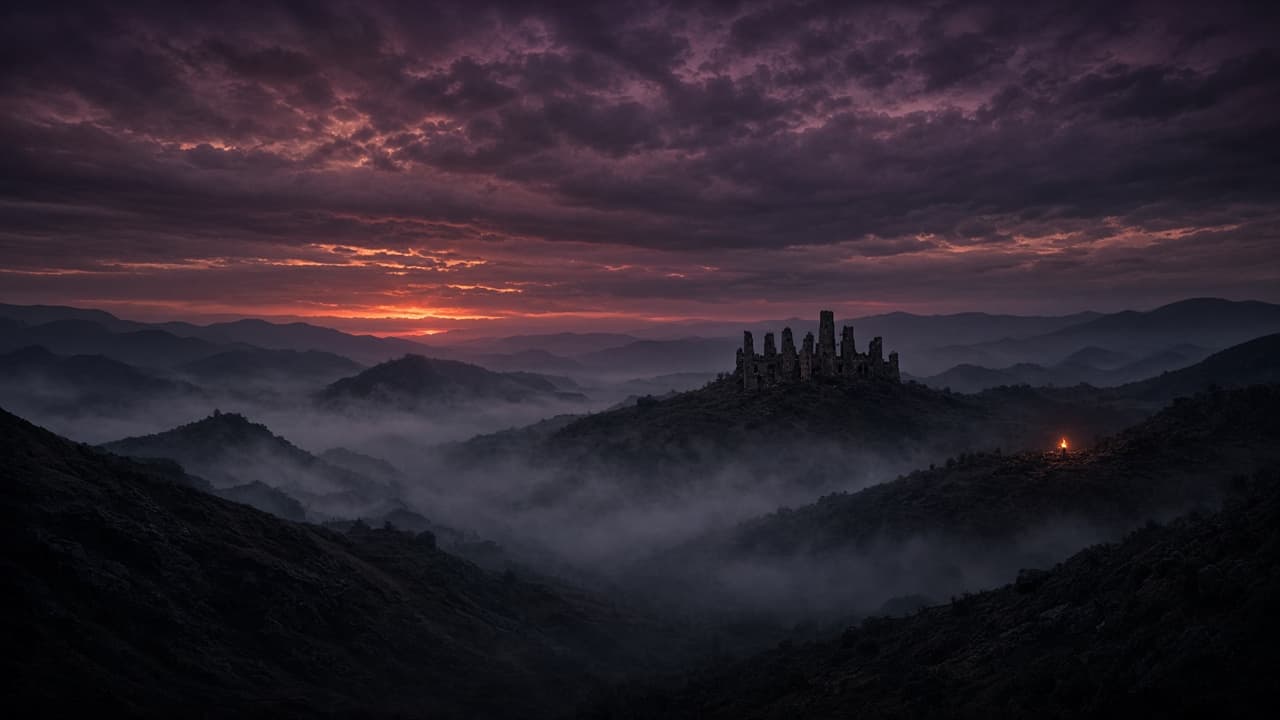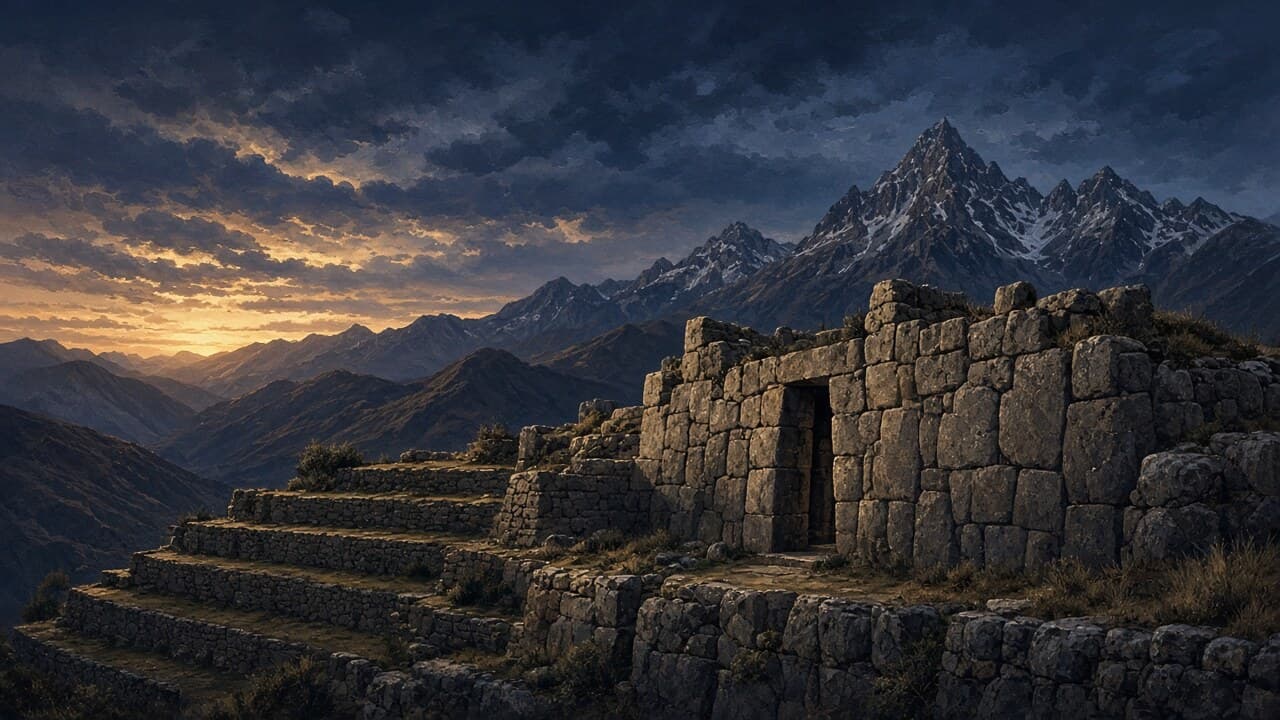
High in the Andes, some of Peru's ruins look less like ordinary archaeological sites and more like remnants of a forgotten technological age.
Peru is often associated with the Inca, Machu Picchu and the spectacular landscapes of the Andes. But the story of civilization in this region reaches much farther back than the Inca Empire.
Ancient settlements such as Caral, Cahuachi and Ollantaytambo preserve evidence of sophisticated planning, monumental construction, religious activity and remarkable knowledge of the landscape. Some features have straightforward archaeological explanations. Others remain subjects of debate, interpretation and speculation.
That distinction matters. The real mystery of ancient Peru may not require visitors from another world. It may simply be that ancient people were capable of far more than we sometimes imagine.
When people picture ancient Peru, the Inca usually come first. Yet the Inca were comparatively late arrivals in a much older cultural landscape. Long before the empire expanded across the Andes, other societies were already constructing monumental architecture, organizing settlements and developing complex ceremonial traditions.
This deeper timeline changes the question. Instead of asking how the Inca built everything we see today, we can ask how thousands of years of Andean experimentation gradually produced some of the continent's most impressive archaeological landscapes.
Deep in the Sacred Valley stands Ollantaytambo, a dramatic complex of terraces, temples and massive stonework. The site became an important center under the Inca ruler Pachacuti, but parts of its construction history remain a subject of discussion.
What immediately captures attention is the scale of the masonry. Huge stones were shaped and fitted into walls with remarkable precision, creating structures that have survived centuries of earthquakes and weathering.
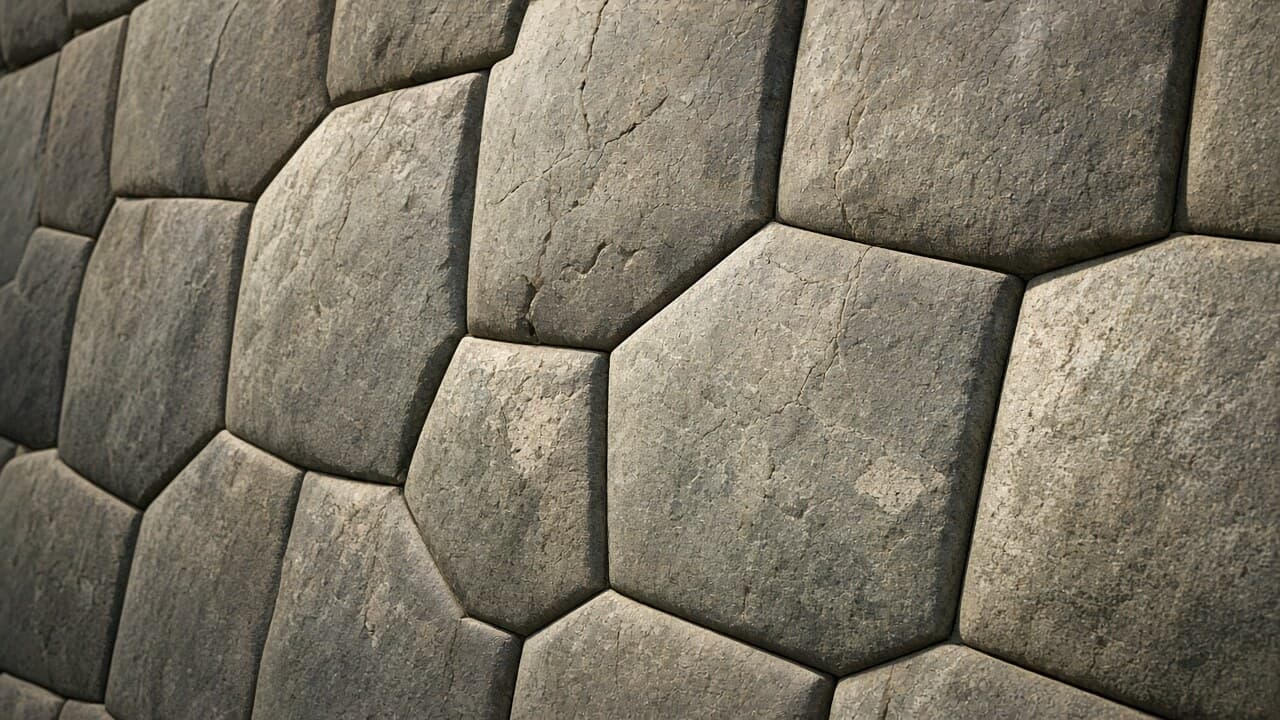
How could people without modern cranes, trucks or hydraulic machinery transport enormous blocks across difficult terrain and position them so accurately?
One of the most impressive aspects of Andean masonry is its ability to withstand seismic activity. Stones were often shaped and fitted in ways that allowed structures to absorb movement rather than simply behaving like rigid modern walls.
The result is architecture that can appear almost impossibly precise. But rather than requiring an unknown energy source, the surviving structures can also be viewed as evidence of generations of accumulated engineering knowledge.
Far from the image of a small prehistoric settlement, Caral reveals something much bigger: an organized urban society with monumental structures, plazas, ceremonial spaces and carefully planned architecture.
UNESCO dates the development of Caral-Supe broadly to the Late Archaic period, with the site's development placed between roughly 3000 and 1800 BC. UNESCO also identifies Caral as the oldest known center of civilization in the Americas.
5,000+ years
Approximate age of Caral
UNESCO World Heritage Centre
Its architecture includes large platform mounds, sunken circular courts and multiple monumental structures. The city was not simply a collection of buildings. Its layout reflects social organization and ceremonial activity.
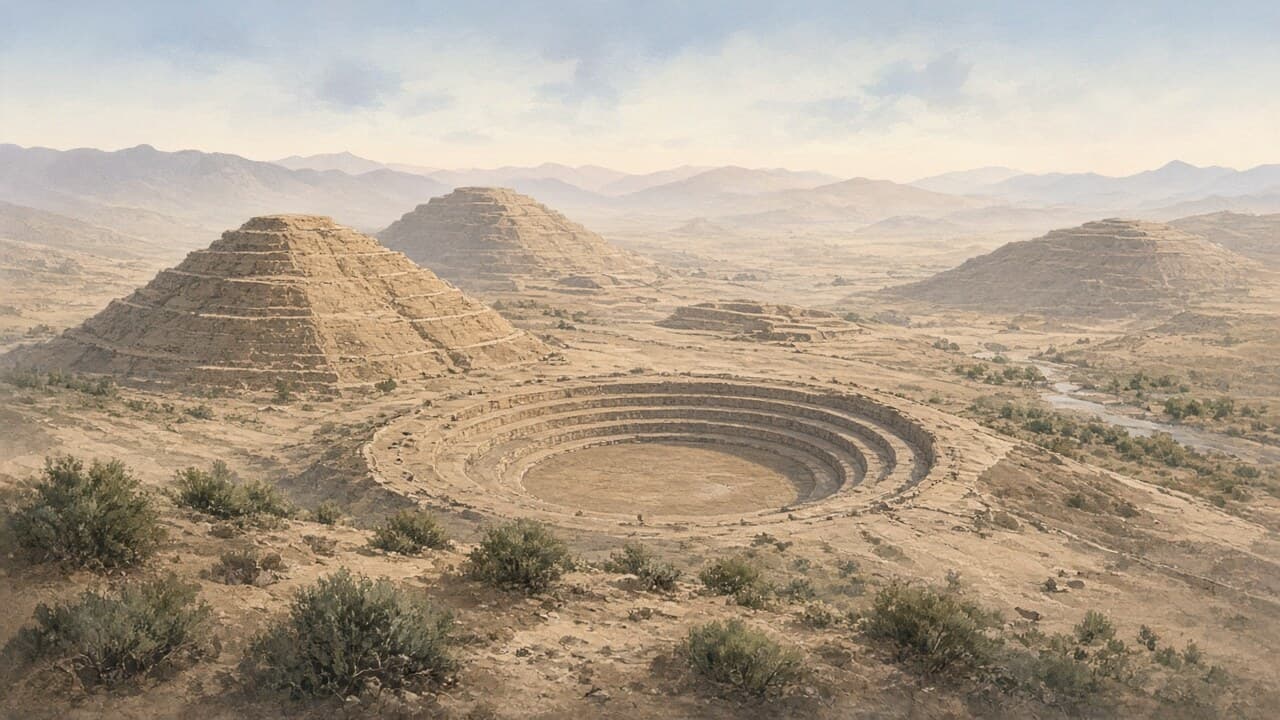
Monumental structures were also developing in other parts of the ancient world around the third millennium BC. Egypt and Mesopotamia were building their own monumental traditions while Caral was developing in the Andes.
The resemblance is intriguing, but resemblance alone does not demonstrate contact between civilizations. Similar architectural solutions can emerge independently when societies develop organized labor, religious institutions, agriculture and increasingly complex political systems.
| Question | Evidence | Interpretation |
|---|---|---|
| Why did different civilizations build monuments? | Monumental architecture appears in multiple ancient societies. | Complex societies often used monumental spaces for religion, politics and social organization. |
| Does similarity prove contact? | Similar forms can appear in different regions. | Additional evidence such as artifacts, inscriptions or trade networks would be required. |
| Does complexity require extraterrestrial help? | Ancient societies demonstrably possessed sophisticated engineering and organizational skills. | No archaeological evidence establishes extraterrestrial involvement. |
Another part of Peru's ancient puzzle appears farther south at Cahuachi, a major ceremonial center associated with the Nazca culture.
Rather than functioning like a conventional city packed with permanent residents, Cahuachi appears to have been strongly connected to ceremonial gatherings, ritual activity and religious life. Its massive mounds and plazas reveal how much importance Nazca society placed on sacred spaces.
The decline of Cahuachi and the transformation of Nazca society are sometimes presented as another mystery. But archaeology rarely gives us a single dramatic moment when an entire culture simply vanishes. Population movement, environmental change, political transformation and changes in religious centers can all contribute to the abandonment or transformation of a site.
Few subjects create as much speculation as the elongated human skulls associated with ancient Peru. Their unusual appearance has sometimes been presented as possible evidence of non-human visitors.
But there is an important archaeological explanation that changes the picture: intentional cranial modification.
Human communities in different parts of the world practiced deliberate modification of infant skulls while the bones were still developing. In the Andes, archaeological research has documented different forms of cranial modification, and the practice could be connected to identity, social status, family affiliation or cultural tradition.

There is no single answer for every culture. Researchers have proposed explanations involving social identity, status, group affiliation and cultural ideals. In some societies, a particular head shape may have helped communicate that a person belonged to a particular community.
That explanation is arguably more fascinating than the alien hypothesis because it reveals how deeply cultural identity could be expressed through the human body.
These archaeological mysteries are sometimes used to explore an extraordinary possibility: that ancient civilizations may have interacted with technologically advanced beings from elsewhere.
The theory points to enormous stones, unusual architecture, astronomical associations and distinctive human imagery as possible clues. In that interpretation, ancient people may have encountered visitors and later represented them as gods.
It is an intriguing narrative, but it is important to separate an interesting hypothesis from archaeological evidence. The existence of monumental architecture does not by itself establish extraterrestrial intervention, and unusual skull shapes do not establish a non-human population.
- Ancient Peru contained complex societies long before the rise of the Inca Empire.
- Caral developed monumental architecture thousands of years ago.
- Cahuachi became an important ceremonial center of the Nazca world.
- Ollantaytambo contains remarkable stone architecture associated with the Inca period and earlier construction traditions.
- Ancient Andean societies possessed sophisticated knowledge of construction, agriculture, astronomy and social organization.
- Intentional cranial modification was practiced by some ancient populations.
- The archaeological record does not currently demonstrate that extraterrestrial beings built Peru's ancient monuments.
The most compelling mystery may not be whether aliens visited ancient Peru. It may be how human societies developed such extraordinary capabilities without the technologies we associate with advanced civilization today.
Moving enormous stones is difficult. Designing earthquake-resistant structures is difficult. Organizing thousands of people around monumental construction is difficult. Creating cities, ceremonial centers and sophisticated agricultural systems in extreme environments is difficult.
And yet ancient communities repeatedly accomplished these things.
The deeper we look into ancient Peru, the more complicated the boundary becomes between what we know, what we can reconstruct and what we still do not understand.
There is an important lesson hidden inside Peru's mysteries: saying 'we do not yet know' is not the same as saying 'therefore it must have been aliens.' Archaeology often works with incomplete evidence. A missing explanation is an invitation for more research, not automatically proof of the most extraordinary possibility.
At the same time, skepticism should not make us underestimate ancient people. The archaeological record already demonstrates remarkable achievements. Ancient Peru does not need an extraterrestrial explanation to be extraordinary.
Peru's ancient landscapes invite extraordinary theories because they are extraordinary places. Massive stones rise from mountainsides. Ancient cities emerge from desert valleys. Ceremonial centers reveal complex religious traditions. Human remains preserve evidence of practices that can seem strange to modern eyes.
But perhaps the most interesting discovery is closer to home. These monuments were created by human societies that possessed knowledge, organization and imagination that we are still working to reconstruct.
The question is no longer simply whether ancient Peru was visited by beings from the stars. The more grounded—and perhaps more fascinating—question is this: how much did ancient humans understand that we have forgotten?
Ancient Peru is filled with mysteries, but mystery should not be confused with proof. Some questions remain unanswered because archaeological evidence is incomplete; others have explanations that are less sensational but far more firmly supported.
Whether you approach Ollantaytambo, Caral and Cahuachi through archaeology, history or the lens of ancient-astronaut speculation, the same fact remains impossible to ignore: the people who built these places were extraordinarily capable.
And that leaves us with a question worth carrying beyond the Andes: if ancient humans could accomplish so much with technologies we barely understand today, what other forgotten achievements are still waiting beneath the surface?
What this reading clarifies — and what it cannot
What works
- Uses archaeological evidence to explore Peru's ancient civilizations.
- Highlights the engineering and urban-planning achievements of ancient societies.
- Separates documented archaeology from speculative ancient-astronaut interpretations.
- Shows why unusual skulls and monumental architecture can have multiple interpretations.
What doesn't
- Many ancient construction techniques remain incompletely reconstructed.
- Some popular claims about Peru's monuments go beyond available archaeological evidence.
- The ancient-astronaut hypothesis remains speculative rather than archaeologically established.