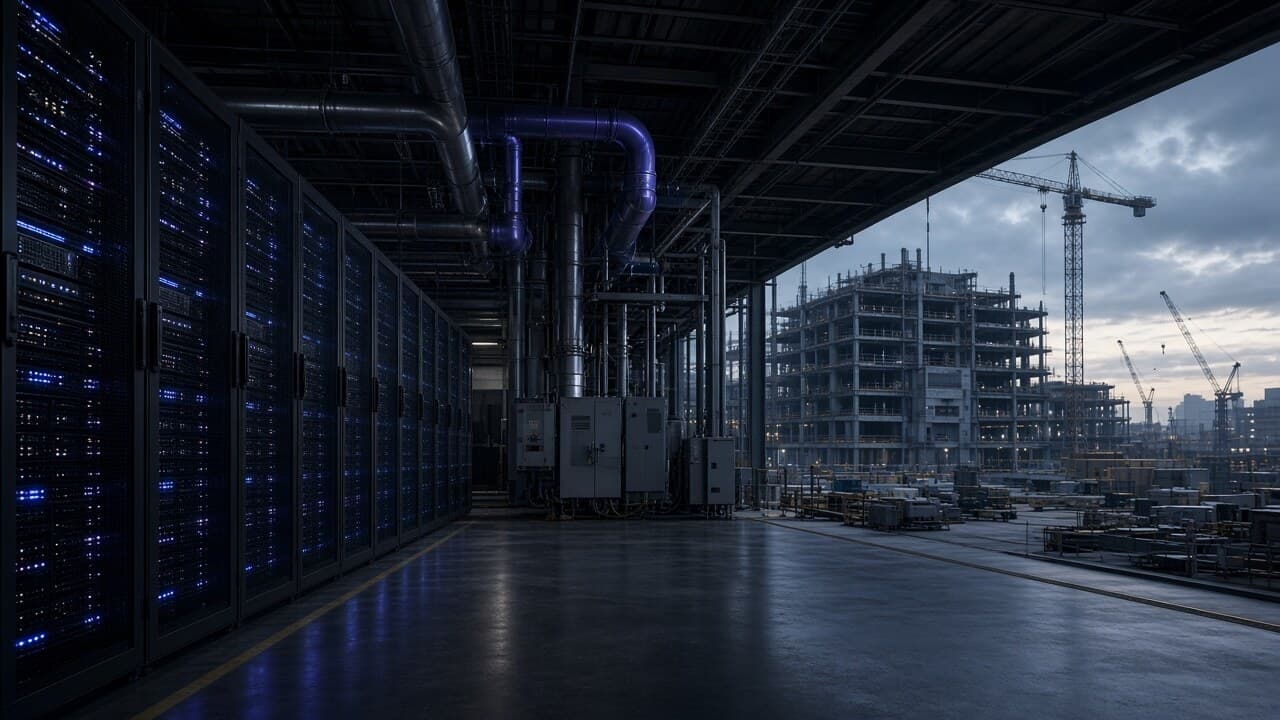
Imagine spending billions of dollars building a factory, filling it with some of the most advanced machines on Earth, and then discovering that you cannot supply enough electricity to turn them on.
It sounds like a business disaster. Yet it captures one of the central challenges facing the artificial intelligence industry: the race to build AI infrastructure is colliding with the physical limits of power generation, electrical equipment, construction and financing.
The world's biggest technology companies are investing heavily in data centres and advanced processors. These facilities help train AI models, run chatbots, generate images, support cloud computing and power a growing range of business applications.
But constructing a data centre is not the same as making it operational. A building needs a reliable electricity connection, cooling, networking, specialist equipment and enough computing demand to justify its cost.
At the same time, investors are trying to determine whether the revenue created by AI will justify the extraordinary cost of building this infrastructure.
This leads to a question that matters far beyond Silicon Valley: what happens if the billions invested in AI do not generate the returns companies expect?
The evidence does not establish that an AI market crash is inevitable. But it reveals risks worth examining, from electricity constraints and rapidly evolving hardware to financing arrangements and the challenge of turning AI adoption into sustainable profit.
During a gold rush, people invest money, labour and resources in the hope of discovering something valuable. Some prospectors strike gold. Others lose money. Businesses supplying the tools and equipment may also profit, sometimes without knowing which prospectors will succeed.
The AI industry has a similar structure. Companies are developing AI models, selling computing hardware, building data centres, providing cloud infrastructure and creating applications for businesses and consumers.
A company can benefit from this expansion in different ways. A chip supplier may earn revenue when a customer buys processors. A cloud provider may earn money when customers rent computing capacity. An AI application developer must convince customers that its product is worth paying for.
These business models carry different risks. Selling equipment today is not the same as proving that the customers purchasing it will earn attractive returns over many years.
The term AI bubble describes a possible situation in which investment valuations or expectations rise beyond what sustainable business performance can justify. It does not mean AI technology itself is useless.
The internet provides a useful historical comparison. The dot-com bubble burst around 2000, causing major losses for many investors and businesses. Yet the internet continued developing and eventually supported enormous industries.
AI could likewise prove transformative while some companies, products or infrastructure projects fail to meet their financial expectations.
AI infrastructure is expensive because it combines computing hardware with substantial physical construction and operational requirements.
Companies need land, buildings, processors, networking equipment, power distribution, cooling systems and reliable electricity. They must also hire people to build, operate and maintain these facilities.
Meta reported capital expenditure of approximately $31.08 billion in the second quarter of 2026, including principal payments on finance leases. In its July 2026 results, the company projected full-year capital expenditure of approximately $130 billion to $145 billion.
Microsoft's October 2026 quarterly results also illustrated the scale of infrastructure investment. The company reported capital expenditure of approximately $45.2 billion for the quarter and Azure revenue growth of 48% year over year.
These figures need context. Capital expenditure is not automatically a loss. It represents investment in assets intended to support future operations and revenue.
The challenge is that much of the spending happens before all future demand is certain. Companies may commit to buildings, power systems and hardware years before the full economic return becomes clear.
If demand grows and computing capacity is used efficiently, these investments may pay off. If customers spend less than expected, hardware becomes less competitive or projects face long delays, returns can disappoint.
The key question is not simply how much a company spends. It is whether the resulting assets generate enough revenue and cash flow to justify their total cost.
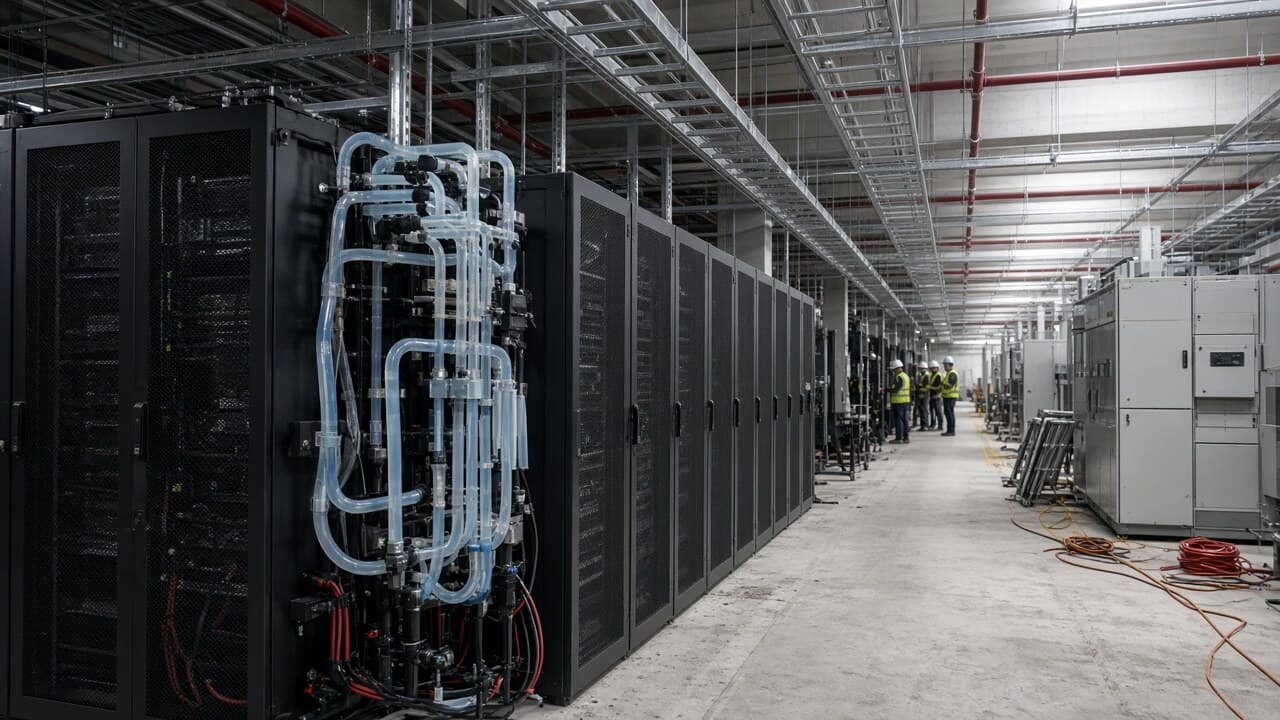
Artificial intelligence may feel like a purely digital technology, but running it at scale requires electricity.
Large computing systems consume power while training models and responding to users. Their processors also generate heat, which must be managed with cooling equipment.
As data-centre demand grows, some regions need additional generation capacity, grid connections, substations and transmission infrastructure.
The US Department of Energy's July 2025 resource adequacy report estimated that the United States could need an additional 100 gigawatts of peak-hour electricity supply by 2030, including approximately 50 gigawatts attributed directly to data centres. This is a projection, not a guarantee of what will happen.
Electricity infrastructure cannot always expand at the same pace as software demand. Grid upgrades and major power projects can require planning, permits, specialised equipment and lengthy construction.
A company may be able to order processors and construct a building before the required power connection is ready. This creates a potential mismatch between the speed of digital investment and the speed of physical infrastructure.
However, it would be inaccurate to claim that every new data centre is sitting idle without electricity. Conditions differ by region and project, and proposed capacity is not the same as completed, operational capacity.
Electricity is therefore a major variable in the economics of AI infrastructure, but its impact must be assessed using local evidence rather than broad assumptions.
Transformers are not glamorous technology, but they are essential to electricity networks. They change voltage levels so power can be transmitted and distributed efficiently.
Large data centres may require substantial electrical equipment before they can operate at full capacity. This can include transformers, switchgear, substations and other specialised systems.
Reporting in 2026 described growing pressure on grid-equipment supply chains as data-centre demand increased. Some large transformer lead times have stretched to multiple years, although actual delivery schedules depend on the equipment and project.
A delayed transformer can affect a much larger construction schedule. A company may already have committed money to land, buildings and computing hardware while waiting for the equipment needed to energise the facility.
Delays can increase financing costs and expose projects to changes in technology, customer demand and construction budgets.
This does not mean every data-centre project will be delayed or unprofitable. It means infrastructure developers must account for supply-chain constraints when estimating the cost and timing of future returns.
The AI industry is a reminder that digital revolutions depend on physical systems that cannot be built instantly.
In a gold rush, suppliers of essential tools can benefit from the activity of thousands of prospectors. NVIDIA occupies an important position in the AI industry because its GPUs and related computing systems are widely used for AI training and inference.
This position creates substantial commercial opportunities. As cloud providers and AI developers expand their computing capacity, demand for specialised hardware can increase.
But a supplier's revenue is not the same as proof that every customer investment will succeed. Customers need financing, power, useful workloads and paying demand to justify their infrastructure purchases.
The financial relationships between suppliers, customers and infrastructure developers therefore deserve attention. Guarantees, leases, long-term commitments and other arrangements can help projects secure financing, but they may also create exposure if customers or projects fail to meet their obligations.
Investors should examine the actual terms of these arrangements: what is guaranteed, who is responsible for payments, what conditions apply, and what happens if a project changes or a customer defaults.
These are legitimate financial questions. The existence of a guarantee or commercial relationship is not, by itself, evidence of misconduct or artificial revenue.
NVIDIA's future performance, like that of other AI companies, will depend on demand, competition, product development, customer finances and the wider economics of AI computing.
AI hardware evolves rapidly. New processors may deliver improved performance, energy efficiency or capabilities, encouraging companies to upgrade their computing infrastructure.
But a new generation of chips does not automatically make older hardware worthless. Older processors may continue supporting inference, research, smaller models and other computing workloads.
The relevant financial question is whether the hardware can continue generating enough revenue to justify its purchase and operating costs.
Companies estimate how long servers and networking equipment will remain useful and spread their costs over those periods through depreciation.
Amazon's 2025 annual report documents changes to its estimated useful lives for server and networking equipment. The company extended the estimated useful life of servers from five to six years effective in 2024, then shortened the estimated useful life of a subset of servers and networking equipment from six to five years effective in 2025. The filing attributed the shorter estimates to the faster pace of technological development, particularly in AI and machine learning.
Changing an asset's estimated useful life can affect the timing of depreciation expense and reported profit. A longer estimated life generally spreads depreciable cost across more years, while a shorter estimate generally increases annual depreciation, all else being equal.
Accounting estimates must be reasonable and supported, but changing an estimate is not automatically fraud. Establishing misconduct requires evidence beyond the existence of an accounting judgement.
The genuine business risk is that some equipment may become less competitive before its accounting life ends. Companies need to account for technological progress as well as physical durability.
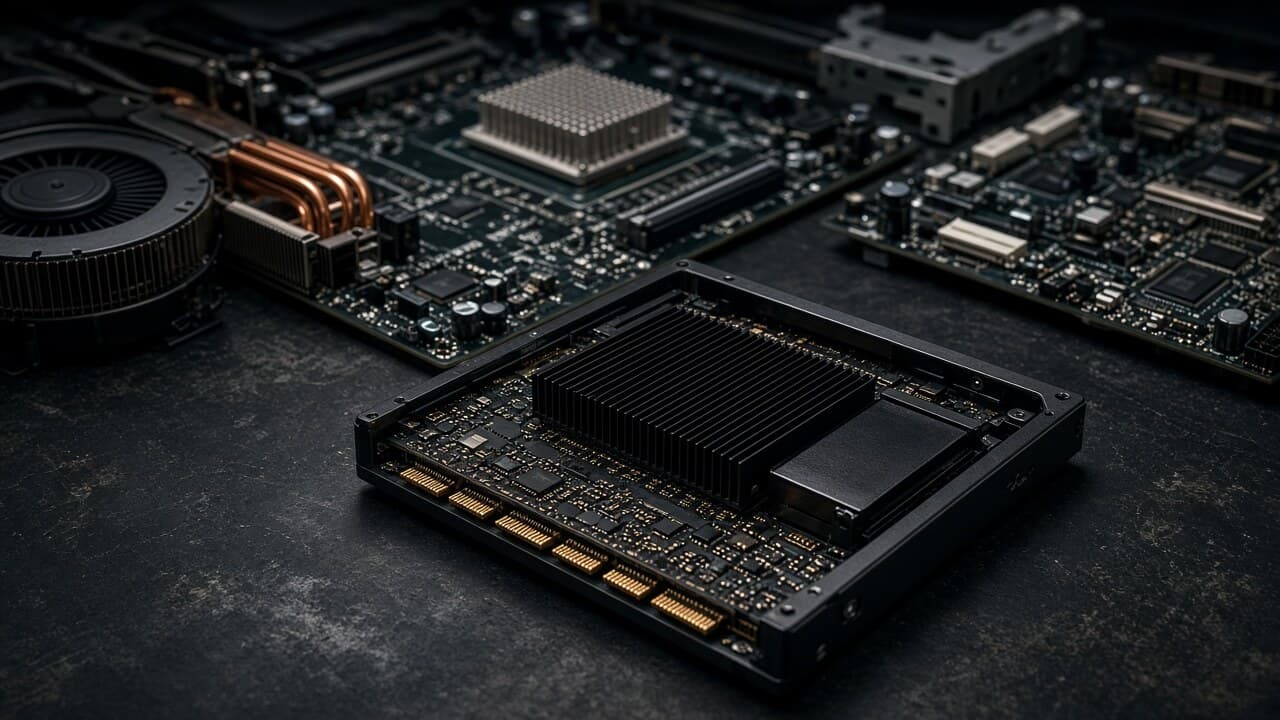
Building infrastructure is only half of the challenge. Companies must also find customers willing to pay for the services it enables.
AI revenue can come from cloud computing, enterprise software, subscriptions, advertising, coding assistants, customer support, research tools and specialised business applications.
Some uses are already commercially valuable. Microsoft's October 2026 results reported 48% year-over-year Azure revenue growth. This demonstrates strong growth in its cloud business, but it does not reveal the exact profit attributable to AI alone or prove that every new AI facility will earn an attractive return.
Other products are still developing sustainable business models. A popular AI application can attract users while struggling to cover model development, computing, staffing and customer acquisition costs.
Running a model for customers—known as inference—also consumes resources. Serving large numbers of users can become expensive, especially when products offer generous free access or compete on price.
For that reason, user numbers alone do not establish profitability. Businesses need to examine revenue, retention, margins, inference costs and how much capital is required to support growth.
AI could become more economical as hardware and software improve. Alternatively, competition may push prices down faster than costs fall. Both outcomes are possible, and different companies may experience different results.
The central question is whether customers receive enough value from AI to justify what they pay and whether that revenue can support the full cost of delivering the service.
Electricity infrastructure serves homes, businesses and industry. When a large new customer requires additional generation or grid investment, regulators and utilities must determine how those costs should be allocated.
In the United States, PJM operates a regional electricity system covering parts of 13 states and Washington, D.C. Its capacity market is designed to help ensure sufficient resources are available to meet future demand.
A 2025 analysis reported that PJM's independent market monitor attributed $29.4 billion in capacity charges across four auctions to data-centre-driven demand. This was an estimate related to capacity-market outcomes, not a bill directly charged to every household.
Household electricity prices depend on many factors, including generation costs, transmission, distribution, local regulation and the way infrastructure costs are allocated.
Data-centre growth can contribute to additional pressure in constrained regions, but it is inaccurate to attribute every increase in electricity prices to AI.
Regulators are considering how to protect other electricity customers when serving large new loads requires expensive infrastructure. Measures may include special tariffs, minimum payments or contractual protections.
The policy question is whether the costs and benefits of data-centre development are distributed fairly. Projects can bring investment and economic activity, but communities also need reliable power and transparent cost allocation.
During the late 1990s, the internet inspired enormous optimism. Investors funded new online businesses, valuations climbed, and companies spent heavily on infrastructure they expected the future would require.
When the dot-com bubble burst around 2000, many companies failed and investors suffered major losses. Yet the internet continued developing. Online commerce, search, cloud computing and digital services eventually became central parts of the global economy.
The lesson is that a valuable technology can coexist with poor investment decisions.
A business may identify a genuine long-term trend but pay too much for assets, expand too quickly or underestimate how long it will take to develop profitable products. Investors may also assume that unusually high growth rates will continue indefinitely.
Today's leading technology companies differ from many dot-com-era startups because they have established customers and existing revenue-generating businesses. That does not remove their investment risks, but it makes the comparison more complicated than simply predicting another crash.
History can help us identify warning signs. It cannot tell us the exact timing or scale of a future correction.
No single indicator can reliably predict an AI market crash. But several developments would deserve close attention.
If infrastructure investment keeps rising while the revenue and cash flow generated by AI fail to keep pace, companies may eventually need to reduce spending or accept weaker returns. Capital expenditure should be evaluated alongside the results it is expected to produce.
A facility can disappoint financially if customers do not arrive or do not use the capacity they reserved. Actual utilisation, contracted demand and the terms of customer commitments are more informative than construction announcements alone.
Debt, leases and guarantees can make large infrastructure projects possible, but they can also create long-term obligations. Investors need to understand who is responsible for payments and what happens if demand or construction falls short.
If newer hardware substantially improves performance or efficiency, companies may need to upgrade sooner than planned. The financial impact depends on the usefulness of existing equipment, operating costs and demand for older computing capacity.
AI services need to solve real problems at a price customers consider worthwhile. If businesses cannot demonstrate productivity improvements, revenue gains or cost savings, they may reduce spending or move to cheaper alternatives.
A balanced analysis must also consider why AI investment could continue producing value.
AI is already being integrated into software, coding tools, enterprise search, data analysis and customer-service systems. When these applications improve productivity or help users complete work more effectively, customers may be willing to pay for them.
Data centres can also serve multiple workloads. A computing facility may support model training, inference and other cloud services rather than relying on a single AI product.
Hardware and software efficiency may improve. Better algorithms, specialised chips, model compression and more efficient serving systems can reduce the cost of producing useful AI output.
Demand may also expand as businesses develop applications that are difficult to predict today. New uses could create revenue opportunities that help justify some of the infrastructure being built now.
Companies can adjust their plans when the economics change. They may delay projects, lease computing capacity instead of owning it, redesign facilities or redirect resources towards more productive uses.
None of these factors guarantees that today's spending levels will pay off. They show why it is premature to assume that all AI infrastructure investment will fail.
The available evidence does not establish that an AI market crash is imminent.
There are measurable reasons for caution: enormous capital commitments, growing electricity demand, constraints in electrical-equipment supply chains, uncertainty about infrastructure returns, and financial arrangements that can create exposure between suppliers, customers and developers.
There are also reasons not to dismiss the entire boom. Major cloud businesses continue to report strong revenue growth, AI tools are being integrated into commercial products, and infrastructure can provide long-term value when demand and utilisation justify its cost.
The outcome will not necessarily be the same for every company. Some AI products may become profitable, some infrastructure projects may deliver excellent returns, and other investments may fail to meet expectations.
The danger is assuming that because AI adoption is growing, every company involved will earn extraordinary profits. A growing market can still contain intense competition, high operating costs, overbuilding and disappointing returns.
The strongest conclusion is that the AI industry is entering a stage where execution, efficiency, financing and measurable customer value matter as much as technological ambition.
Artificial intelligence is often presented as a contest between increasingly powerful models. But the industry's future will also depend on electricity grids, transformers, construction, cooling systems, financial planning and customers' willingness to pay.
The AI boom could lead to major technological and economic advances. It could also produce expensive mistakes if companies build too much capacity, borrow too aggressively or assume demand will grow forever.
Those possibilities are not contradictory. Both can happen at the same time.
The internet's history reminds us that a technology can change the world while some businesses built around it fail. AI may follow a similar pattern, although its timing and scale cannot be predicted reliably.
Rather than asking only when the AI bubble will burst, we should ask which companies are creating durable value, which investments are financially sustainable, and whether the infrastructure being built today will remain useful tomorrow.
Because the biggest test for AI is no longer just whether machines can become more intelligent.
It is whether the world can build, power and pay for the intelligence it is creating.
Continue with are we ready for superintelligence, AI civilization and control, and could Mickey 17 become real.
AI Gold Rush FAQ
Is the AI industry in a bubble?
Why are technology companies spending so much on AI?
Could AI data centres cause electricity prices to rise?
Is NVIDIA responsible for an AI bubble?
Are AI chips becoming obsolete too quickly?
Does changing the useful life of servers manipulate profits?
Will the AI boom crash like the dot-com bubble?
What should investors watch to judge the AI boom?
What the evidence supports — and what remains uncertain
What works
- Separates valuable AI technology from the assumption that every AI investment will succeed.
- Highlights electricity, transformers, financing and utilisation as real constraints on infrastructure returns.
- Treats accounting useful-life changes and commercial guarantees as risks to examine, not automatic proof of fraud.
What doesn't
- An imminent AI market crash has not been established.
- Company-level returns will vary widely and remain hard to forecast.
- Electricity and capacity-market effects differ by region and cannot be generalised to every household bill.